


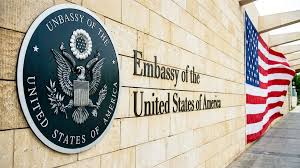
The United States Embassy in Riyadh has been struck by two drones, just as Iran announced the closure of the strategically vital Strait of Hormuz, dramatically escalating an already widening regional conflict.
Saudi authorities confirmed that the drones hit the US diplomatic compound in Riyadh, causing a limited fire and minor structural damage. In response, the embassy cancelled all routine and emergency consular services across its missions in Riyadh, Jeddah and Dhahran, and ordered staff and visitors to “shelter in place”.
“Avoid the Embassy until further notice due to an attack on the facility,” the mission said, urging American citizens to activate personal safety plans.
Regional Conflict Deepens
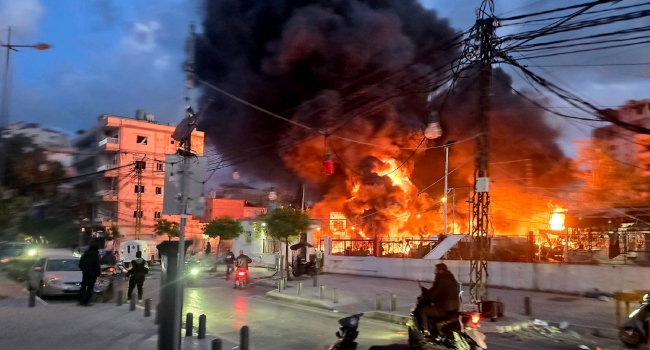
The strike comes amid intensified Israeli military operations targeting Tehran and Beirut, including a reported hit on Iran’s state broadcaster. The broader conflict has reportedly left more than 600 people dead across Iran and Lebanon.
The US diplomatic mission also updated its travel advisory for Iraq, directing non-emergency government personnel to depart the country for security reasons. Staff in Baghdad have been barred from using the city’s international airport due to heightened risks.
Related Posts:


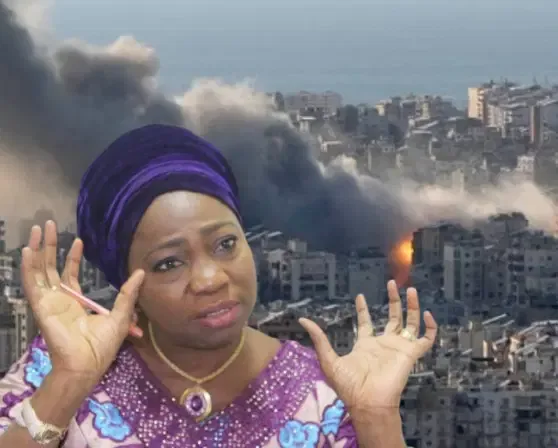
State Department official Mora Namdar issued an urgent message on X, advising US citizens to “DEPART NOW” from multiple countries in the region due to “serious safety risks”.
The advisory covered Bahrain, Egypt, Iran, Iraq, Israel, the occupied West Bank and Gaza, Jordan, Kuwait, Lebanon, Oman, Qatar, Saudi Arabia, Syria, the United Arab Emirates and Yemen.
Hormuz Closure Sends Shockwaves Through Energy Markets
Tehran’s decision to shut the Strait of Hormuz — one of the world’s most critical oil and gas transit chokepoints — has triggered alarm across global energy and financial markets.
Michael Mulroy, a former US Deputy Assistant Secretary of Defense, warned that Washington is closely monitoring the Iranian navy, particularly the risk of sea mine deployment.
“The maritime issue has become very critical,” Mulroy said, cautioning that any mining of the strait could have lasting global consequences.
He noted that halting traffic through the narrow waterway would disrupt energy flows to countries worldwide and inflict severe economic consequences on Gulf states.
“If they can lay sea mines in any part of it, which is not very difficult, it could take multiple months to be completely clear and to convince insurance companies to allow and insure vessels to go through those straits,” he said. “It could have a major impact for the long term if that were to actually happen.”
Iran has previously disrupted shipping in the area by targeting vessels transiting the strait.
Asian Markets Slide
Financial markets across Asia reacted sharply to the escalating crisis, with investors selling off energy, aviation, shipping and transport stocks amid fears of prolonged instability.
South Korea’s benchmark index dropped about 5 percent in morning trading, while Japan’s Nikkei index fell 2.3 percent.
China’s markets showed mixed performance. After a roughly 2 percent decline on Monday, Hong Kong and Shanghai traded only slightly lower on Tuesday. Analysts suggested Beijing could be intervening to stabilise markets ahead of its upcoming “Two Sessions” political meetings.
China’s substantial crude oil reserves — including imports from Iran — may cushion short-term supply disruptions, with reports indicating the country holds up to three months’ worth of reserves.
Nuclear Talks Collapse
Diplomatic efforts appear increasingly strained. Steven Witkoff, the US special envoy involved in recent nuclear negotiations with Iran, revealed that Tehran rejected a US proposal for a 10-year suspension of uranium enrichment, even with Washington offering to finance alternative fuel supplies.
According to Witkoff, Iranian negotiators insisted on what they described as their “inalienable right” to enrich nuclear fuel.
“We, of course, responded, ‘The president feels that we have the inalienable right to stop you,’” he said.
Witkoff said he was “flummoxed” by Iran’s stance, adding that US officials concluded Tehran had “no notion anything other than retaining enrichment for the purpose of weaponising” — an allegation Iran has consistently denied.
Iranian officials maintain that their nuclear programme is for civilian purposes and that they are not pursuing nuclear weapons.
With diplomatic channels under strain, embassies under attack, critical oil routes blocked and global markets unsettled, the crisis shows little sign of immediate de-escalation, raising fears of a prolonged regional and economic confrontation.