




The Senate and the United Nations Office on Drugs and Crime (UNODC) have called for urgent measures to strengthen Nigeria’s response to image-based sexual abuse and other forms of cyber-interpersonal violence.
The call was made during a stakeholders’ workshop in Lagos aimed at developing a comprehensive framework to combat intimate image abuse, including revenge porn, sextortion and the non-consensual sharing of intimate images.
Participants at the meeting described the abuse as one of the fastest-growing forms of technology-facilitated gender-based violence, warning that advances in digital technology and artificial intelligence have made it easier for perpetrators to create, manipulate and disseminate explicit images without the consent of victims.
They stressed that while the internet has transformed communication and social interaction, it has also created new opportunities for abuse, blackmail and exploitation, with women and girls bearing the greatest burden of the emerging threat.
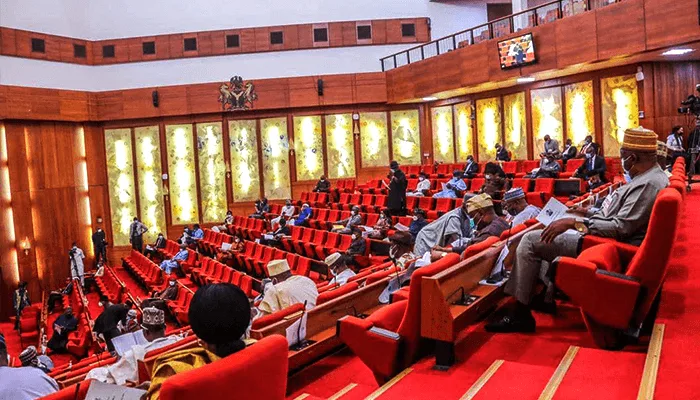
The Senate Committee on Drugs and Narcotics pledged legislative support to tackle the problem, while the UNODC advocated a survivor-centred and rights-based approach that prioritises prevention, protection, accountability and access to justice for victims.
Related Posts:





Stakeholders noted that victims of intimate image abuse often suffer severe consequences beyond the digital space, including public humiliation, cyberbullying, social isolation and extortion. In many cases, victims lose educational opportunities, employment and relationships due to the unauthorised circulation of their intimate content.
They also warned that the rise of artificial intelligence-generated deepfake technology has introduced a dangerous dimension to the problem by enabling perpetrators to produce realistic but fake explicit images and videos that can be used to harass, blackmail and damage reputations.
The stakeholders called for stronger laws, improved investigative and forensic capabilities, enhanced cooperation between law enforcement agencies and technology companies, and the establishment of rapid response mechanisms for removing abusive content from digital platforms.
They further emphasised the need for greater public awareness and digital literacy, noting that many victims remain silent because of fear of stigma, victim-blaming and retaliation.
Participants maintained that Nigeria must act decisively to close legal and policy gaps and build a robust framework capable of protecting citizens from digital exploitation.
They stressed that ensuring safety in the digital space is no longer merely a technology issue but a pressing human rights and justice imperative that requires coordinated action by government institutions, lawmakers, law enforcement agencies, civil society organisations and the private sector.