



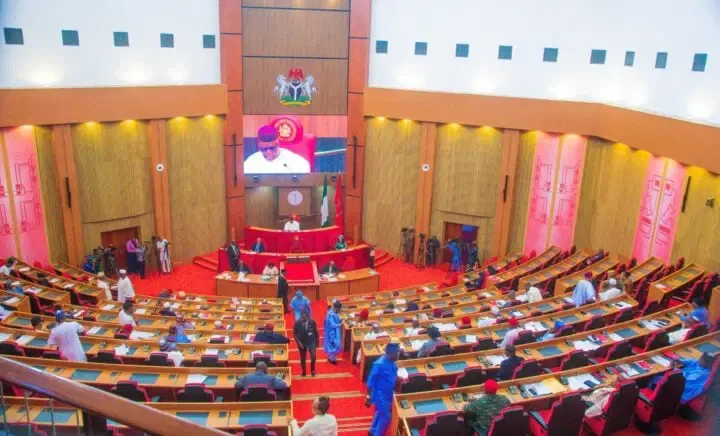
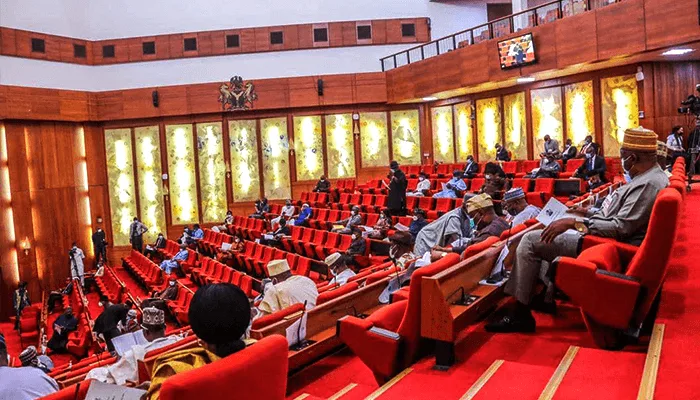
The Senate has directed that all public and private hospitals across Nigeria must mandatorily stock life-saving antidotes and emergency medicines, following concerns over recurring, preventable deaths arising from snakebites, poisoning, drug overdoses and similar medical emergencies.
The resolution was adopted on Tuesday after lawmakers considered a motion sponsored by Senator Idiat Oluranti Adebule (APC, Lagos West), amid growing unease about gaps in emergency preparedness within the country’s healthcare system.
In a solemn gesture underscoring the gravity of the issue, the Senate observed a minute of silence in honour of Miss Ifunanya Nwangene, who reportedly died after suffering a snakebite in Abuja. Senators described the incident as avoidable and emblematic of systemic failures in the availability of critical antidotes during medical emergencies.
Contributing to the debate, Senator Sunday Karimi (APC, Kogi West) described the death as needless, insisting that no Nigerian should lose their life to a condition for which effective treatment exists.
“That shouldn’t happen in our country because we are supposed to have antidotes. We have to be proactive as a government. I don’t see why medical centres should not have antidotes,” Karimi said.
Related Posts:


Other lawmakers echoed similar sentiments, calling for decisive policy action rather than reactive responses to avoidable fatalities.
Senator Ekong Sampson (APC, Akwa Ibom) said the tragedy should serve as a wake-up call for authorities at all levels.
“We must put in place clear healthcare policies and drive them. We don’t have to wait until there’s a fatality through snakebites. This is a lesson that we must take healthcare very seriously. My heart bleeds for the family of the deceased, noting that the loss was avoidable,” he said.
Leading the debate, Senator Adebule stressed that emergencies such as snakebites, scorpion stings and poisoning require immediate access to specific antidotes, particularly within the critical “golden hour.” She warned that delays often result in preventable deaths or irreversible complications.
“The tragic death of Miss Ifunanya Nwangene exposes the grave consequences of inadequate emergency preparedness in both public and private hospitals. No Nigerian should lose their life simply because a hospital lacks basic, life-saving antidotes,” she said.
Adebule also referenced the World Health Organisation’s classification of snakebite envenoming as a neglected tropical disease, noting that the global health body has repeatedly emphasised the need for timely access to safe and effective antivenoms, especially in countries like Nigeria where snakebites remain prevalent.
She further cited Sections 14(2)(b) and 17(3)(d) of the 1999 Constitution (as amended), which place a duty on governments to prioritise citizens’ welfare and ensure access to adequate medical facilities.
According to her, many hospitals either do not stock essential antidotes such as antivenoms and anti-toxins or keep them in grossly insufficient quantities, forcing patients to move from one facility to another during emergencies.
“This practice is unacceptable and deadly. It increases mortality rates and erodes public confidence in our healthcare system,” she said.
Adopting the motion, the Senate urged the Federal Ministry of Health and Social Welfare to develop and enforce national guidelines prescribing minimum stock levels of essential antidotes and emergency medicines for designated public and private hospitals.
It also called on the Ministry, in collaboration with the National Agency for Food and Drug Administration and Control (NAFDAC), to ensure the procurement, quality assurance, proper storage and nationwide availability of safe, effective and affordable antivenoms, with priority attention given to high-risk regions.
Lawmakers further urged state governments to immediately audit hospitals within their jurisdictions to assess compliance with approved antidote-stocking and emergency preparedness standards. Relevant professional and regulatory bodies were also called upon to strengthen emergency response protocols and ensure periodic training of healthcare workers.
In addition, the Senate urged the Federal Capital Territory Administration (FCTA) and state governments to establish coordinated emergency referral systems linking public and private hospitals to guarantee timely access to life-saving medicines.
The resolutions further directed that the availability of essential antidotes should become a mandatory condition for licensing and renewal of accreditation for private hospitals, while adequate budgetary provisions should be made to sustain supplies in public health facilities.
In a related decision, the Senate urged the Federal Ministry of Housing and Urban Development to strengthen building regulations by making the installation of Non-Return Valves compulsory under the National Building Code, to prevent rodents and snakes from entering buildings through drainage systems.
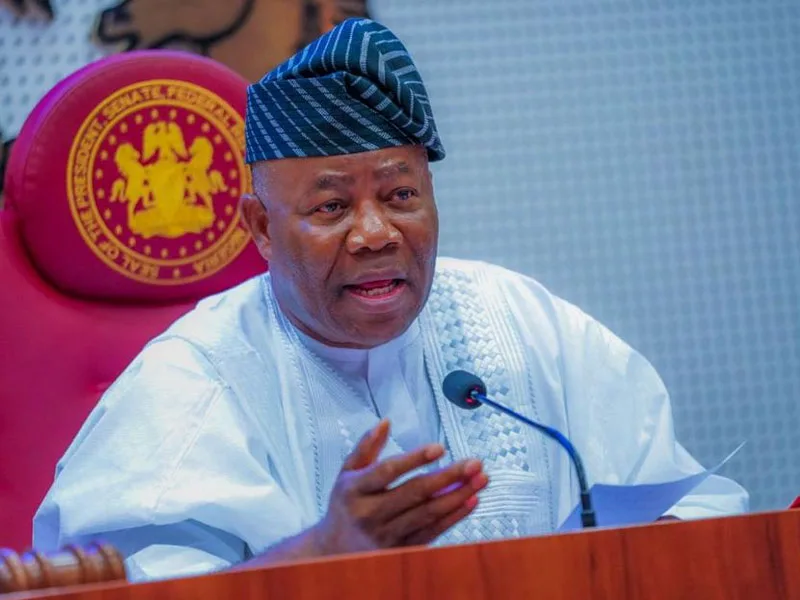
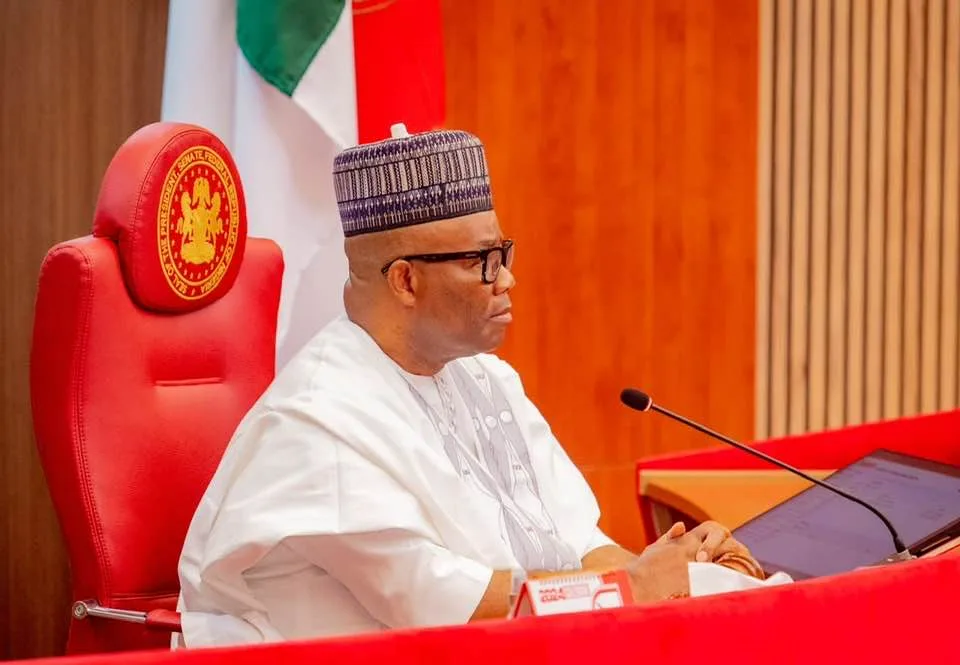
Presiding over the session, Senate President Godswill Akpabio described Miss Nwangene as a promising Nigerian whose death was a significant loss to her family and the nation. He said the resolutions reflected the Senate’s resolve to protect lives.
“The welfare of Nigerians must remain paramount. No life should be lost because of avoidable lapses in our healthcare system,” Akpabio said.
Meanwhile, the Senate also retreated into a prolonged closed-door session over the Electoral Act Amendment Bill, spending over four hours behind closed doors without making any public disclosure on the fate of the legislation.
Lawmakers entered the executive session at about 1:06pm following a motion by Senate Leader Opeyemi Bamidele for the continuation of clause-by-clause consideration of the report of the Senate Committee on Electoral Matters, chaired by Senator Simon Lalong. The session ended around 5:30pm.
When plenary resumed, however, no details were provided on the outcome of the deliberations, further deepening uncertainty around the bill, which is widely regarded as critical to strengthening Nigeria’s electoral process.
In brief remarks, Akpabio said senators had deliberated on “matters concerning the Senate in particular and the nation in general,” before closing the session.
The closed deliberations have raised concerns among stakeholders over transparency and delays surrounding the amendment process.
Separately, the Senate also initiated moves to amend the 1999 Constitution to increase the Federal Government’s share of national revenue, citing mounting fiscal pressures, deteriorating infrastructure and escalating security challenges.
The proposal followed the first reading of a constitutional amendment bill sponsored by Senator Karimi, which seeks an upward review of the existing revenue allocation formula in favour of the Federal Government.
Under the current arrangement, the Federal Government receives 52.68 per cent of federally collected revenue, states receive 26.72 per cent, while local governments share 20.60 per cent.
Karimi argued that despite receiving the largest share, the Federal Government’s allocation no longer reflects the scale of its constitutional responsibilities.
He said the proposal was aimed at addressing “grossly inadequate revenue” that has constrained federal capacity to fund infrastructure, security and other national obligations.
The proposed amendment is expected to trigger extensive debate, particularly from state and local governments that may oppose any reduction in their shares.
If passed, it would mark a significant shift in Nigeria’s fiscal federalism and the distribution of resources among the three tiers of government.