



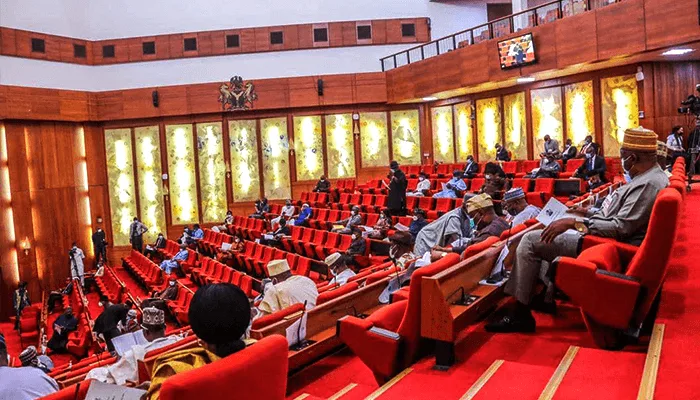
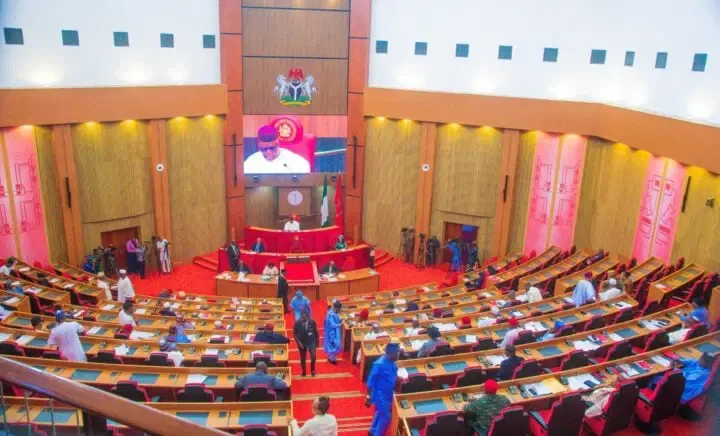
The Senate on Tuesday constituted a 12-member conference committee to harmonise differences between its version of the Electoral Act (Amendment) Bill and that passed by the House of Representatives, as controversy continues over proposed changes to Nigeria’s electoral framework.
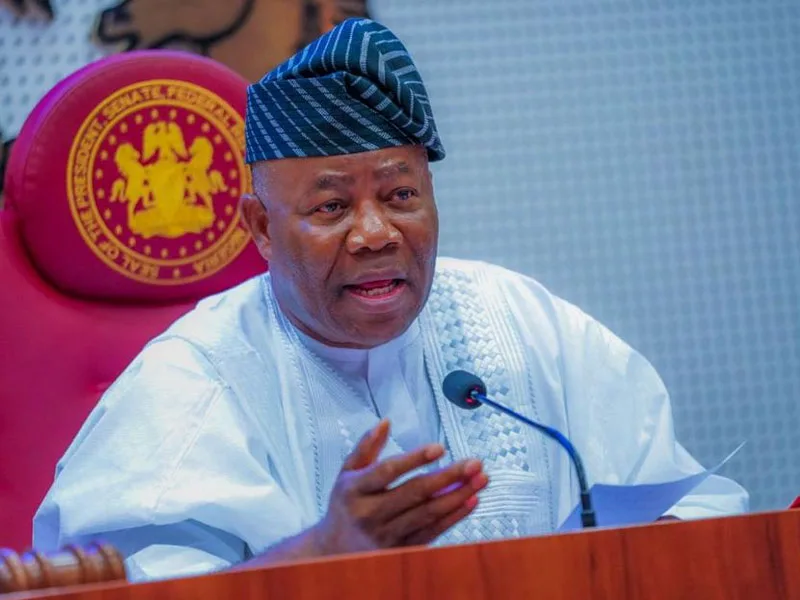
The decision was taken during an emergency plenary session and announced by Senate President, Godswill Akpabio, amid sustained public pressure over provisions relating to the electronic transmission of election results.
Akpabio said the committee’s membership was expanded from nine to 12 following consultations with Senate leadership, underscoring the sensitivity and urgency of the assignment.
“After consultation with the leadership, we have moved the number from nine to 12. I will now read out the names of the conference committee members from the Senate,” he said.
The members of the Senate conference committee are:
Related Posts:

- Senator Simon Bako Lalong — Chairman
- Senator Mohammed Tahir Monguno
- Senator Adamu Aliero
- Senator Orji Uzor Kalu
- Senator Abba Moro
- Senator Asuquo Ekpenyong
- Senator Aminu Iya Abbas
- Senator Tokunbo Abiru
- Senator Niyi Adegbonmire (SAN)
- Senator Jibrin Isah
- Senator Ipalibo Banigo
- Senator Onyekachi Nwebonyi
Akpabio urged the committee to commence work immediately and conclude its assignment within days.
“When you meet, you should recognise that this is a matter of urgency. I believe that if you are able to conclude within the next few days or one week, the President should be able to sign the amended Electoral Bill into law within the month of February,” he said, before formally inaugurating the committee.
The emergency sitting was convened against the backdrop of widespread backlash over amendments to the Electoral Act, particularly Clause 60(3), which governs the transmission of election results.
The Senate had removed the requirement for real-time electronic transmission, retaining the provision in the 2022 Electoral Act that empowers the Independent National Electoral Commission (INEC) to determine the mode of results transmission.
The decision triggered protests across Abuja, including the Occupy National Assembly demonstration, with civil society groups, opposition parties and political figures demanding mandatory real-time electronic transmission to strengthen electoral transparency ahead of the 2027 general election.
During Tuesday’s session, fresh disagreements emerged among lawmakers. Akpabio supported a proposal recognising electronic transmission as the primary mode of results transfer, while allowing manual submission using Form EC8A only in cases of technical failure.
The proposal sparked debate on the Senate floor, with Senate Minority Leader, Senator Enyinnaya Abaribe, initially calling for a division vote before later withdrawing the request.
In response to public criticism, Akpabio reiterated that the Senate had not rejected electronic transmission of results, insisting that the removal of the phrase “real time” was to avoid legal complications arising from network failures and to give INEC operational flexibility.
Former Senate President, David Mark, also weighed in on the debate, urging lawmakers to allow INEC to decide the most appropriate method of transmitting election results.
While critics argue that the current amendment weakens electoral transparency, several senators maintain that the chamber overwhelmingly supports electronic transmission, stressing that the dispute centres on wording rather than the principle itself.
The outcome of the Senate–House conference committee is expected to determine the final shape of the Electoral Act amendments and could prove decisive for Nigeria’s electoral process ahead of future polls.