

The Executive Secretary of the National Institute of Cultural Orientation (NICO), Mr Abiodun Ajiboye, has said Nigeria currently lacks the capacity and infrastructure to implement electronic voting or real-time electronic transmission of election results.
Ajiboye made the assertion on Monday while reacting to the ongoing national debate over proposed amendments to the Electoral Act, particularly the push for electronic transmission of results.
According to him, Nigeria’s existing electoral process, which is largely manual, cannot be seamlessly integrated with real-time electronic transmission without exposing the system to serious risks.
“Transmitting election results electronically is tied to the manner of voting. If voting is done manually and results are collated manually, how do you then transmit results electronically in real time? It is not possible. We cannot even afford it. Even if we wish to, we simply cannot afford it,” he said.
Ajiboye questioned the readiness of Nigeria’s critical infrastructure to support such a process, citing challenges in telecommunications, electricity supply and cybersecurity.
Related Posts:

“Do the telecom operators have that capability? Do we have enough electricity across the country to support this responsibility? Is the infrastructure of telecom companies sufficient to undertake such an exercise?” he asked.
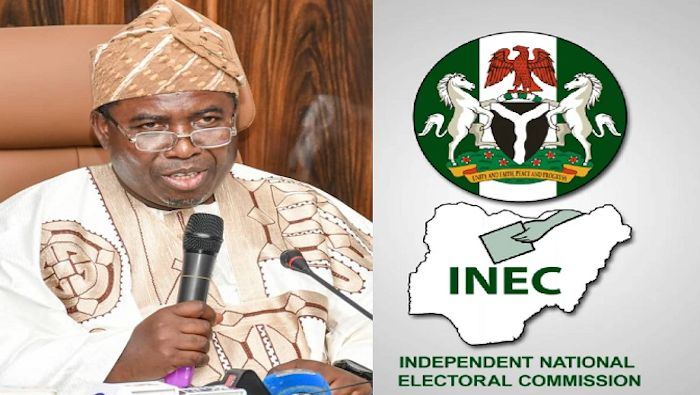
He recalled that during the last general election, the Independent National Electoral Commission’s (INEC) server was reportedly subjected to over a million cyberattacks, warning that pushing for full electronic transmission could expose Nigeria’s electoral process to manipulation and confusion.
“What is being pushed is to place the entire electoral process within the vulnerability of hijackers. That will only cause chaos,” Ajiboye said.
He explained that while elections have manual components, existing safeguards already provide room for transparency.
“You vote, the votes are counted at the polling unit, party agents append their signatures on the result sheets, and those documents can then be scanned and transmitted by any acceptable means,” he stated.
Insisting that Nigeria is not technologically prepared for electronic voting or real-time transmission, Ajiboye said capability, not ambition, should guide policy decisions.
“A man can only do what he is capable of. We do not have the capability to do electronic voting or real-time transmission at this time,” he said.
He also dismissed comparisons with advanced democracies, noting that even the United States does not rely on real-time electronic transmission of election results.
“America does not even do real-time transmission. Some rural communities in Nigeria do not have telecom coverage. Some do not have electricity. By pushing for what is not possible, you are disenfranchising a large segment of Nigerians,” he warned.
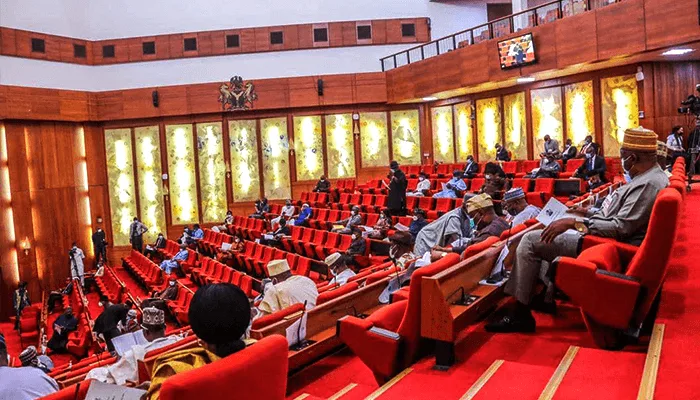
Ajiboye cautioned against what he described as pressure on the National Assembly to adopt reforms that could create more problems than solutions.
“Stop stampeding the Senate and the National Assembly into something that will put everyone in a mess at the end of the day,” he added.
On his role at the National Institute of Cultural Orientation, Ajiboye said the agency plays a distinct role in nation-building and should not be merged with other institutions.
He explained that NICO was established to promote cultural identity, pride and national cohesion.
“A man without a cultural identity is a man without a future. A nation without a cultural identity is a nation without a future,” he said.
According to him, the institute conducts research, public lectures and cultural orientation programmes, and is working towards establishing a Nigerian Academy for Cultural Studies in Ogbomoso.
Speaking on the Federal Government’s plan to merge overlapping agencies, Ajiboye said the process was being handled by the National Assembly through consultations and justification sessions.
“There is a committee of the National Assembly overseeing this. Agencies have been invited to justify their existence, and the process is ongoing,” he said.
He expressed confidence in President Bola Ahmed Tinubu’s commitment to reforms, saying the president would leave no stone unturned in actions aimed at building a better Nigeria.