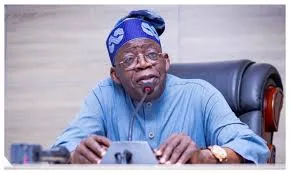
The Chairman of the Presidential Committee on Fiscal Policy and Tax Reforms, Taiwo Oyedele, has raised concerns over threats to his life following the implementation of Nigeria’s new tax laws, describing the reform process as difficult and risky due to entrenched interests. Oyedele disclosed this on Tuesday in Abuja while speaking at a governance colloquium […]
The Chairman of the Presidential Committee on Fiscal Policy and Tax Reforms, Taiwo Oyedele, has raised concerns over threats to his life following the implementation of Nigeria’s new tax laws, describing the reform process as difficult and risky due to entrenched interests.
Oyedele disclosed this on Tuesday in Abuja while speaking at a governance colloquium organised to mark the 50th birthday of the Special Adviser to the President on Policy and Coordination and Head of the Central Delivery Coordination Unit (CDCU), Hadiza Bala-Usman.
He said tax reforms were particularly challenging because they affected vested interests and were compounded by low public trust in government, weak tax culture and limited visibility of how taxes translate into public benefits.
“Reforms are hard, and tax reforms are even harder. You need courage. I receive threats simply for trying to fix a broken system,” Oyedele said, adding that Nigeria’s tax revenue remained significantly low compared to peer countries, making reforms unavoidable.
He urged Nigerians who understood and supported the reforms to speak out, warning that silence allowed misinformation and negative narratives to dominate public discourse.
The Federal Government commenced the implementation of the new tax laws on January 1, 2026, with four statutes taking effect simultaneously: the Nigeria Tax Act 2025, the Nigeria Tax Administration Act 2025, the Nigeria Revenue Service Establishment Act 2025, and the Joint Revenue Board Establishment Act 2025.
At the event, Vice President Kashim Shettima called on public servants to embrace selflessness, discipline and excellence, describing them as essential for building enduring legacies in governance. He stressed that true public service required sacrifice, consistency and strong character.
Shettima described Bala-Usman as a symbol of possibility for young women, particularly from northern Nigeria, noting that her rise in public service was driven by deliberate choices, institutional strengthening and disciplined responsibility.
“There is no doubt that Hadiza’s place in our public service history is secure. It was not built on spectacle, but on decisions taken quietly, responsibilities carried fully, and institutions strengthened with care,” he said.
The Secretary to the Government of the Federation, George Akume, also paid tribute to Bala-Usman, describing her career as one marked by purpose, sacrifice and commitment to good governance. He said her leadership at the CDCU had strengthened governance delivery, improved coordination across ministries and reinforced accountability in line with the Renewed Hope Agenda.
In her response, Bala-Usman expressed gratitude for the recognition, saying she was deeply humbled by the honour. She noted that she did not seek public attention and was initially hesitant about the colloquium but was moved by the support shown by colleagues and younger Nigerians.
The event featured a panel discussion on governance, reforms and service delivery. Speaking during the session, the Deputy Governor, Economic Policy Directorate of the Central Bank of Nigeria, Muhammad Sani Abdullahi, said the reforms implemented in the last two years were the most far-reaching in decades and had begun to yield macroeconomic improvements despite short-term pains.
The keynote address was delivered by former Director-General of the Bureau of Public Service Reforms, Joe Abah, who emphasised the importance of institutional integrity, transparency and process reforms for sustainable governance.
Separately, Kaduna State Governor Uba Sani called on Nigerians to support the tax reform laws, describing them as critical to sustainable national development. He made the call in Kaduna at a sensitisation summit organised by the Arewa Think Tank, where he was represented by the Executive Chairman of the Kaduna State Internal Revenue Service, Jerry Adams.
Sani said the reforms were designed to harmonise revenue sources, simplify tax compliance and improve the ease of doing business, particularly for small and youth-led enterprises. He urged young people to play an active role in ensuring the success of the reforms by demanding accountability and linking taxation to tangible development outcomes.
He reaffirmed Kaduna State’s commitment to progressive tax reforms and commended stakeholders for supporting public sensitisation on the importance of taxation to national development.
ADBN TV is a dynamic digital broadcasting platform committed to delivering credible news, inspiring stories, and engaging programmes that inform, educate, and connect communities across Nigeria and beyond.