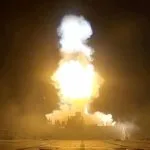
US President Donald Trump has warned Iran and its Houthi allies of what he described as “major military punishment” following missile and drone attacks on two Saudi oil tankers in the Red Sea, an incident that has heightened fears of a wider Middle East conflict and pushed global oil prices sharply higher. The Houthis claimed […]
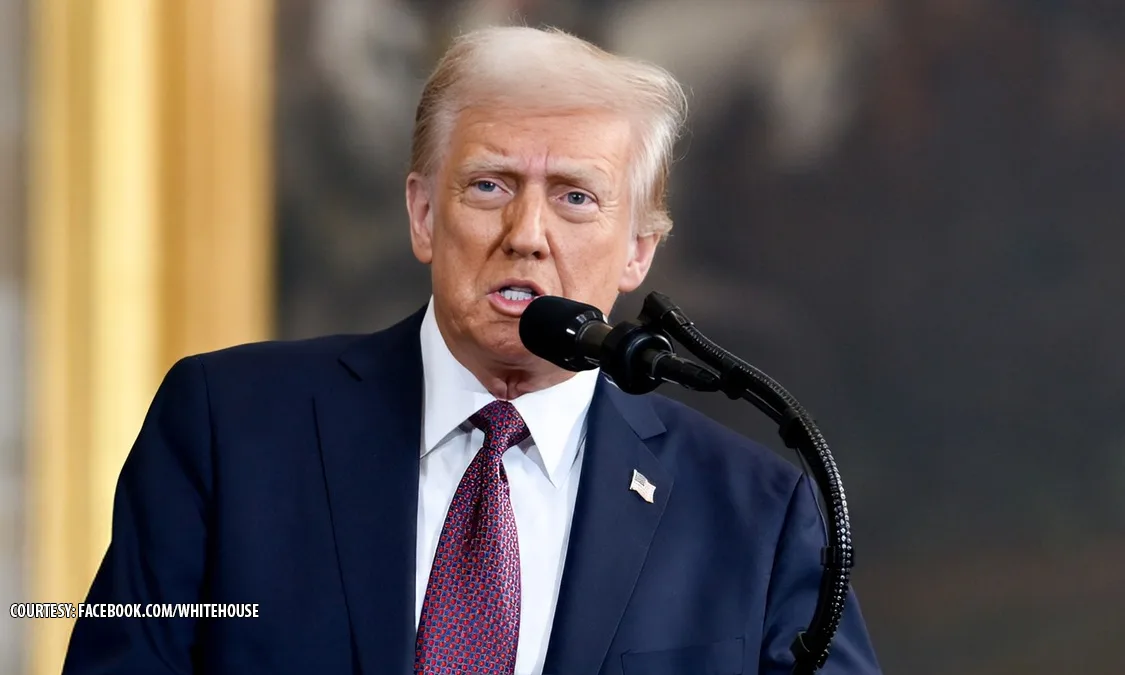
US President Donald Trump has warned Iran and its Houthi allies of what he described as “major military punishment” following missile and drone attacks on two Saudi oil tankers in the Red Sea, an incident that has heightened fears of a wider Middle East conflict and pushed global oil prices sharply higher.
The Houthis claimed responsibility for the attacks, marking a significant escalation by extending hostilities into the Red Sea, one of the world’s busiest maritime trade routes. The attacks have also added to existing disruptions affecting shipping through the Strait of Hormuz.
Brent crude oil rose by more than six per cent, surpassing $100 per barrel for the first time since May, as concerns grew over the security of another major global energy route.
The latest escalation came after the US military launched fresh airstrikes on Iranian targets for the 13th consecutive night following the collapse of an interim truce. Iran responded by targeting neighbouring Arab countries hosting US military bases.
Iranian state media also reported missile strikes on Qeshm Island along the Strait of Hormuz, while state broadcaster IRIB said four people were killed and five others injured in a US missile strike on Ahvaz.
Reacting to the attacks, Trump said the United States would hold Iran responsible for any future Houthi operations.
“If they do this again, the U.S. will hold Iran responsible, in that the Houthis are a surrogate and proxy of Iran, and major military punishment will be inflicted upon Iran and, of course, the Houthis themselves,” Trump wrote on social media.
According to Axios, Trump is also considering launching a renewed large-scale military campaign against Iran, saying the country “hasn’t received enough pain yet.”
He further stated that damages caused to cargo ships would be paid for using Iranian assets frozen by the United States, although he did not explain how such a move would be carried out.
Iranian Foreign Minister Abbas Araqchi condemned the proposal, warning that seizing another country’s assets to settle future claims would create a dangerous international precedent.
The Houthis, who control much of northern and western Yemen, announced a naval blockade on Saudi Arabia and claimed responsibility for striking the oil tankers Encelia and Layla with missiles and drones.
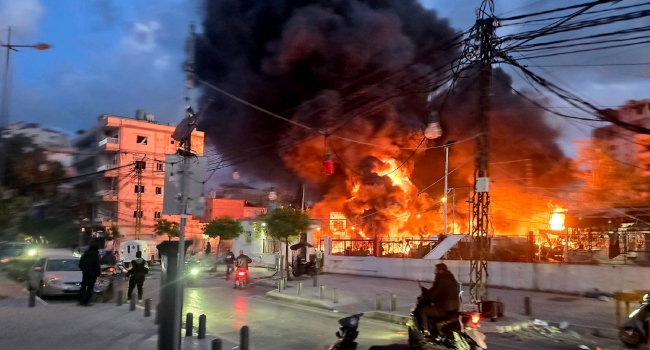
A maritime security source said the Encelia sent a distress signal after being hit near the Saudi port of Jizan, while Saudi state news agency SPA reported that the attack caused a fire at the vessel’s bow. Reuters said it could not independently verify the reported attack on the Layla.
Sources in Iran and Yemen told Reuters that Tehran recently deployed Revolutionary Guard commanders, military advisers, and missile and drone equipment to Yemen before the blockade was announced, a claim denied by the Houthis.
The attacks have intensified concerns over security in the Bab el-Mandeb Strait, a key shipping route linking the Red Sea to the Indian Ocean. Several oil tankers have reportedly rerouted around Africa, while insurance premiums for vessels using the southern Red Sea have doubled for some operators.
Ship-tracking data also showed tanker traffic through the Strait of Hormuz fell to just one vessel on Thursday, the lowest level since May 7.
Meanwhile, Iran said it had launched retaliatory attacks on US missile systems, fuel depots and military facilities in Jordan and Kuwait. Jordan’s military said it intercepted four Iranian missiles and six drones, with only one missile landing harmlessly in an uninhabited area.
Iran’s Revolutionary Guards also claimed they struck a US electronic warfare unit at Kuwait’s Al-Adiri base, although neither the United States nor Kuwait confirmed any casualties.
Iranian military spokesperson Brigadier General Mohammad Akraminia vowed that Tehran would continue retaliatory operations as long as the United States continued attacking Iranian infrastructure and coastal areas.
The growing conflict has also sparked political debate in Washington, where rising oil prices have fuelled inflation concerns ahead of the November congressional elections. While the Republican-controlled House voted in favour of legislation directing Trump to halt military operations against Iran, arguing that only Congress has the authority to declare war, the Senate rejected a similar measure, allowing the administration’s military campaign to continue.
ADBN TV is a dynamic digital broadcasting platform committed to delivering credible news, inspiring stories, and engaging programmes that inform, educate, and connect communities across Nigeria and beyond.