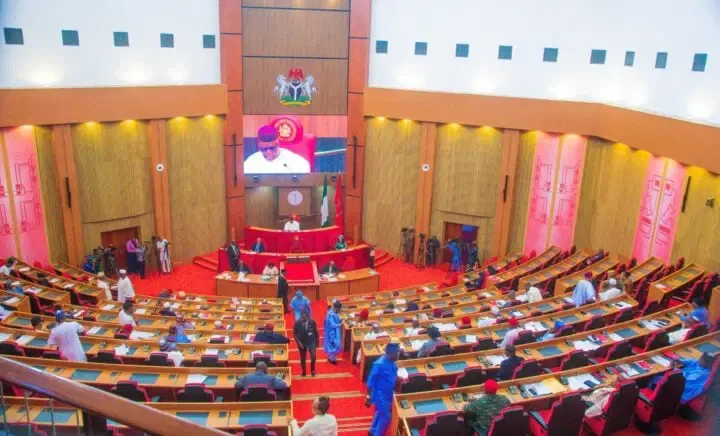
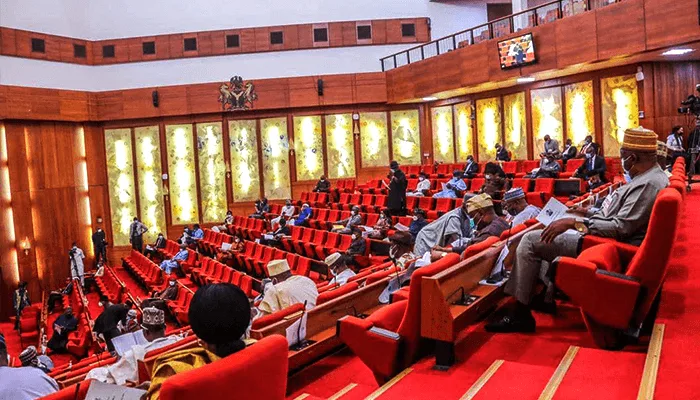
The Senate has passed a landmark constitutional amendment bill seeking to establish state police across Nigeria, marking a significant step in the country’s efforts to address growing security challenges. The proposed legislation, which provides a framework for state-controlled police services operating alongside the Nigeria Police Force, was approved after lawmakers considered and adopted all 26 […]
The Senate has passed a landmark constitutional amendment bill seeking to establish state police across Nigeria, marking a significant step in the country’s efforts to address growing security challenges.
The proposed legislation, which provides a framework for state-controlled police services operating alongside the Nigeria Police Force, was approved after lawmakers considered and adopted all 26 clauses of the bill.
Leading the debate, Senate Leader, Senator Opeyemi Bamidele, described the proposal as one of the most important constitutional reforms since Nigeria’s return to democratic rule, noting that the creation of state police would strengthen security architecture and improve community-based policing.
Senator Enyinnaya Abaribe of Abia South said the worsening security situation across the country had convinced him to support the establishment of state police despite his earlier opposition to the idea.
Abaribe, however, called for strong safeguards in the legislation that will operationalise the constitutional amendment, particularly on issues relating to funding and the relationship between federal and state police authorities.
Also contributing, Senator Aminu Tambuwal of Sokoto South backed the bill, describing state police as a critical step towards deepening federalism and improving responses to security challenges across the country.
Supporters of the legislation argue that the reform will improve local intelligence gathering, enhance community participation in policing, and strengthen responses to emerging security threats, while safeguards are expected to prevent political abuse of the proposed state police structure.
The constitutional amendment bill will now proceed to the State Houses of Assembly, where it must secure the approval of at least two-thirds of the 36 state legislatures before it can be transmitted to President Bola Tinubu for assent.
If approved by the required number of state assemblies and signed into law, the amendment will pave the way for the establishment of state police services across Nigeria, a reform that has long been advocated as a means of improving security and strengthening grassroots policing.
ADBN TV is a dynamic digital broadcasting platform committed to delivering credible news, inspiring stories, and engaging programmes that inform, educate, and connect communities across Nigeria and beyond.