European Union (EU) leaders held emergency talks on Sunday after United States President Donald Trump announced plans to impose a 10 per cent tariff on imports from several EU countries unless they agree to Washington’s push to buy Greenland. Trump said on Saturday that he would impose escalating tariffs on Denmark, Sweden, France, Germany, the […]
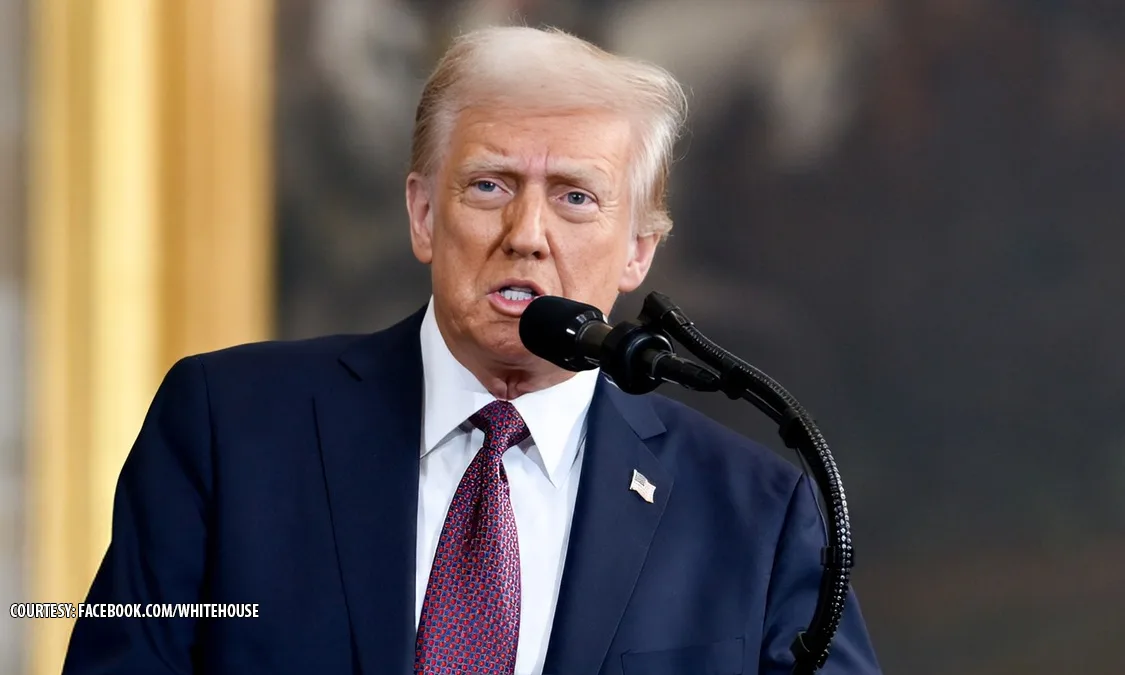
European Union (EU) leaders held emergency talks on Sunday after United States President Donald Trump announced plans to impose a 10 per cent tariff on imports from several EU countries unless they agree to Washington’s push to buy Greenland.
Trump said on Saturday that he would impose escalating tariffs on Denmark, Sweden, France, Germany, the Netherlands and Finland, as well as Britain and Norway, until the United States is allowed to purchase Greenland.
Cyprus, which currently holds the rotating six-month EU presidency, convened an urgent meeting of EU ambassadors in Brussels at 5 p.m. (1600 GMT) on Sunday, as leaders intensified diplomatic contacts in response to the threat.
Several major EU states described Trump’s tariff threats against European allies as blackmail. France proposed responding with a range of previously unused economic countermeasures, including the possible activation of the EU’s Anti-Coercion Instrument.
A source close to French President Emmanuel Macron said he was pushing for the use of the instrument, known as the “bazooka”, which could limit access to public tenders, investments or banking activity, or restrict trade in services where the United States runs a surplus with the EU, including digital services.
However, sources said EU member states agreed not to immediately deploy the anti-coercion instrument, opting instead to prioritise a diplomatic solution. An update on the outcome of the meeting is expected later on Monday, January 18.
EU countries are said to have backed off from triggering retaliatory measures during the emergency meeting, preferring dialogue with Washington. Nonetheless, they could revive a €93 billion retaliation package if Trump proceeds with the proposed tariffs on February 1.
The retaliation package, prepared last year amid uncertainty over a possible EU-US trade deal, includes tariffs of up to 30 per cent on a range of US products, from cars to poultry. A decision on whether to reinstate the suspended measures will be taken after the February deadline.
All eight European countries targeted by the proposed tariffs, already subject to existing US duties of between 10 and 15 per cent, have sent small numbers of military personnel to Greenland amid a growing dispute with Washington over the future of the Danish Arctic territory, according to Reuters.
In a joint statement issued on Sunday, the eight nations said tariff threats undermine transatlantic relations and risk triggering a dangerous downward spiral. They stressed that the Danish military exercise in Greenland was intended to strengthen Arctic security and posed no threat to any country.
Danish Prime Minister Mette Frederiksen welcomed the unified response from across Europe, stating that “Europe will not be blackmailed,” a position echoed by Germany’s finance minister and Sweden’s prime minister.
Dutch Foreign Minister David van Weel described Trump’s actions as blackmail, while European Council President António Costa announced plans to convene an extraordinary summit of EU leaders in the coming days, reportedly scheduled for Thursday, January 22.
German Social Democrat Bernd Lange, who chairs the European Parliament’s trade committee, and Valerie Hayer, head of the Renew Europe group, supported calls for a tougher stance. Germany’s engineering association also backed the push for stronger countermeasures.
Irish Prime Minister Micheál Martin said the EU would retaliate if necessary but cautioned that activating the anti-coercion instrument at this stage was premature. Italian Prime Minister Giorgia Meloni described the tariff threat as a mistake, saying she had spoken directly with Trump and intended to engage other European leaders.
Britain’s Culture Secretary Lisa Nandy said London favoured working with the United States to resolve the dispute, warning against escalating rhetoric.
The tariff threats have cast doubt on recently concluded trade deals between the United States and Britain, as well as the EU-US agreement reached in July. The European Parliament is now expected to suspend consideration of the EU-US trade deal, which had been scheduled for a vote later this month.
German lawmaker Juergen Hardt suggested that, as a last resort, Europe could consider a boycott of the football World Cup being hosted by the United States this year.
ADBN TV is a dynamic digital broadcasting platform committed to delivering credible news, inspiring stories, and engaging programmes that inform, educate, and connect communities across Nigeria and beyond.