The Nigerian Senate has endorsed an ambitious plan by the South East Development Commission (SEDC) to grow the region into a $200 billion economy within the next decade, while issuing a stern warning against mismanagement of public funds. The commission’s Managing Director, Mark Okoye, unveiled the blueprint during the agency’s 2026 budget defence before the […]
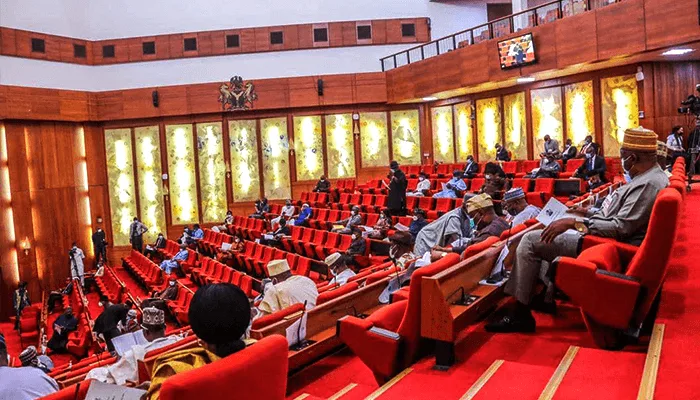
The Nigerian Senate has endorsed an ambitious plan by the South East Development Commission (SEDC) to grow the region into a $200 billion economy within the next decade, while issuing a stern warning against mismanagement of public funds.
The commission’s Managing Director, Mark Okoye, unveiled the blueprint during the agency’s 2026 budget defence before the Senate Committee on SEDC in Abuja. He sought legislative backing for a proposed N140 billion appropriation to power what he described as the commission’s “execution year.”
According to Okoye, the long-term strategy aims to position the South-east as Africa’s preferred investment destination, with projections to build a $200 billion regional economy in 10 years. The plan, he said, received broad political endorsement at the Southeast Vision 2050 forum, attended by governors from the five South-east states, the Vice President, ministers, and private sector stakeholders.
He disclosed that the commission had secured presidential approval to raise up to $150 billion in projected capital to fund transformative infrastructure and industrial projects across the zone. The SEDC also targets building a $1 billion balance sheet within eight years through a Southeast Investment Conference vehicle structured under a public-private partnership model.
For 2026, the commission proposed a N140 billion budget, with N108 billion allocated to capital projects, N23 billion for overheads, and N7.3 billion for personnel. Okoye described 2025 as largely foundational, noting that only N5 billion of the year’s allocation was released late in December, with about N957 million spent mainly on stakeholder engagement and investment promotion.
However, lawmakers insisted that the commission must focus on projects with direct impact on citizens, particularly in education, healthcare, and infrastructure.
Senator Tony Nwoye urged the agency to prioritise building and renovating schools and hospitals instead of spending heavily on conferences and seminars. Senator Patrick Ndubueze called for legacy projects such as a regional reference hospital.
Chairman of the committee, Orji Uzor Kalu, described the blueprint as “bankable” but warned that the Senate would be strict in its oversight responsibilities.
“I plead with you not to take this commission as a place for siphoning money. This commission is to work for our people,” Kalu cautioned, stressing that transparency and teamwork would be critical to the commission’s success.
With Senate backing now secured — albeit under close scrutiny — the SEDC faces mounting public expectations to convert its bold $200 billion vision into measurable projects capable of transforming the economic trajectory of Nigeria’s South-east region.
ADBN TV is a dynamic digital broadcasting platform committed to delivering credible news, inspiring stories, and engaging programmes that inform, educate, and connect communities across Nigeria and beyond.