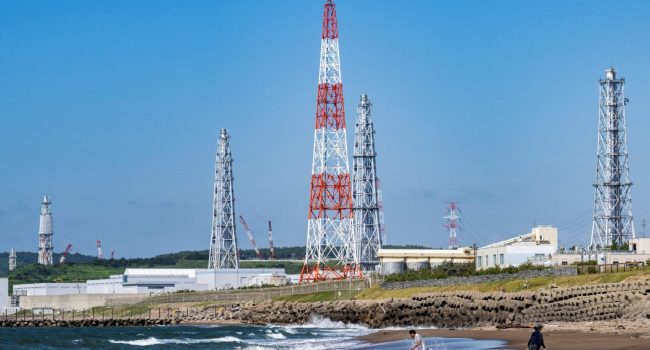
The restart of the world’s largest nuclear power plant has been suspended in Japan, with the operator saying it is unclear when the issue that prompted the halt will be resolved. The Kashiwazaki-Kariwa nuclear power station in Niigata Prefecture, which has remained offline since the 2011 Fukushima disaster, had begun restart operations on Wednesday after […]
The restart of the world’s largest nuclear power plant has been suspended in Japan, with the operator saying it is unclear when the issue that prompted the halt will be resolved.
The Kashiwazaki-Kariwa nuclear power station in Niigata Prefecture, which has remained offline since the 2011 Fukushima disaster, had begun restart operations on Wednesday after receiving final approval from the country’s nuclear regulator.
However, its operator, Tokyo Electric Power Company (TEPCO), announced on Thursday that an alarm sounded during reactor start-up procedures, forcing a suspension of operations.
“An alarm from the monitoring system sounded during the reactor startup procedures,” TEPCO said, adding that it does not yet know how long it will take to resolve the issue.
Site superintendent Takeyuki Inagaki told a news conference, “We don’t expect this to be solved within a day or two. There is no telling at the moment how long it will take. We will for now fully focus on trying to identify the cause of what happened.”
According to TEPCO spokesman Takashi Kobayashi, the alarm led the company to investigate malfunctioning electrical equipment. He said that once it became clear the problem would take time to address, control rods were reinserted into the reactor in a planned manner.
“The reactor is stable and there is no radioactive impact outside,” Kobayashi said.
Control rods are used to regulate nuclear chain reactions in a reactor, either accelerating them when withdrawn or slowing and stopping them when inserted deeper.
The restart had initially been scheduled for Tuesday but was delayed after a separate technical issue related to control rod removal was identified over the weekend. TEPCO said that issue was resolved on Sunday.
Kashiwazaki-Kariwa is the world’s biggest nuclear power plant by potential capacity, although only one of its seven reactors was being restarted. The facility was shut down after Japan suspended nuclear power operations nationwide following the 2011 earthquake and tsunami that triggered meltdowns at the Fukushima Daiichi plant.
Japan has since sought to revive nuclear energy to cut reliance on fossil fuels, achieve carbon neutrality by 2050, and meet rising energy demand, including from artificial intelligence technologies. Kashiwazaki-Kariwa is the first TEPCO-operated unit to attempt a restart since 2011. TEPCO also operates the Fukushima Daiichi plant, which is undergoing decommissioning.
Public opinion in Niigata remains divided. A survey conducted in September showed about 60 per cent of residents oppose the restart, while 37 per cent support it.
“It’s Tokyo’s electricity that is produced in Kashiwazaki, so why should the people here be put at risk? That makes no sense,” said Yumiko Abe, a 73-year-old resident, during a protest outside the plant earlier this week.
Earlier this month, seven groups opposing the restart submitted a petition signed by nearly 40,000 people to TEPCO and Japan’s Nuclear Regulation Authority, citing concerns that the plant is located on an active seismic fault zone and was hit by a strong earthquake in 2007.
ADBN TV is a dynamic digital broadcasting platform committed to delivering credible news, inspiring stories, and engaging programmes that inform, educate, and connect communities across Nigeria and beyond.