

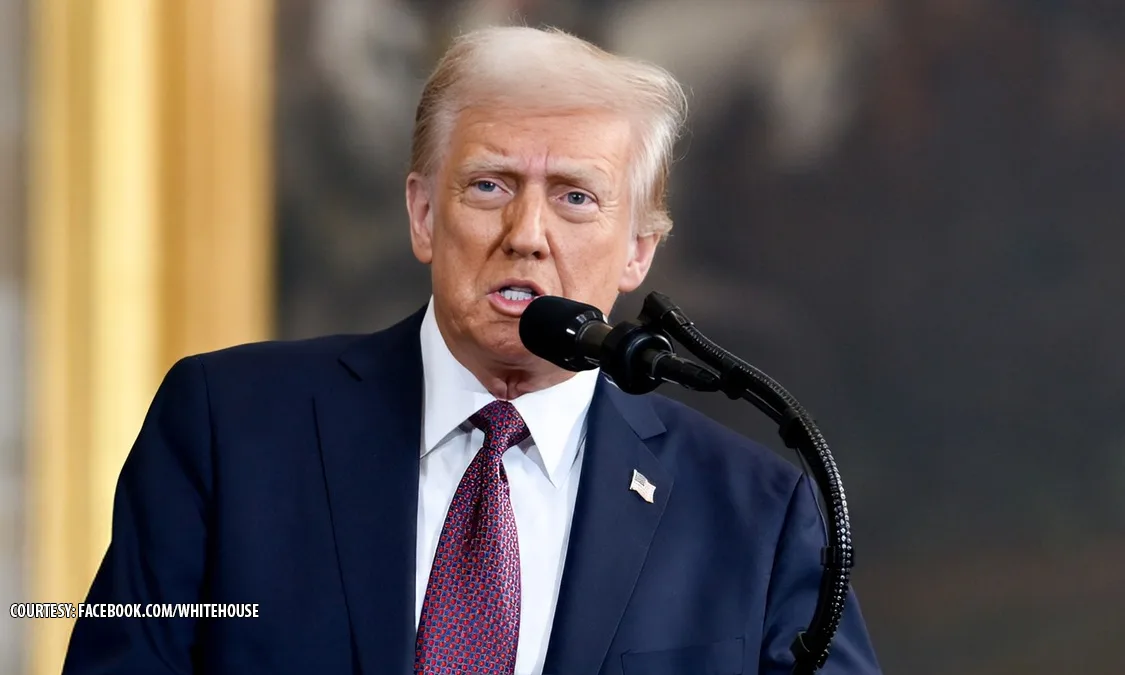


The administration of US President Donald Trump has introduced a fresh round of import tariffs ranging from 10% to 12.5% on goods from 60 trading partners, including the European Union and China, citing concerns over what it says is inadequate action against forced labour in global supply chains.
The new tariff regime came into effect at 12:01 a.m. EDT (0401 GMT) on Friday, immediately after a temporary 10% global tariff that had remained in place for 150 days expired. Products already in transit before the deadline will remain exempt until July 28.
According to a notice published in the Federal Register, the measures affect roughly 99.4% of US imports. However, several categories have been excluded, including oil and gas, fertilisers, selected food products, aircraft and aviation parts, critical minerals, and goods already covered by national security tariffs such as steel, aluminium, copper and automobiles.
The move represents another effort by the Trump administration to reintroduce broad-based tariffs after the US Supreme Court invalidated the president’s earlier reciprocal tariff policy in February, ruling that the emergency powers used to impose duties of between 10% and 50% exceeded presidential authority.
Unlike the previous policy, the latest tariffs are being implemented under Section 301 of the Trade Act of 1974, a legal framework that has historically survived judicial scrutiny and is expected to face fewer legal challenges.
Related Posts:



US Trade Representative Jamieson Greer defended the policy, describing it as both a human rights and trade enforcement measure.
Greer said the United States has maintained a ban on imports produced with forced labour for decades and believes other countries should adopt similar standards. He added that the new tariffs are intended to address unfair trade practices while protecting workers globally.
He also reassured countries that already negotiated tariff agreements with Washington that the additional duties would not push their total tariff rates above the ceilings agreed in those deals.
Under the revised tariff schedule, imports from Argentina, Bangladesh, Britain, Cambodia, Canada, Ecuador, El Salvador, Guatemala, Honduras, India, Indonesia, Jordan, Malaysia, Mexico, Pakistan, Sri Lanka and Trinidad and Tobago will attract a 10% tariff.
Meanwhile, the European Union, Japan, South Korea, Taiwan and Switzerland will face combined tariff rates of either 10% or 12.5% after existing most-favoured-nation duties are added.
Another 38 countries, including China and Vietnam, have been assigned a 12.5% tariff. While Vietnam recently strengthened its laws against goods produced with forced labour, China continues to reject US accusations regarding the treatment of Uyghur minorities.
US officials also disclosed that Washington plans to restore tariffs on Chinese products to the 20% level agreed during the November 2025 trade truce between President Trump and Chinese President Xi Jinping, but said they would not exceed that threshold.
The announcement has drawn criticism from several US trading partners.
European Union foreign policy chief Kaja Kallas questioned the rationale behind the tariffs, arguing that labour protections across Europe are stronger than those in the United States. She said the justification offered by Washington lacked merit.
Australia and Brazil also criticised the measures and pledged to seek their removal, while Norway insisted there was no valid basis for the tariffs.
Canada, which recently faced separate US tariffs on $20 billion worth of exports, adopted a more cautious approach. Trade Minister Dominic LeBlanc said Ottawa would continue constructive discussions with Washington on the issue and other outstanding trade matters.
Trade analysts believe the administration’s latest approach is less vulnerable to legal challenges than previous tariff policies.
Former White House trade adviser Kelly Ann Shaw said the policy largely maintains the status quo, although it broadens the exemption list by adding about 471 more products.
Former US Commerce Department official Ryan Majerus noted that Section 301 gives the administration significant authority to adjust tariffs after they have been imposed, making the legal framework considerably stronger.
A senior Trump administration official dismissed suggestions that the new duties simply replace the expired global tariff, insisting the measures specifically target countries whose enforcement against forced labour is considered inadequate.
The official argued that the United States maintains stricter restrictions on goods linked to forced labour than most countries and said lawmakers from both major political parties have consistently supported stronger efforts to eliminate forced labour from global supply chains.

