President Bola Ahmed Tinubu has issued an executive order stopping the deduction of management fees and contributions to the Frontier Exploration Fund by the Nigerian National Petroleum Company Limited (NNPC), effectively blocking revenue streams that generated about N2.076tn over four years. An analysis of monthly earnings submitted to the Federation Account Allocation Committee (FAAC) shows […]
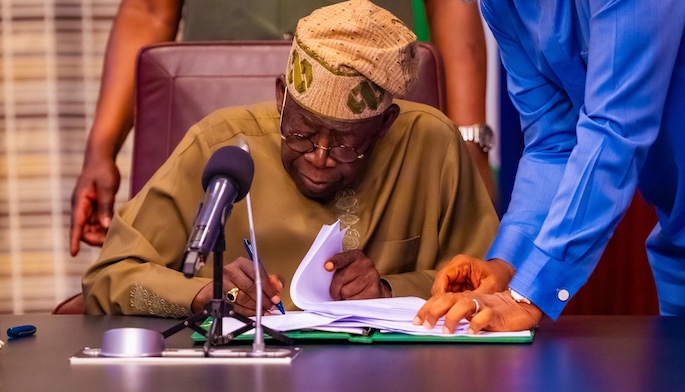
President Bola Ahmed Tinubu has issued an executive order stopping the deduction of management fees and contributions to the Frontier Exploration Fund by the Nigerian National Petroleum Company Limited (NNPC), effectively blocking revenue streams that generated about N2.076tn over four years.
An analysis of monthly earnings submitted to the Federation Account Allocation Committee (FAAC) shows that the national oil company received N20.739bn from such deductions in 2022, N695.9bn in 2023, N452.6bn in 2024, and N906.91bn in 2025. The total retained between 2022 and 2025 amounts to roughly N2.1tn.
The directive mandates that all oil and gas revenues due to the federation be remitted in full before any operational charges are applied, in line with constitutional fiscal provisions. It halts automatic deductions, including management fees and Frontier Exploration Fund allocations, requiring that earnings first be paid into the Federation Account.
The order has drawn mixed reactions.
State governments and fiscal transparency advocates have welcomed the move, arguing that it will increase distributable revenue, improve accountability, and address concerns over opaque deductions.
However, some industry stakeholders and legal analysts warn that the directive may create tensions between provisions of the Petroleum Industry Act (PIA) and constitutional fiscal rules. They caution that frontier exploration and joint venture funding structures were designed to drive reserve growth and operational efficiency, and that abrupt changes without alternative funding arrangements could affect investments and production.
Labour groups, including the Petroleum and Natural Gas Senior Staff Association of Nigeria, have called for clarity on implementation to ensure reforms do not disrupt production or job security. They also urged the government to establish a transparent funding framework for critical industry projects.
Data from FAAC submissions show significant volatility in the retained earnings over the four-year period. While deductions stood at N20.739bn in 2022, they rose sharply to N695.9bn in 2023, before dropping to N452.6bn in 2024 and surging again to N906.91bn in 2025.
In 2025 alone, N453.455bn was allocated each to management fees and the Frontier Exploration Fund. However, the frontier allocation fell short of the N710.520bn budgeted for the year, leaving a deficit of N257.066bn.
Monthly figures further highlight the fluctuations. For instance, in 2025, frontier deductions ranged from as low as N6.83bn in June to as high as N82.61bn in September, reflecting swings in production sharing contract profits.
Under existing arrangements, royalties and taxes from deepwater production sharing contracts are remitted to FAAC through crude oil lifting rather than direct cash payments. Industry sources say any change to this structure could create operational and financing uncertainties, particularly where crude-backed loans and investor agreements are involved.
The Frontier Exploration Fund, established under the PIA, supports hydrocarbon exploration in frontier basins such as Chad, Sokoto, Anambra, and Benue troughs.
Energy analysts note that the long-term impact of the directive will depend on how the government balances fiscal transparency with sustained oil and gas investment. A presidential implementation committee has been tasked with overseeing the effective rollout of the new remittance framework.
ADBN TV is a dynamic digital broadcasting platform committed to delivering credible news, inspiring stories, and engaging programmes that inform, educate, and connect communities across Nigeria and beyond.