Nigeria, Libya and Algeria collectively flared more than 25 billion cubic metres of gas in 2025, despite ongoing efforts to expand domestic gas utilisation and address energy shortages across the continent. This was revealed in the World Bank’s latest Global Gas Flaring Tracker, which showed that global gas flaring rose to a six-year high in […]
Share This Article:
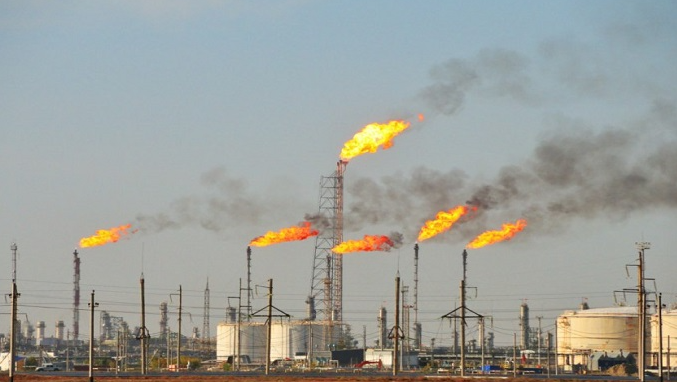
Nigeria, Libya and Algeria collectively flared more than 25 billion cubic metres of gas in 2025, despite ongoing efforts to expand domestic gas utilisation and address energy shortages across the continent.
This was revealed in the World Bank’s latest Global Gas Flaring Tracker, which showed that global gas flaring rose to a six-year high in 2025, driven largely by increases recorded in Russia and Iran.
According to the report, global gas flaring increased for the third consecutive year to 167 billion cubic metres, resulting in the waste of an estimated 54 billion dollars worth of gas.
The World Bank noted that Africa remains a region of persistent gas flaring, with Nigeria, Libya and Algeria accounting for a significant share of the continent’s total flared gas volumes.
In response, the Nigerian Upstream Petroleum Regulatory Commission, NUPRC, said its metered data showed that about 6.08 billion cubic metres of gas were flared in Nigeria during the period, slightly below the World Bank’s estimate of 6.6 billion cubic metres.
The commission attributed the difference to variations between satellite monitoring and on-site measurement methods.
NUPRC spokesperson, Eniola Akinkuotu, said the slight increase in gas flaring was linked to higher gas production levels, while reaffirming Nigeria’s commitment to ending routine gas flaring by 2030.
He added that the commission is implementing programmes aimed at commercialising gas currently lost through flaring.
The report identified Russia, Iran, Iraq, Venezuela, Mexico, Libya, Algeria and the United States among the countries responsible for more than four-fifths of global gas flaring, despite producing less than half of the world’s crude oil.
According to the World Bank, Russia, Iran and Iraq alone accounted for about 84 billion cubic metres of gas flared in 2025, representing nearly half of the global total.
The report highlighted weak infrastructure, limited gas markets, financing challenges and inconsistent regulatory enforcement as major factors slowing investments in gas capture and processing across several oil-producing countries.
World Bank Global Director for Energy, Demetrios Papathanasiou, said the economic cost of continued gas flaring remains too high, particularly at a time when many countries are seeking affordable and reliable energy sources.
The World Bank estimated that eliminating routine gas flaring globally would require investments of between 70 billion and 100 billion dollars.
The institution maintained that the technology and financing mechanisms needed to reduce flaring already exist, but stressed that stronger leadership, policy implementation and regulatory oversight are required to achieve meaningful progress.
ADBN TV is a dynamic digital broadcasting platform committed to delivering credible news, inspiring stories, and engaging programmes that inform, educate, and connect communities across Nigeria and beyond.