President Bola Tinubu has again stepped in to halt the deepening political crisis in Rivers State, ordering the immediate suspension of impeachment moves against Governor Siminalayi Fubara while directing the governor to formally recognise his predecessor, Nyesom Wike, as the undisputed political leader in the state. The intervention follows months of failed reconciliation efforts that […]
Share This Article:
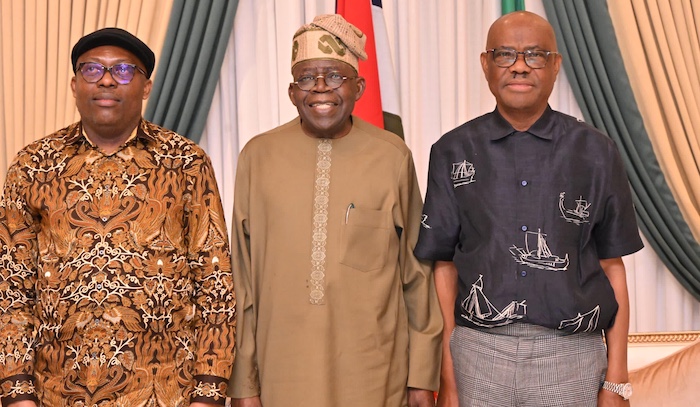
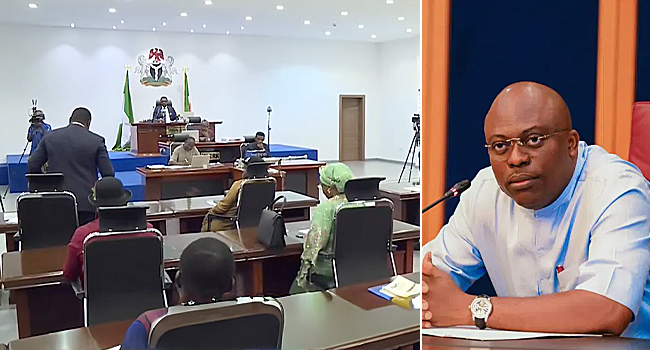
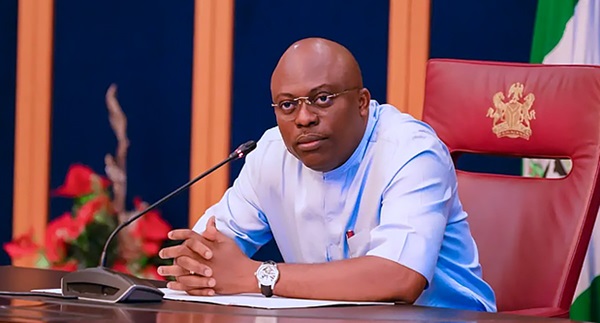
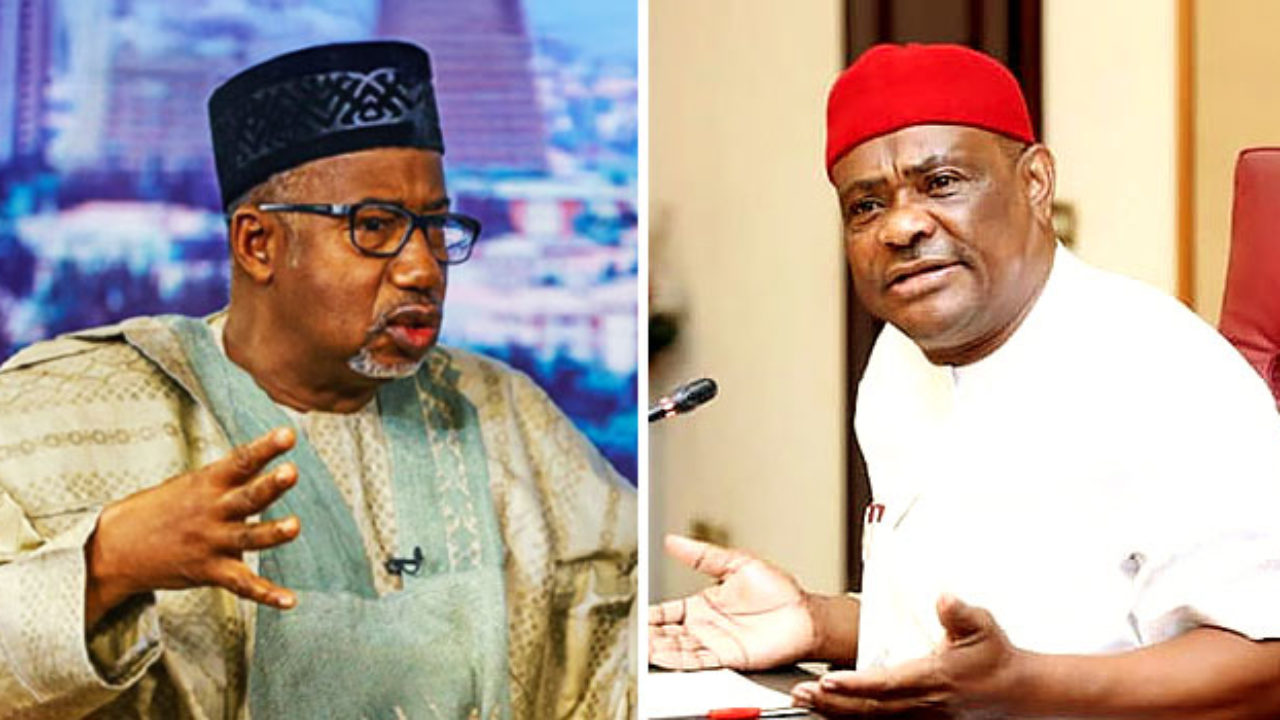
President Bola Tinubu has again stepped in to halt the deepening political crisis in Rivers State, ordering the immediate suspension of impeachment moves against Governor Siminalayi Fubara while directing the governor to formally recognise his predecessor, Nyesom Wike, as the undisputed political leader in the state.
The intervention follows months of failed reconciliation efforts that had pushed Rivers State to the brink of political collapse, marked by legislative paralysis, persistent impeachment threats and prolonged instability.
Tinubu’s latest peace effort came just days before his departure for an official visit to Türkiye on January 26, following growing concerns that the feud between Fubara and Wike was becoming one of the most combustible political crises in the country ahead of the 2027 general elections.
Highly placed sources familiar with the intervention said the president laid down firm political conditions aimed at restoring stability in the oil-producing state, which is regarded as strategically important to Tinubu’s re-election calculations.
According to the sources, Tinubu ordered an immediate halt to all impeachment-related actions against Fubara but made it clear that the directive came with strict obligations for the governor.
The president reportedly told Fubara in clear terms that Wike remains the undisputed political leader in Rivers State, regardless of party affiliations, and must be accorded full recognition and respect in that capacity.
Tinubu was said to be visibly displeased that the crisis had persisted despite his earlier intervention in December 2023, when he brokered a fragile peace that later collapsed, eventually leading to the declaration of a six-month state of emergency in Rivers State on March 18, 2025, and the suspension of the governor.
Sources said the president warned that continued hostilities between both camps would further undermine governance and threaten stability in the state, a situation he was not prepared to tolerate.
As part of the settlement, Tinubu directed Wike and his supporters to immediately back off from any impeachment plot and allow Fubara to govern without legislative sabotage.
In return, Fubara was instructed to make major political concessions, including the formal recognition of Wike as the political leader of Rivers State with final authority over party affairs.
Sources said Tinubu stressed that all internal party disputes in the state must ultimately defer to Wike, regardless of whether the platform involved is the All Progressives Congress or the Peoples Democratic Party.
The feud between Fubara and Wike has simmered since shortly after Fubara’s inauguration in May 2023. Wike, who personally engineered Fubara’s emergence as governor, is widely believed to have sought to retain firm control over the political machinery of the state from Abuja, where he now serves as Minister of the Federal Capital Territory.
Fubara, however, gradually attempted to assert his independence, triggering sharp divisions within the state’s political class. Most members of the Rivers State House of Assembly openly aligned with Wike, leading to repeated impeachment threats against the governor.
Several reconciliation efforts failed to yield lasting peace, with one breakdown culminating in the declaration of emergency rule in the state, which lasted six months.
While Wike’s camp has consistently accused Fubara of betrayal and political ingratitude, allies of the governor argue that Rivers State cannot be governed remotely by a former governor now serving as a federal minister.
In explaining his position, Tinubu was said to have drawn parallels with Lagos State politics, questioning whether sitting governors automatically become political leaders over their predecessors.
“Is Babajide Sanwo-Olu my leader in Lagos, or was Babatunde Fashola my leader when he was governor?” the president was quoted as saying by one of the sources.
Tinubu reportedly emphasised respect for political seniority, describing Wike as an elder statesman in Rivers politics whose influence could not be wished away because of personal disagreements.
The agreement also extended to the forthcoming Rivers State House of Assembly bye-elections. The president reportedly directed that candidates loyal to Wike should be recognised by the APC leadership for the two vacant assembly seats.
Sources said it was explicitly stated that Wike has two preferred candidates for the by-elections and that those candidates are to be recognised by the party structure.
The Independent National Electoral Commission has fixed February 21, 2026 for the by-elections into the Ahoada East II and Khana II State Constituencies.
The Ahoada East II seat became vacant following the resignation of its former occupant, Edison Ehie, who was appointed Chief of Staff to Governor Fubara, while the Khana II seat has remained vacant since the death of its lawmaker, Dinebari Loolo, in September 2023.
The sensitive issue of Fubara’s second-term ambition was also reportedly raised during the discussions but was deliberately set aside. Sources said Tinubu described any conversation about the 2027 governorship contest in Rivers State as premature.
With Tinubu’s intervention, political observers say the fragile peace now hinges on the willingness of both camps to honour the terms of the agreement and prioritise stability over rivalry in one of Nigeria’s most politically volatile states.
ADBN TV is a dynamic digital broadcasting platform committed to delivering credible news, inspiring stories, and engaging programmes that inform, educate, and connect communities across Nigeria and beyond.