

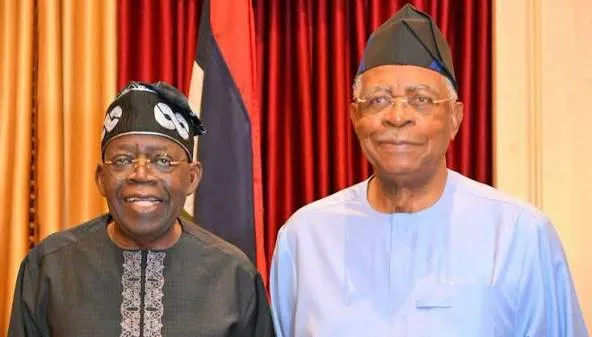
Former Minister of Defence, General Theophilus Yakubu Danjuma, has endorsed President Bola Tinubu’s re-election bid, introducing a new dimension to the political contest for Christian voters across the Middle Belt and parts of Northern Nigeria ahead of the 2027 presidential election.
Danjuma’s endorsement is considered significant because of his influence among sections of the Christian community and political leadership in states including Taraba, Adamawa, Plateau, Benue and Kaduna.
According to sources, his position is based on the argument that since the North had eight years under former President Muhammadu Buhari, the South should also be allowed to complete two terms under Tinubu to promote national unity and cohesion.
Danjuma, who has long supported Christian causes in Northern Nigeria, is believed to have considerable influence in parts of the North-East and North-Central.
However, questions remain about whether his endorsement can translate into votes, particularly in communities still dealing with killings, displacement and insecurity.
Related Posts:



The endorsement became public over the weekend during the 20th anniversary celebration of the Adamawa State Government House Chapel in Yola, where Danjuma appealed for support for Tinubu’s re-election rather than that of former Vice-President Atiku Abubakar.
Represented by former Chief of Army Staff, General Ishaya Bamaiyi, Danjuma argued that the Tinubu administration had demonstrated some level of inclusiveness through the appointment of Christians into important government positions, despite the controversy surrounding the APC’s Muslim-Muslim ticket in 2023.
He also donated 250 million naira towards the expansion of the Government House Chapel and the provision of residential accommodation for its chaplain and deputy chaplain.
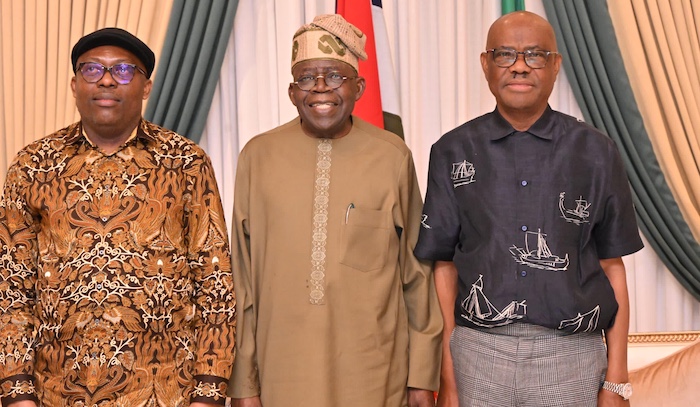
The declaration followed Danjuma’s participation in a delegation that met President Tinubu at the Presidential Villa in Abuja on November 5.
The delegation included Plateau State Governor Caleb Mutfwang, Taraba State Governor Agbu Kefas, former Speaker of the House of Representatives Yakubu Dogara, Minister of Defence Christopher Musa and APC National Chairman Nentawe Yilwatda.
After the meeting, Dogara said the delegation had come to demonstrate solidarity with the President and discuss political cooperation, security and support mobilisation ahead of the election.
Danjuma’s influence is rooted in his military background, relationships with political leaders, philanthropic activities and standing among sections of the Middle Belt community. However, his endorsement does not automatically guarantee electoral support across the region.
The 2023 presidential election results highlight both the opportunity and the challenge facing Tinubu.
In Plateau State, Labour Party candidate Peter Obi secured 466,272 votes, defeating Tinubu, who polled 307,195. Atiku received 243,808 votes.
In Benue, Tinubu narrowly defeated Obi with 310,468 votes against 308,372, a difference of just 2,096 votes. Atiku secured 130,081 votes.
Obi also won Nasarawa State with 191,361 votes, ahead of Tinubu’s 172,922 and Atiku’s 147,093.
Taraba State presents another important battleground. Atiku won the state in 2023 with 189,017 votes, followed by Obi with 146,315 and Tinubu with 135,165.
However, the political situation has changed since then, following Governor Agbu Kefas’s defection from the PDP to the APC in December 2025. His political structure, alongside Danjuma’s influence, could strengthen Tinubu’s position in the state.
In Adamawa, Atiku secured 417,611 votes in 2023, significantly ahead of Tinubu’s 182,881 and Obi’s 105,648. Danjuma’s appeal for Tinubu’s re-election in Atiku’s home state could introduce fresh political competition, although Atiku retains an established political network there.
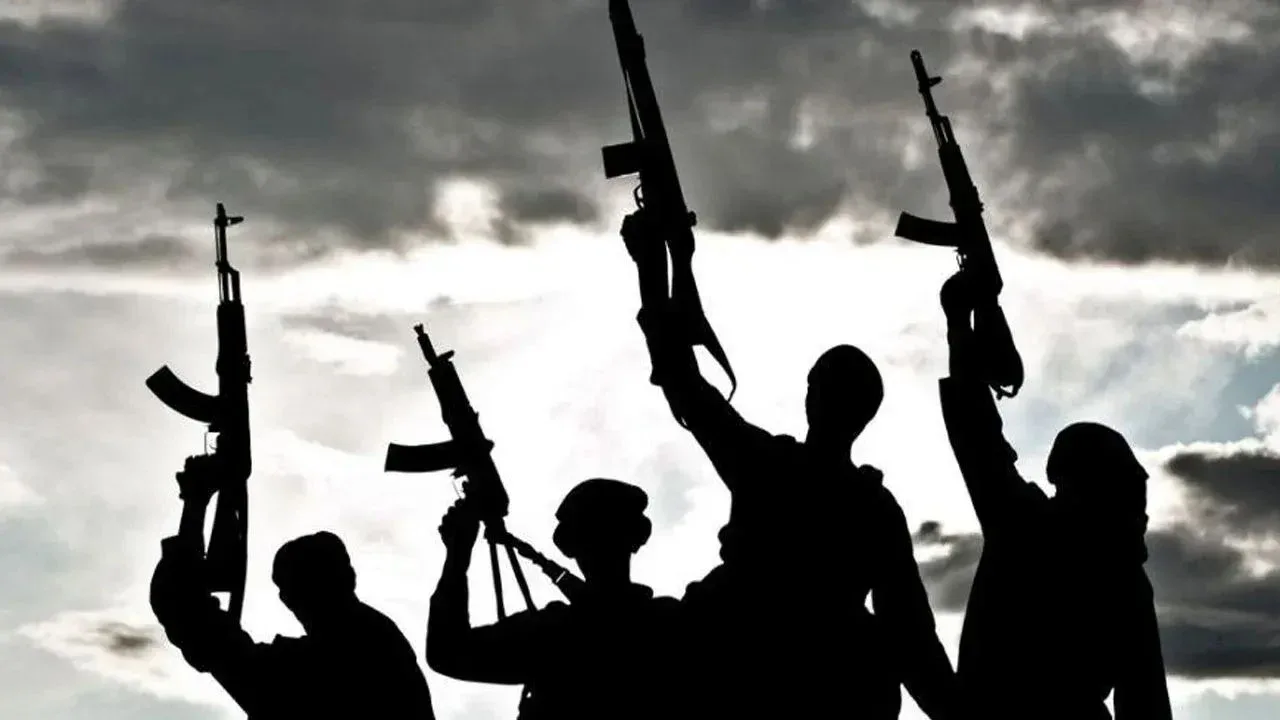
Security concerns remain a major factor in Plateau, Benue and parts of Kaduna, where communities have experienced repeated attacks, displacement and destruction of livelihoods.
The June 2025 attack on Yelewata in Benue State, where more than 100 people were reportedly killed, and other deadly incidents in Plateau have reinforced concerns about the protection of vulnerable communities.
In Benue, Governor Hyacinth Alia’s membership of the APC gives the ruling party an advantage, but the narrow margin in Tinubu’s 2023 victory shows that the state remains politically competitive.
Plateau has also witnessed a political shift following Governor Caleb Mutfwang’s defection from the PDP to the APC in January 2026. The presence of Mutfwang and APC National Chairman Nentawe Yilwatda could strengthen the party’s political structures in the state.
However, the defection of political leaders does not necessarily mean that their supporters will automatically follow them.
In Kaduna, Atiku won the 2023 election with 554,360 votes, against Tinubu’s 399,293, while Obi secured 294,494 votes. Southern Kaduna, where insecurity and questions of representation remain important political issues, could also influence the contest.
Danjuma’s endorsement has also brought renewed attention to the controversy surrounding the APC’s Muslim-Muslim presidential ticket in 2023.
His argument is that the appointment of Christians into important government positions demonstrates inclusiveness beyond the religious composition of the presidential ticket.
However, political representation may not be enough to address concerns in communities affected by insecurity. For many residents, the more pressing issues remain protection from attacks, justice for victims and the safe return of displaced families.
The political landscape has also changed with the emergence of new party arrangements ahead of 2027. Atiku is contesting on the ADC platform, with former Rivers State Governor Rotimi Amaechi as his running mate, while Obi is running on the NDC platform with former Kano State Governor Rabiu Musa Kwankwaso.
The new alignments could affect the distribution of opposition votes across the region, particularly in states where Obi and Atiku performed strongly in 2023.
Danjuma’s endorsement could help Tinubu attract support from sections of the Christian Middle Belt and strengthen the APC’s political reach. However, the extent of its electoral impact will depend on how voters assess the administration’s performance, particularly on security, economic conditions and governance.