

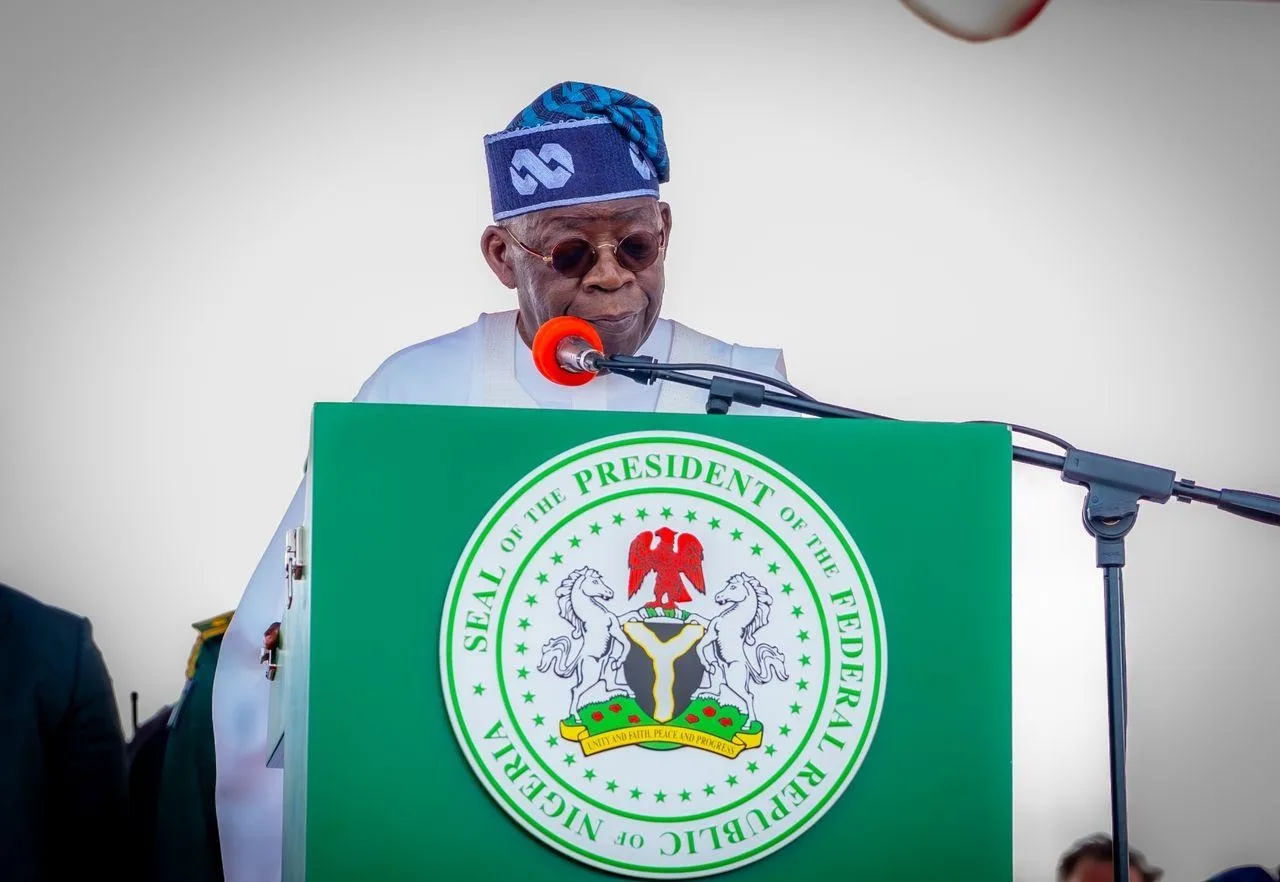
President Bola Tinubu is reportedly considering expanding his planned presidential campaign tour from 12 states to all 36 states of the federation as opposition candidates intensify efforts ahead of the January 16, 2027 presidential election.
The possible adjustment comes amid growing political activity in northern Nigeria, where former Vice President Atiku Abubakar, the African Democratic Congress (ADC) presidential candidate, has stepped up his campaign engagements.
Tinubu secured approximately 5.5 million votes from the 19 northern states in the 2023 presidential election, representing about 62.6 per cent of his total 8.79 million votes. Atiku received 6.98 million votes nationwide, while Peter Obi polled 6.1 million.
The figures highlight the importance of northern support to Tinubu’s 2023 victory and the political significance of retaining that support in the next election.
Atiku’s campaign opening in Sokoto on November 4 attracted a large gathering of supporters, which the ADC described as evidence of growing dissatisfaction with the Tinubu administration. The party has also made the rising cost of living and insecurity central to its campaign message.
Related Posts:

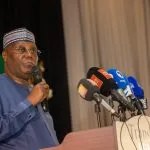
Although the size of a political rally does not necessarily translate into electoral support, Atiku’s reception has drawn attention to the competition for northern votes.
Tinubu has also made campaign appearances outside his original 12-state itinerary. He attended a rally in Akwa Ibom on November 6 before proceeding to Rivers State on November 7. He is also scheduled to visit Jigawa for an APC rally and the inauguration of four development projects, with a visit to Ibadan expected in the coming days.
The North-west Political Battle
The North-west is emerging as a major focus of the political contest, with seven states: Kano, Kaduna, Katsina, Jigawa, Kebbi, Sokoto and Zamfara.
In 2023, Tinubu secured approximately 2.65 million votes in the zone, compared with Atiku’s 2.33 million. However, Atiku won Kaduna, Katsina, Kebbi and Sokoto, while Tinubu won Jigawa and Zamfara. Rabiu Kwankwaso won Kano with 997,279 votes.
Some of the contests were particularly close. Atiku defeated Tinubu in Katsina by 6,762 votes and in Sokoto by just 3,235 votes. He also won Kebbi by more than 37,000 votes.
Tinubu’s campaign team is therefore expected to focus on consolidating support in states where APC won in 2023 while seeking to regain ground in those won by the opposition.
The ruling party currently controls all seven North-west state governments following a series of political defections, including those of Kano Governor Abba Kabir Yusuf and Zamfara Governor Dauda Lawal.
However, control of state governments does not automatically translate into voter support, as the 2023 results showed that voters in several states did not necessarily follow the political affiliations of their governors.
Kano And The Kwankwaso Factor
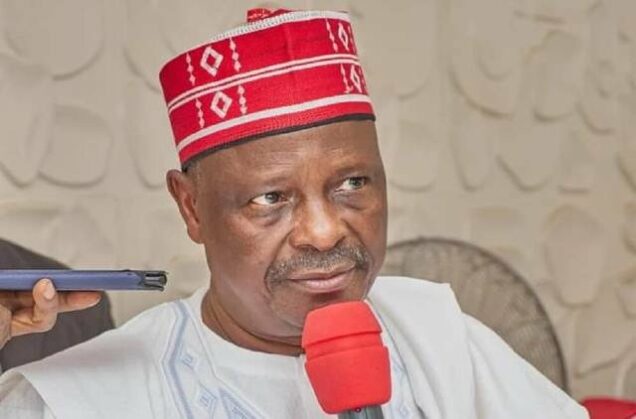
Kano presents a separate challenge, with Kwankwaso retaining significant political influence despite Governor Yusuf’s defection from the New Nigeria Peoples Party to APC in January.
Kwankwaso is now running as Peter Obi’s running mate on the Nigeria Democratic Congress ticket, potentially introducing another dimension to the contest for northern votes.
Tinubu secured 517,341 votes in Kano in 2023, while Atiku received 131,716. Kwankwaso’s 997,279 votes made him the leading candidate in the state.
The extent to which the governor can retain or transfer the former NNPP political structure to APC, and how much of Kwankwaso’s support remains with him, could shape the political contest in the state.
Challenges Beyond The North-west
Tinubu also faces competition in the North-east, where Atiku secured approximately 1.74 million votes in 2023, compared with Tinubu’s 1.18 million.
Atiku won Adamawa, Bauchi, Gombe, Taraba and Yobe, while Tinubu won Borno, the home state of his running mate, Vice President Kashim Shettima.
The North-central and other regions are also expected to feature prominently as the major political parties seek to expand their support bases.
Economic hardship and insecurity remain important issues in the northern campaign. Rising food and transportation costs, disruptions to farming activities, banditry and kidnapping have featured prominently in public concerns.
The Tinubu administration has defended its economic reforms, including fuel subsidy removal and foreign exchange reforms, as necessary steps towards stabilising the economy. However, the opposition has continued to criticise the impact of the policies on household incomes and living conditions.
Opposition Challenges And APC Strategy
Atiku’s growing visibility in the North is part of a wider opposition effort involving Peter Obi and Oyo State Governor Seyi Makinde, who are also identified in the report as potential challenges to Tinubu’s re-election bid.
However, the opposition faces its own challenges, including political fragmentation and competition for the same voter base.
Atiku must seek to consolidate his northern support while expanding his appeal beyond the region. Obi and Kwankwaso’s joint ticket could also influence voting patterns, particularly in Kano and parts of the Middle Belt.
For APC, the challenge is to maintain the political coalition that delivered victory in 2023 while addressing public concerns over economic conditions and insecurity.
Tinubu’s original campaign itinerary included Kaduna, Rivers, Plateau, Oyo, Borno, Enugu, Bauchi, Sokoto, Delta, Kano, Adamawa and Lagos. The broader APC campaign programme is expected to cover all 36 states and the Federal Capital Territory, with governors and party leaders handling rallies outside the president’s personal schedule.
There has been no formal announcement confirming an expansion of Tinubu’s personal campaign tour to all 36 states. However, his recent appearances outside the original itinerary have raised the possibility of further adjustments.
As the 2027 campaign gathers momentum, the competition is increasingly centred on the economic record of the current administration, security concerns, regional political alliances and the ability of the major candidates to mobilise voters across the country.