




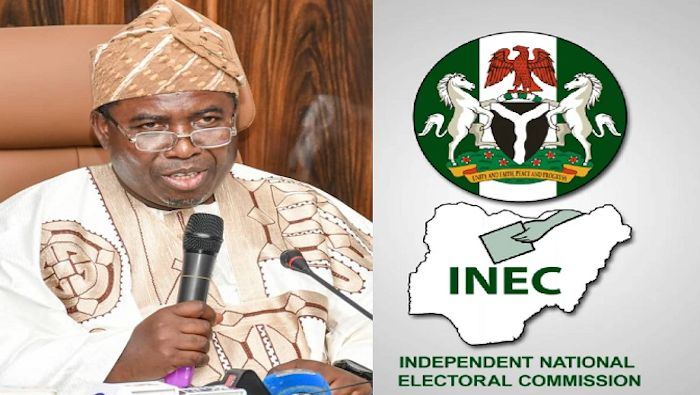
The Independent National Electoral Commission (INEC) has announced plans to release a revised timetable for the 2027 general election following the enactment of the Electoral Act 2026.
INEC Chairman, Joash Amupitan, disclosed this on Wednesday in Abuja during a meeting with Resident Electoral Commissioners (RECs) and the swearing-in of a new REC for Abia State.
According to him, the earlier Notice of Election issued on February 13, 2026, was made under the old Electoral Act.
“I must not fail to inform you that we now have a new Electoral Act, 2026. We had on 13th February 2026 issued a Notice of Election before the new act was enacted. The notice was issued under the old law. With the introduction of the new Electoral Act, we have to make some adjustments and issue a revised timetable for the 2027 general election,” he said.
Amupitan revealed that the commission is reviewing its transport logistics model ahead of 2027. He explained that during the recent Federal Capital Territory (FCT) Area Council election, only 45 per cent of polling units opened by 8:30am, though full coverage was achieved by 10:00am.
Related Posts:



He stated that staff members responsible for logistics shortfalls in Kuje Area Council and Kabusa Ward in Abuja Municipal Area Council (AMAC) had been identified and would be queried. Transporters linked to delays in Kwali Area Council would also be blacklisted.
The INEC chairman noted that the FCT election and the state constituency elections in Kano and Rivers provided both reassuring and sobering lessons for the commission.
On allegations of “voter migration” in the FCT, Amupitan clarified that no voter was migrated in 2026. He explained that the redistribution of voters occurred in 2022 following the creation of over 56,000 additional polling units nationwide, increasing the total from 119,972 to over 176,000.
To populate the newly created polling units, about 6.7 million voters were redistributed from approximately 12,000 congested units to 17,000 less congested ones across the country.
In the FCT alone, 411 polling units were decongested, and about 580,000 voters were redistributed to 1,156 polling units.
He said some voters still experienced difficulties locating their polling units despite text messages, emails, and voter register displays, stressing that voter education must be continuous and not episodic.
Amupitan also addressed concerns over result management, describing collation as the most vulnerable stage of the electoral process. He said safeguards had been added to the BVAS system to prevent manipulation of results uploaded to the INEC Result Viewing Portal (IReV).
He explained that presiding officers are required to capture and upload Form EC8A to IReV and enter party scores directly into the BVAS device. The system automatically flags over-voting and prevents finalisation if total votes exceed accredited voters.
Using the example of the Kuroko Health Centre polling unit in Yangoji Ward, Kwali Area Council, where a viral result alleged 1,219 votes for a party despite 345 registered voters and 213 accredited voters, Amupitan said an investigation revealed a clerical error by the presiding officer during manual correction of figures.
He said the correct result was later entered at the ward collation level and that the FCT REC issued a press release clarifying the matter.
While acknowledging that no election is perfect, the INEC chairman stressed that the commission would no longer tolerate absenteeism, lateness, or dereliction of duty by staff.
He added that the upcoming governorship elections in Ekiti and Osun would test INEC’s readiness ahead of the more complex 2027 general election.
Amupitan said the commission would soon begin a thorough clean-up to sanitise and strengthen the integrity of the voter register in preparation for 2027, emphasising that credibility is built on performance, transparency, and public trust.