




The Federal Government has announced that its five-year strategic defence operations plan is ready, as part of efforts to strengthen Nigeria’s security architecture and tackle terrorism, banditry, kidnapping and other security threats.
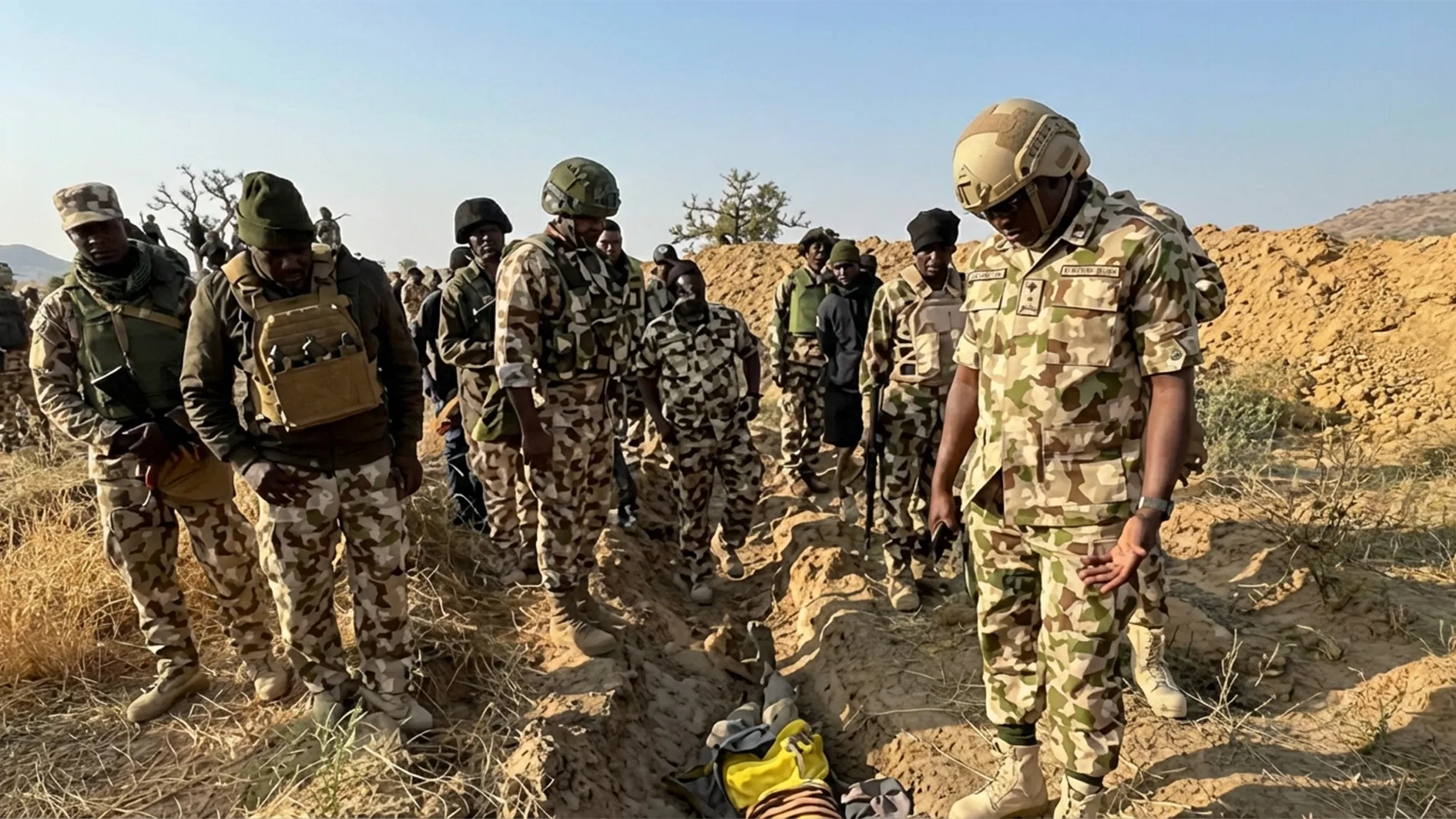
The government also claims that military operations over the past three years have eliminated more than 15,000 Boko Haram terrorists and bandits across the country.
It further disclosed that more than 130,000 Boko Haram fighters and their dependents had surrendered through Operation Safe Corridor, the government’s rehabilitation programme for repentant insurgents.
The figures and details of the security plan were contained in a statement issued on Sunday by the spokesperson of the All Progressives Congress Presidential Campaign Council, Dele Alake.
According to Alake, the five-year plan is designed to align defence priorities, military capabilities, operational requirements and expenditure with Nigeria’s current and anticipated security challenges.
Related Posts:




He said the framework would promote a more coordinated approach to national defence, with greater emphasis on intelligence, technology, surveillance and prevention.
Alake said President Bola Tinubu was determined to end the 17-year security crisis through sustained military operations and non-military interventions.
As part of efforts to expand military capacity, the administration said it had established four new Army divisions and restructured existing formations to improve operational coverage and response to security threats.
The President has also approved two additional Army depots in Osogbo, Osun State, and Amasiri-Edda, Ebonyi State, to increase the training of new soldiers. Each facility has a capacity of 6,000 recruits, bringing their combined capacity to 12,000.
Alake disclosed that 5,210 recruits were currently undergoing training at the Osogbo depot, adding that the expansion would reduce training time and increase the number of soldiers available for deployment.
He also said Tinubu had approved the recruitment of 28,000 additional soldiers and 50,000 police officers to strengthen military operations and internal security.
Beyond manpower expansion, the administration said it was investing in military accommodation and operational infrastructure to improve personnel welfare and effectiveness.
One of the projects highlighted is a 700-unit military barracks in Ikere-Ekiti, Ekiti State, designed to provide accommodation and supporting facilities for military personnel.
The government said defence investments under the five-year plan would be guided by identified threats, operational needs and national priorities, with the aim of improving combat readiness, addressing capability gaps and reducing wasteful spending.
Nigeria has battled the Boko Haram insurgency for more than a decade, particularly in the North-East, where the conflict has caused widespread deaths and displacement. Banditry and kidnapping have also continued to place pressure on security operations across several parts of the country.