Home Blog Page 7

Super Eagles To Miss 2026 World Cup As FIFA Confirms DR Congo For Play-Offs

0

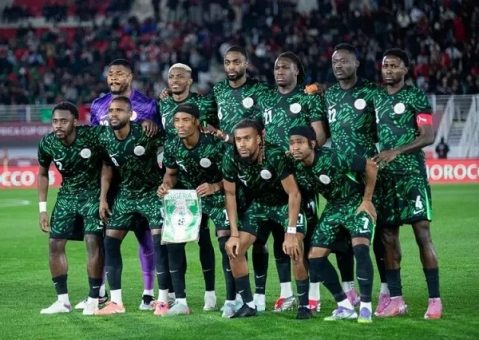
Nigeria’s national football team, the Super Eagles, will not participate in the 2026 FIFA World Cup after the world football governing body confirmed DR Congo as Africa’s representative in the intercontinental play-off tournament.

The 2026 FIFA World Cup will be jointly hosted by the United States, Canada and Mexico.

Nigeria had earlier hoped to revive its qualification chances after submitting a formal complaint to FIFA, alleging that DR Congo fielded ineligible players during their penalty shootout victory over the Super Eagles in the continental play-off final. The complaint sparked months of uncertainty surrounding the final qualification outcome.

However, FIFA has now settled the issue. In an official tournament notice, the football body listed DR Congo among the six countries that will compete in the intercontinental play-off tournament for the final two available slots at the expanded 2026 World Cup.

According to FIFA, the play-off tournament will feature six teams battling for the remaining two qualification places.

The teams confirmed for the tournament include Bolivia, DR Congo, Iraq, Jamaica, New Caledonia and Suriname.

The play-off matches are scheduled to take place from March 26 to March 31, 2026, in the Mexican cities of Guadalajara and Monterrey.

Nigeria’s absence represents a major setback for the three-time African champions. It will also mark the first time since their World Cup debut in 1994 that the Super Eagles have failed to qualify for two consecutive tournaments, having also missed the 2022 FIFA World Cup in Qatar.

Tinubu Suspends Cashless Payment System at Federal Airports

President Bola Ahmed Tinubu has ordered the immediate suspension of the cashless payment system recently introduced at Nigeria’s federal airports.

The directive was announced after the Federal Executive Council (FEC) meeting by the Minister of Aviation and Aerospace Development, Festus Keyamo.

According to the minister, the president took the decision after observing that the new system was causing serious congestion at airport gates, leading many Nigerians to miss their flights.

Keyamo explained that the president acted out of concern for travellers.

“The President directed that the present system be suspended because it created a lot of gridlock and Nigerians were suffering.”

Return to the Old System

Tinubu instructed the aviation ministry to return to the previous payment method temporarily while authorities review and improve the new system before reintroducing it.

The cashless initiative was introduced by the Federal Airports Authority of Nigeria (FAAN) as part of efforts to modernise airport operations and reduce physical cash transactions.

The ‘Go Cashless Card’ System

FAAN had earlier announced that beginning March 1, 2026, all payments at airport entry points would be made through the “Go Cashless Card” system.

The system was designed to provide:

  • Faster transactions
  • Contactless payments
  • Improved security
  • Reduced cash handling

However, the rollout encountered major challenges.

Despite earlier public announcements, many motorists attempted to register for the cards directly at the airport gates, causing long queues and heavy traffic at toll lanes.

FAAN acknowledged the issue and said it had deployed more personnel and created additional registration points to ease the congestion.

What Happens Next

With the presidential directive now in effect, the cashless system will be temporarily halted while authorities review the implementation process and address the operational issues.

The government says the system may be reintroduced later once it works smoothly without disrupting airport operations.

Israel, Iran Exchange Fresh Attacks as War Expands Across the Middle East

The conflict between Israel and Iran intensified on Thursday as new strikes spread across several parts of the Middle East, raising fears of a broader regional war.

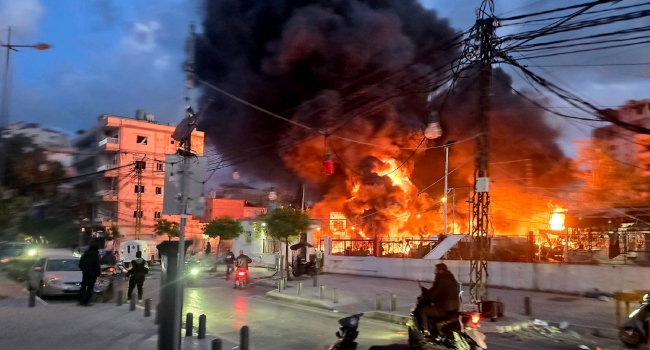
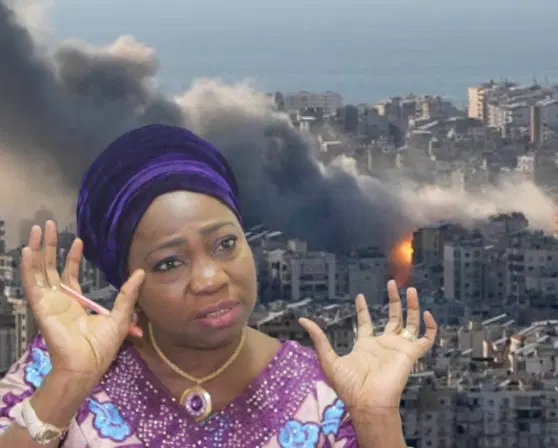
Israel launched fresh bombardments on Lebanon, including a pre-dawn airstrike on a suburb of Beirut known as a stronghold of Hezbollah. The Iran-backed group has vowed to retaliate following the killing of Iran’s supreme leader, Ali Khamenei, at the beginning of the war last Saturday.

At the same time, Israel said it intercepted a new barrage of missiles launched by Iran, despite earlier claims by the United States that Iranian military capabilities had been severely weakened.

Strait of Hormuz Tensions

Iran’s elite Islamic Revolutionary Guard Corps (IRGC) announced it had effectively shut down the Strait of Hormuz, a strategic waterway through which about one-fifth of the world’s oil supply normally passes.

Energy intelligence firm Kpler reported that oil tanker traffic through the strait has dropped by roughly 90 percent since the escalation began.

Meanwhile, Britain’s maritime authorities reported a large explosion near Kuwait City, with oil spilling into Gulf waters.

Iraq and Regional Fallout

The war’s ripple effects were also felt in Iraq, where the country experienced a nationwide electricity blackout. Officials blamed a sudden drop in gas supply to a key power plant, though it was not immediately confirmed whether the outage was directly linked to the conflict.

Iran also launched a strike in the Kurdish region of Iraq, reportedly killing a member of an Iranian Kurdish opposition group.

US Sinks Iranian Warship

In a major escalation, the United States confirmed that one of its submarines sank the Iranian frigate IRIS Dena off the coast of Sri Lanka. The vessel had been on a friendly visit to India before the attack.

US Defence Secretary Pete Hegseth described the operation as a “quiet death,” saying Washington was determined to win the conflict.

Sri Lankan officials said at least 87 people were killed in the strike, with dozens still missing.

Missile Incident Near Turkey

A missile fired from Iran was intercepted by NATO air defences while heading toward the airspace of Turkey. Turkish authorities said the missile had actually been aimed at a British military base in Cyprus but had veered off course.

Turkey summoned Iran’s ambassador, warning against actions that could widen the war.

Impact Across the Gulf

Several Gulf states, including Saudi Arabia, United Arab Emirates and Qatar, reported intercepting Iranian missiles and drones targeting strategic infrastructure such as the Ras Tanura oil refinery.

Civilian casualties have also been reported. In Kuwait, an 11-year-old girl died after being struck by falling shrapnel from intercepted missiles.

Rising Death Toll

Iran’s state media reported that more than 1,000 people — including civilians and military personnel — have died since the conflict began. The United States confirmed six of its soldiers have been killed.

In Lebanon alone, Israeli strikes have reportedly killed at least 75 people and displaced over 83,000 residents.

Diplomatic Warnings

French President Emmanuel Macron warned Israeli Prime Minister Benjamin Netanyahu against launching a ground invasion of Lebanon and urged respect for Lebanon’s territorial integrity.

Iran, meanwhile, threatened to target Israeli embassies worldwide if Israel attacks Iranian diplomatic missions in Lebanon.

The escalating conflict has already disrupted air travel across the region and triggered evacuation efforts by countries including the United States, France and Britain, as fears grow that the war could spiral into a full-scale regional confrontation.

APC Maintains Zoning Formula, Retains North-Central Chairman and South-West Secretary

0

The ruling All Progressives Congress (APC) has resolved to maintain its existing zoning arrangement for national offices ahead of its National Convention scheduled for March 27 and 28.

Under the current arrangement, the position of National Chairman remains zoned to the North-Central region, while the office of National Secretary is retained for the South-West.

The decision, according to party sources, is aimed at ensuring a smooth and rancour-free convention as the party prepares for the 2027 general elections.

Sources within the party said President Bola Ahmed Tinubu had directed that national officers who had already served two terms should not seek re-election, while those who had completed only one term would be allowed to return.

With this arrangement, the current APC National Chairman, Nentawe Yilwatda, is expected to be endorsed at the convention for another term. Similarly, Ajibola Basiru is likely to return as the party’s National Secretary.

A party source, who spoke on condition of anonymity, also indicated that some officials who have completed two terms would not contest again. These include APC National Vice Chairman, South-South, Victor Giadom, and National Vice Chairman, North-East, Salihu Mustapha.

“Those that have spent one term will come back. Those that have spent two terms will not come back. Asiwaju is being careful; he does not want the process to be hijacked,” the source said.

Another party insider confirmed that the position of National Chairman had largely been settled in favour of Yilwatda, although the fate of Basiru as National Secretary remained uncertain due to internal concerns that reportedly arose late last year.

Last week, Yilwatda inaugurated the National Central Coordinating Committee for the party’s convention. The committee is chaired by former Katsina State governor, Aminu Bello Masari.

Speaking during the inauguration, Yilwatda described the convention as more than a routine gathering, noting that it represents an affirmation of democratic values and a demonstration of the party’s commitment to internal democracy.

He added that Masari brings decades of experience, integrity and deep knowledge of party administration to the assignment.

El-Rufai Declines ICPC Interrogation, Says He Will Respond Only in Court

Former Nasir Ahmad El-Rufai has refused to answer questions from the Independent Corrupt Practices and Other Related Offences Commission (ICPC), insisting that he will address the allegations against him only before a court of law.

The former Kaduna State governor said his decision to remain silent during interrogation was based on his constitutional right and should not be interpreted as defiance.

El-Rufai, who is currently under investigation by the anti-graft agency, submitted two handwritten statements to ICPC officials on February 19 and 20, 2026, while under caution and in the presence of his lawyer, Ubong E. Akpan.

In the statements, he described the investigation as politically motivated and argued that the commission should present its findings before a judicial tribunal rather than continuing to question him.

In the first statement dated February 19, El-Rufai said he understood the caution given to him but had decided, on the advice of counsel, to exercise his right to remain silent.

He outlined his background, stating that he was born in Dandawa in Katsina State in 1960 and grew up mostly in Kaduna. He added that he attended Ahmadu Bello University where he earned his first degree in Quantity Surveying, and later studied at Harvard University and the University of London.

El-Rufai also highlighted his career in both private and public service, noting that he served as Director-General of the Bureau of Public Enterprises from 1999 to 2003, Minister of the Federal Capital Territory from 2003 to 2007, and Governor of Kaduna State from 2015 to 2023.

He said he is now retired and lives mostly in Egypt with part of his family and his 96-year-old mother.

The former governor further claimed that his membership of the African Democratic Congress (ADC) may have contributed to the investigation, describing the party as one of the key opposition platforms in Nigeria.

“I have, on the advice of counsel, decided to exercise my right to silence. I will make no further statement or respond to any question. I will respond to any allegations in a court of law only,” he stated.

In a follow-up statement dated February 20, El-Rufai reaffirmed his position after investigators presented additional documents to him.

He maintained that he would continue to exercise his constitutional right to silence and would only address the documents and questions when presented before a court.

Meanwhile, the ICPC had earlier secured a 14-day remand order from a Chief Magistrate Court in Bwari to detain the former governor while investigations continue. The remand order is expected to expire on March 5, 2026.

Security Tightens in Abuja as Middle East War Escalates, US Embassy Suspends Visa Appointments

Security agencies mounted heavy deployments across Abuja on Wednesday as tensions from the escalating conflict involving the United States, Israel and Iran triggered heightened alert across Nigeria’s capital.

Armed soldiers and police officers were stationed around strategic government buildings, diplomatic districts and major transit routes in the Federal Capital Territory as authorities moved to prevent any potential security threats linked to the intensifying Middle East crisis.

Although officials did not announce a specific threat, the large security presence signaled growing global concern over the widening confrontation.

US Embassy Cancels Visa Appointments

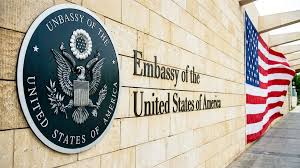
The United States Embassy Abuja also cancelled all visa appointments scheduled for Wednesday, citing security concerns related to the evolving conflict.

In a security advisory to its citizens in Nigeria, the embassy warned of possible protests and demonstrations in the FCT and urged Americans to remain indoors and avoid crowded areas.

Applicants affected by the cancellation were informed that their interviews would be rescheduled, while emergency consular services would remain available. Operations at the United States Consulate General Lagos were not immediately affected.

Security Checkpoints Across the Capital

Major routes leading into the city, including the busy Abuja-Keffi road, experienced severe traffic as security forces established checkpoints to prevent members of the Islamic Movement in Nigeria (IMN), popularly known as the Shiites, from staging protests over the attacks on Iran.

Security barricades were reported at several strategic points including Mararaba, Nyanya, Kugbo, and near government buildings such as the Eagle Square and the Federal Ministry of Finance complex.

Some individuals suspected of attempting to incite protests were reportedly arrested and taken into police custody.

Authorities believe the lockdown was necessary to prevent demonstrations already seen in parts of northern Nigeria including Niger State, Kaduna State and Sokoto State from spreading to Abuja.

Religious Leaders Call for Calm

Amid rising tensions, the League of Imams and Alfas Lagos urged Nigerians not to take sides or participate in protests linked to the Middle East crisis.

Speaking during the Ramadan Tafsir programme at Lagos House in Ikeja, Sheikh Abdul Rahman Ahmad warned that demonstrations could trigger unrest and urged citizens to pray for peace instead.

He also warned that the global conflict could worsen Nigeria’s economic challenges, including a possible rise in fuel prices.

Global Conflict Intensifies

The war has continued to escalate with the reported killing of Iran’s Supreme Leader, Ali Khamenei, during joint strikes by the United States and Israel.

Iran has since launched waves of missile and drone attacks against Israeli targets and U.S. interests across the region, raising fears of a broader global confrontation.

Iranian authorities say more than 1,000 people have been killed since the strikes began.

Meanwhile, global markets are reacting nervously to the conflict, with analysts warning that disruptions around the Strait of Hormuz could drive oil prices significantly higher if the war continues to expand.

FG Monitoring Middle East Situation, No Nigerian Will Be Endangered – NiDCOM

The Nigerians in Diaspora Commission (NiDCOM) has assured citizens that the Federal Government is taking steps to safeguard Nigerians residing in the Middle East amid escalating tensions in the region.

In a statement issued on Tuesday, NiDCOM’s Director of Media, Public Relations and Protocols, Abdur-Rahman Balogun, said Nigerian authorities are closely monitoring developments following recent military exchanges involving the United States, Israel and Iran.

According to the commission, it has received enquiries from Nigerians in Qatar, the United Arab Emirates and Iran regarding possible evacuation plans should the situation deteriorate further.

“The fact of the matter is that the Ministry of Foreign Affairs is working with all relevant agencies for appropriate steps, while appealing to Nigerians in the affected countries to follow the travel advice as issued by the Ministry,” the statement read.

“Nigerians in affected countries should be rest assured that the federal government is monitoring the situation and will take necessary steps to ensure no Nigerian life is endangered.”

Travel Advisory Issued

Over the weekend, the Ministry of Foreign Affairs urged Nigerians in Iran and other affected Gulf states to exercise heightened caution.

“All Nigerians in Iran and affected Gulf countries are advised to remain extremely vigilant and conscious of their surroundings at all times,” the ministry said.

Citizens were advised to avoid military, strategic and government installations, which could become flashpoints in the conflict.

The government also reiterated that the safety and well-being of Nigerians abroad remain a top priority, while calling on all parties involved to de-escalate tensions.

Regional Escalation

The advisory follows a sharp escalation in hostilities after US and Israeli forces carried out strikes on Iranian targets. Iran subsequently retaliated with missile and drone attacks across parts of the Gulf.

In Saudi Arabia, drones struck the United States Embassy in Riyadh, causing visible smoke damage to sections of the building and prompting heightened security measures in the diplomatic quarter.

Explosions were also reported in Bahrain and Qatar, while Iran announced strikes on Israeli targets and on the US air base at Al-Udeid in Qatar. Qatari authorities said attempted attacks on key infrastructure were thwarted.

The conflict has triggered international concern, with governments moving to evacuate their nationals and the United States urging its citizens to depart several Middle Eastern countries due to what it described as “serious safety risks.”

As the crisis continues to unfold, Nigerian authorities say contingency plans remain in place should evacuation become necessary.

US Embassy In Riyadh Hit As Iran Closes Strait Of Hormuz, Markets Reel

The United States Embassy in Riyadh has been struck by two drones, just as Iran announced the closure of the strategically vital Strait of Hormuz, dramatically escalating an already widening regional conflict.

Saudi authorities confirmed that the drones hit the US diplomatic compound in Riyadh, causing a limited fire and minor structural damage. In response, the embassy cancelled all routine and emergency consular services across its missions in Riyadh, Jeddah and Dhahran, and ordered staff and visitors to “shelter in place”.

“Avoid the Embassy until further notice due to an attack on the facility,” the mission said, urging American citizens to activate personal safety plans.

Regional Conflict Deepens

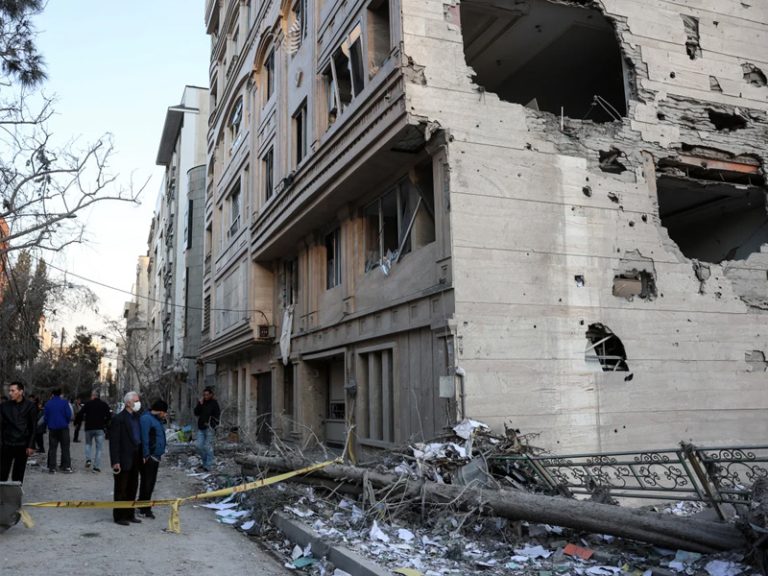
The strike comes amid intensified Israeli military operations targeting Tehran and Beirut, including a reported hit on Iran’s state broadcaster. The broader conflict has reportedly left more than 600 people dead across Iran and Lebanon.

The US diplomatic mission also updated its travel advisory for Iraq, directing non-emergency government personnel to depart the country for security reasons. Staff in Baghdad have been barred from using the city’s international airport due to heightened risks.

State Department official Mora Namdar issued an urgent message on X, advising US citizens to “DEPART NOW” from multiple countries in the region due to “serious safety risks”.

The advisory covered Bahrain, Egypt, Iran, Iraq, Israel, the occupied West Bank and Gaza, Jordan, Kuwait, Lebanon, Oman, Qatar, Saudi Arabia, Syria, the United Arab Emirates and Yemen.

Hormuz Closure Sends Shockwaves Through Energy Markets

Tehran’s decision to shut the Strait of Hormuz — one of the world’s most critical oil and gas transit chokepoints — has triggered alarm across global energy and financial markets.

Michael Mulroy, a former US Deputy Assistant Secretary of Defense, warned that Washington is closely monitoring the Iranian navy, particularly the risk of sea mine deployment.

“The maritime issue has become very critical,” Mulroy said, cautioning that any mining of the strait could have lasting global consequences.

He noted that halting traffic through the narrow waterway would disrupt energy flows to countries worldwide and inflict severe economic consequences on Gulf states.

“If they can lay sea mines in any part of it, which is not very difficult, it could take multiple months to be completely clear and to convince insurance companies to allow and insure vessels to go through those straits,” he said. “It could have a major impact for the long term if that were to actually happen.”

Iran has previously disrupted shipping in the area by targeting vessels transiting the strait.

Asian Markets Slide

Financial markets across Asia reacted sharply to the escalating crisis, with investors selling off energy, aviation, shipping and transport stocks amid fears of prolonged instability.

South Korea’s benchmark index dropped about 5 percent in morning trading, while Japan’s Nikkei index fell 2.3 percent.

China’s markets showed mixed performance. After a roughly 2 percent decline on Monday, Hong Kong and Shanghai traded only slightly lower on Tuesday. Analysts suggested Beijing could be intervening to stabilise markets ahead of its upcoming “Two Sessions” political meetings.

China’s substantial crude oil reserves — including imports from Iran — may cushion short-term supply disruptions, with reports indicating the country holds up to three months’ worth of reserves.

Nuclear Talks Collapse

Diplomatic efforts appear increasingly strained. Steven Witkoff, the US special envoy involved in recent nuclear negotiations with Iran, revealed that Tehran rejected a US proposal for a 10-year suspension of uranium enrichment, even with Washington offering to finance alternative fuel supplies.

According to Witkoff, Iranian negotiators insisted on what they described as their “inalienable right” to enrich nuclear fuel.

“We, of course, responded, ‘The president feels that we have the inalienable right to stop you,’” he said.

Witkoff said he was “flummoxed” by Iran’s stance, adding that US officials concluded Tehran had “no notion anything other than retaining enrichment for the purpose of weaponising” — an allegation Iran has consistently denied.

Iranian officials maintain that their nuclear programme is for civilian purposes and that they are not pursuing nuclear weapons.

With diplomatic channels under strain, embassies under attack, critical oil routes blocked and global markets unsettled, the crisis shows little sign of immediate de-escalation, raising fears of a prolonged regional and economic confrontation.

‘Nothing Has Gone Bad,’ Fintiri Says Defection To APC Won’t Affect Ties With Atiku

0

Governor Umaru Fintiri of Adamawa State has dismissed suggestions of a rift between him and former Vice President Atiku Abubakar, insisting that his recent defection to the All Progressives Congress (APC) has not damaged their relationship.

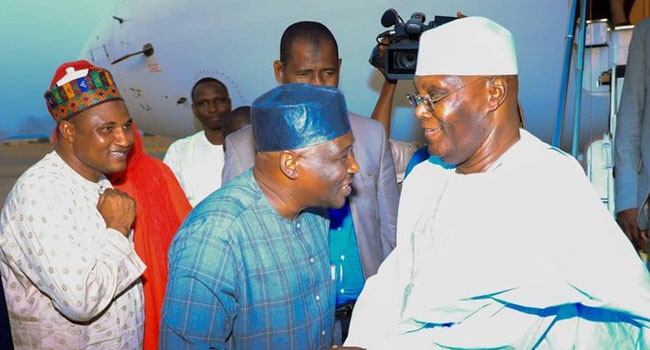
Fintiri, who recently left the Peoples Democratic Party (PDP) for the ruling APC, said both men have simply chosen different political paths.

“I still have. There is nothing that has gone bad. It is just that everybody has taken their political ways, and I am today in APC, they are in another party,” the governor said during an appearance on Sunrise Daily.

Atiku, a prominent political figure from Adamawa State, is positioning himself for the 2027 presidential election and has aligned with the African Democratic Congress (ADC).

Power Rotation Should Continue, Says Fintiri

Speaking on the long-standing informal power-sharing arrangement between Nigeria’s northern and southern regions, Fintiri argued that the principle should be respected ahead of the 2027 elections.

President Bola Tinubu, who is from the southern region, is currently serving his first term.

While acknowledging that the rotational arrangement is not codified in law, Fintiri described it as a stabilising and unifying mechanism for the country.

“A northerner has no business at the moment to vie for the office of the president,” the governor said.

“It is the South’s turn; they should complete their eight years if we are really serious about this country and leadership.”

Defends Defection To APC

Fintiri, who is in his second and final term as governor, defended his decision to join the APC, stating that it was made in the interest of Adamawa State.

“The move was purely in the interest of the people and the state…because for long, it is not about winning elections but aligning and getting more for our people,” he said.

His defection has increased the number of governors under the APC to 31, amid ongoing debates about growing political realignments and concerns from critics who warn about the risks of Nigeria drifting toward a one-party dominance.

Kingibe Lacks Projects, Won’t Return To Senate In 2027 – Wike

0

The Minister of the Federal Capital Territory (FCT), Nyesom Wike, has declared that Senator Ireti Kingibe will not return to the Senate in 2027, insisting that she has no tangible projects to justify re-election.

Kingibe, who represents the FCT in the National Assembly, was elected in 2023 on the platform of the Labour Party and has since defected to the African Democratic Congress (ADC).

Political tensions between the two figures have persisted, particularly over governance and development issues in the FCT.

Wike Challenges Kingibe’s Record

Speaking during a media parley in Abuja on Monday, Wike maintained that the senator’s legislative record lacks visible development initiatives.

“I had said it more than one year ago, Senator Ireti, you won’t come back as a senator. That’s why you people don’t like people who tell you the truth. It’s bitter. Let her show one project,” he stated.

He further alleged that Kingibe has not been sufficiently present in satellite communities across the territory, areas he noted often account for significant voter turnout during elections.

Kingibe had earlier accused the minister of being uncooperative in efforts to attract development projects to the FCT. Appearing on a television programme, she claimed that despite writing to the minister to seek collaboration aimed at improving infrastructure and services, she had not received a positive response.

Polling Unit Controversy

Wike also addressed criticisms from opposition parties regarding his visits to polling units during the February 21 FCT area council elections.

Defending his actions, the minister argued that as the territory’s chief security officer, he has the right to monitor activities at polling centres.

“I have the rights, I am the governor of 3,000 polling units. For security, I have to find out what is going on. I don’t have to be told, I am not a candidate for the election,” he said.

“Somebody has said I move about. How many polling units in FCT? FCT has not less than 3,000 polling units. Assuming I went to 10 polling units to check what was going on, how will it affect 3,000 polling units?

“As a candidate, I cannot move around. I must have my agents. As the Chief Security Officer, I have a right to have a view of what is going on and how does it affect, influence the election?”

The former Rivers State governor argued that the opposition’s performance in the council polls reflected poor preparation, adding that the outcome demonstrated the effectiveness of the administration of President Bola Tinubu.

The exchange underscores ongoing political tensions within the FCT as political actors begin positioning ahead of the 2027 general elections.

BREAKING: National Police Council Confirms Disu As Substantive IGP

The National Police Council has confirmed Olatunji Disu as the substantive Inspector-General of Police.

Following the confirmation, his name is to be forwarded to the Nigerian Senate for screening in line with constitutional provisions.

Disu’s confirmation comes amid recent leadership changes within the Nigeria Police Force, marking a new phase for the country’s top law enforcement institution.

Further details are expected as the process moves to the Senate.