The Chief Justice of Nigeria (CJN), Justice Kudirat Kekere-Ekun, has said Nigeria’s electricity sector is undergoing a major transformation driven by constitutional amendments, legislative reforms and evolving regulatory structures, with far-reaching implications for the judiciary.
Justice Kekere-Ekun, who is also Chairman of the Board of Governors of the National Judicial Institute (NJI), spoke on Monday at the opening ceremony of the Seminar on Legal Issues in the Regulation of the Electricity Sector for Judges, organised by the NJI in collaboration with the Nigerian Electricity Regulatory Commission (NERC) in Abuja.
She said the seminar was convened at a critical moment in the evolution of Nigeria’s electricity market, characterised by far-reaching regulatory reforms, increased private sector participation, rapid technological developments and growing demand for judicial clarity in the interpretation and application of electricity laws.
According to the CJN, recent legislative and policy changes have significantly expanded the complexity of legal questions now coming before Nigerian courts.
“The Nigerian electricity sector, as we are all aware, is undergoing profound transformation. This transformation is being driven by legislative reforms, policy innovations, increased private sector participation, and the progressive decentralisation of regulatory authority to state-level institutions,” she said.
“These developments have significantly expanded the complexity of legal questions brought before our courts, making judicial familiarity with sector-specific regulations and practices not merely desirable, but indispensable.”
Justice Kekere-Ekun stressed that the judiciary bears a critical responsibility to interpret statutes, review regulatory decisions and resolve disputes in a manner that promotes legal certainty, economic efficiency and public confidence in Nigeria’s justice system.
She noted that the constitutional empowerment of states to enact their own electricity laws and establish state-level regulatory authorities has introduced new layers of legal complexity, particularly in relation to jurisdictional boundaries between federal and subnational governments.
“Increasingly, our courts are called upon to determine the scope of federal and state authority, reconcile competing regulatory frameworks, and ensure fidelity to the principle of legality. In this context, judicial clarity, consistency, and sound reasoning are imperative,” she stated.
The CJN added that capacity-building initiatives such as the seminar were essential to equipping judges with the analytical tools and sector-specific knowledge required to adjudicate electricity-related disputes with confidence and precision.
Justice Kekere-Ekun also underscored the importance of judicial oversight in matters of safety, reliability and quality of service in the power sector, warning that failures by electricity providers could result in economic disruption, personal injury and loss of life.
“Issues such as ultra vires action, legitimate expectation, procedural fairness, and the judicial review of delegated legislation are central to the adjudication of electricity-related disputes,” she said.
“Judicial vigilance is essential to ensure that regulatory agencies act within the limits of their lawful authority, striking an appropriate balance between efficient sector management and the protection of constitutional rights and equitable outcomes.”
Speaking at the event, the Attorney General of the Federation and Minister of Justice, Lateef Fagbemi, said ongoing electricity sector reforms hold significant promise for attracting investment and strengthening Nigeria’s power market.
He described the seminar as timely, coming in the wake of constitutional and legislative reforms that have fundamentally reshaped the regulatory landscape of the electricity sector.
Fagbemi noted that the Electricity Act has empowered states to make laws for the generation, transmission and distribution of electricity within areas covered by their respective state electricity grids.
According to him, the development has laid the foundation for a decentralised, responsive and investment-friendly electricity governance framework, replacing outdated legislation.
“The Act establishes a comprehensive architecture for decentralisation of regulatory authority, the creation of state electricity markets and regulators, and a clear demarcation of federal and subnational responsibilities across the electricity value chain,” he said.
“It further strengthens consumer protection, promotes healthy competition and enhances regulatory certainty throughout the sector.”
He emphasised the federal government’s commitment to electricity sector reform, adding that collaboration with states, regulators and other stakeholders would continue to ensure improved power supply across the country.
In his welcome address, NERC Chairman, Dr Musiliu Oseni, outlined gains recorded under ongoing reforms, including the creation of the Nigerian Independent System Operator (NISO) from the Transmission Company of Nigeria (TCN) to enhance transparency in grid management and boost investor confidence.
Oseni disclosed that one major outcome of the restructuring was the successful test synchronisation of Nigeria’s power grid with other West African countries through the West African Power Pool (WAPP), with full synchronisation expected.
He also said the free distribution of prepaid meters to unmetered electricity customers had fully commenced, in line with a directive of President Bola Tinubu, while oversight of the Supervisory Control and Data Acquisition (SCADA) project had been intensified to address recurring grid collapses.
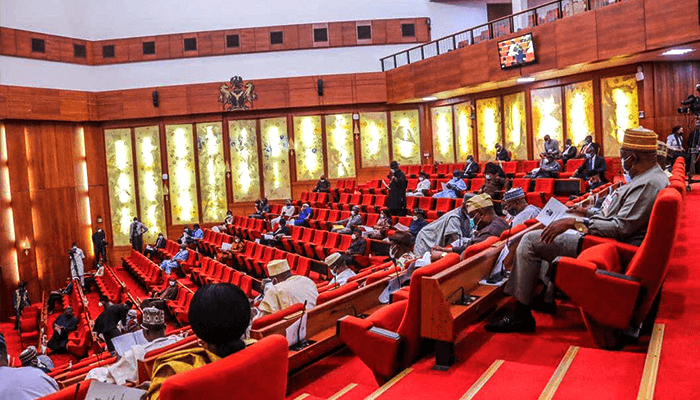
The Chairman of the Senate Committee on Power, Senator Enyinnaya Abaribe, said the National Assembly remains committed to strengthening the electricity sector through sustained legislative reforms and oversight.
“As lawmakers, our mandate is to foster reforms through constitutional amendments, the enactment of the Electricity Act 2023 and the ongoing amendments to the Act,” Abaribe said.
He explained that the reforms are aimed at boosting electricity supply, integrating renewable energy, promoting competition and reducing disputes between federal, state and private sector actors.
“The Electricity Act 2023 consolidates and modernises the legal framework of the sector, including clear provisions for structured dispute resolution mechanisms in electricity-related matters,” he added.
Abaribe noted that emerging conflicts in Nigeria’s decentralised electricity market underscore the growing importance of judicial interpretation and regulatory clarity.
“You supply electricity, a subnational entity takes it and refuses to pay, claiming independence. These are the kinds of issues the judiciary will increasingly have to address,” he said.
He disclosed that the Senate is working on further amendments to the Electricity Act to address gaps such as tougher penalties for infrastructure vandalism and improved coordination between federal and state regulators.
Also speaking, the Minister of Power, Bayo Adelabu, represented by the Director of Distribution, Mustapha Baba Umara, said the judiciary plays a stabilising role in the electricity market by providing predictability and credibility to Nigeria’s legal and regulatory framework.
He added that strong judicial interpretation remains critical to sustaining investor confidence and ensuring the long-term success of power sector reforms.