Home Blog Page 15

National Assembly Moves to Grant Solid Minerals First-Line Charge Over Zero Capital Release

0

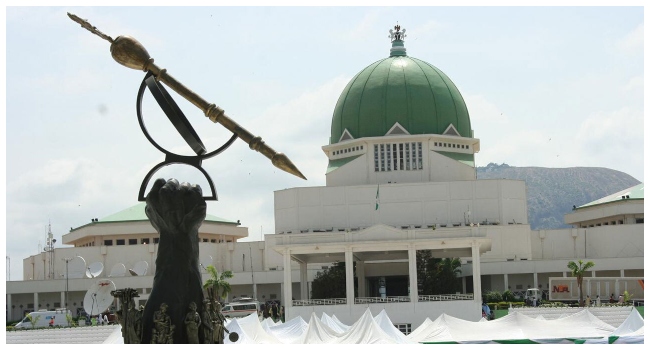
The National Assembly has initiated moves to grant the Federal Ministry of Solid Minerals Development first-line charge status following revelations that the ministry recorded zero capital releases for the 2025 fiscal year despite substantial budgetary appropriations.

At a budget defence session in Abuja, members of the Joint National Assembly Committee on Solid Minerals Development expressed concern that although N865.06 billion was earmarked for capital expenditure in 2025, no funds had been disbursed. Lawmakers also noted that only 50 per cent of the ministry’s overhead allocation had been released as of January 31, 2026.

Minister of Solid Minerals Development, Dele Alake, told lawmakers that the absence of capital releases had stalled key infrastructure, exploration and sector development projects. He warned that inconsistent funding threatens efforts to reposition mining as a driver of economic growth, job creation and foreign investment.

Alake advocated for first-line charge status — a funding mechanism that guarantees automatic statutory allocations from the Federation Account — to shield the ministry’s budget from bureaucratic delays and revenue shortfalls.

Chairman of the Joint Committee, Ekong Sampson, described the zero capital release as “worrisome” and inconsistent with the ambitious projections outlined in the national budget. He questioned how the sector could realise its full potential without actual cash backing.

Other lawmakers supported the proposal, arguing that the solid minerals sector should receive similar priority funding protections as the petroleum industry if Nigeria is serious about economic diversification.

Responding, Alake welcomed the proposal and urged the National Assembly to provide legislative backing to formalise the arrangement.

Presenting the ministry’s 2026 budget proposal, the minister disclosed that total allocations for personnel, overhead and capital expenditure across the ministry and its agencies stood at N165.34 billion. Of this, N48.9 billion was proposed for the main ministry, comprising N1.79 billion for personnel costs, N1.57 billion for overhead and N45.54 billion for capital projects.

Alake described the 2026 proposal as a strategic shift from planning to execution and revenue generation, noting that the sectoral allocation is designed to unlock solid minerals’ potential to diversify the economy, create jobs and boost Gross Domestic Product.

He stated that the proposed budget prioritises surveillance, logistics and digital systems to combat illegal mining, improve revenue collection and create a more stable investment climate.

Despite funding challenges, the minister revealed that the ministry exceeded its 2025 revenue target by 80 per cent, generating N30.23 billion as of December 31, 2025. He attributed the performance to reforms that formalised artisanal miners into cooperatives and corporate entities, enhancing regulatory compliance and access to financing.

According to him, 388 mineral buying centres were established during the year, artisanal miners received formal training, and four high-risk abandoned mine sites were reclaimed.

Lawmakers, however, maintained that without predictable and sustained funding, recent gains may be difficult to sustain. They pledged to examine the first-line charge proposal and explore legislative mechanisms to strengthen the sector’s funding framework.

The committee said granting priority funding to the solid minerals sector would not only ensure financial stability but also signal to global investors Nigeria’s commitment to building a competitive and credible mining industry.

Spain Orders Probe Into X, Meta, TikTok Over Alleged AI-Generated Child Abuse Content

0

The Spanish government has ordered a formal investigation into major social media platforms over the alleged circulation of artificial intelligence-generated child sexual abuse material, intensifying its efforts to combat online harm and strengthen child protection.

Prime Minister Pedro Sánchez announced that prosecutors had been directed to investigate X, Meta, and TikTok over the reported spread of the illegal content.

In a statement posted on his official X account, Sánchez criticized the platforms for what he described as inadequate safeguards for minors.

“These platforms are undermining the mental health, dignity, and rights of our children,” he stated, adding that the government would not tolerate impunity among major technology companies.

The move represents one of Spain’s most forceful actions to date against global tech firms accused of failing to curb harmful content, particularly as advances in artificial intelligence make it easier to create and distribute exploitative material.

Earlier this month, the Spanish government unveiled a set of measures aimed at tightening online safety regulations. Among the proposals is a ban on social media access for children under the age of 16, a policy officials argue is necessary to limit exposure to harmful and exploitative content.

The investigation will assess whether the platforms violated Spanish laws designed to protect minors and prevent the dissemination of illegal material, especially content generated through AI technologies.

Spain’s action adds to mounting regulatory pressure across Europe on technology companies to strengthen oversight mechanisms and ensure safer digital environments for children.

Uba Sani Hails Nduka Obaigbena on LekeeLekee App Launch

0

Kaduna State Governor, Uba Sani, has congratulated Prince Nduka Obaigbena, Chairman of ARISE & THISDAY Media Group, on the successful launch of the homegrown social media platform, LekeeLekee.

In a letter dated February 16, 2026, Governor Sani described the unveiling of the platform as a landmark achievement for Nigeria and the African continent.

According to him, the launch of LekeeLekee — now available on the App Store, Google Play, the web, and as a Progressive Web App — represents more than the introduction of a new digital platform. He noted that it marks the emergence of an African-owned social media ecosystem tailored to local realities and underserved communities.

The governor commended the initiative for offering low-data, high-speed feeds, voice-enabled messaging, community groups, and structured moderation, stating that the platform responds to a longstanding need for technology built within the African context.

Sani further praised Obaigbena’s commitment to media freedom and democratic development, noting that the launch of the app challenges global dominance in digital content distribution while amplifying authentic African voices.

He said the platform holds significant promise for Nigeria’s youthful and digitally savvy population, with potential long-term benefits for innovation, entrepreneurship, civic engagement, and cultural expression.

On behalf of the Kaduna State Government and its residents, Governor Sani pledged support and partnership as the platform expands its reach across Africa and beyond.

We’ll Win Battle Against Banditry, Terrorism — Tinubu Assures Nigerians

0

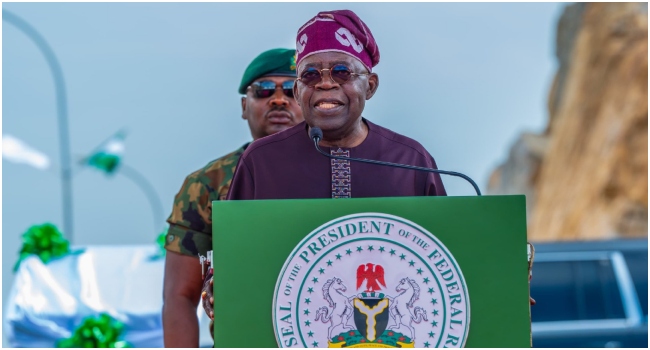
President Bola Ahmed Tinubu has reaffirmed his administration’s determination to defeat banditry and terrorism across the country, assuring Nigerians that ongoing security efforts will yield lasting results.

The President gave the assurance on Monday in Yola while commissioning projects executed by Adamawa State Governor, Umaru Fintiri.

Tinubu commended the efforts of the Armed Forces of Nigeria, pledging continued support for security personnel in the discharge of their duties.

“We are grateful to the Nigerian Armed Forces for their commitment to liberating Nigeria from banditry and insurgency. Together, we will win,” the President said.

He also urged state governors and citizens to work collaboratively in advancing development across the federation, emphasizing the need for collective responsibility in nation-building.

“As your leader, I assure you of my continuous service and sacrifice. Nigeria is ours to develop,” Tinubu stated.

The President further praised Governor Fintiri for infrastructure projects undertaken in Adamawa State, describing them as vital to grassroots development.

Tinubu also commended the National Security Adviser, Nuhu Ribadu, acknowledging his role in strengthening the country’s security architecture. He described Ribadu as dedicated, courageous, and committed to addressing the nation’s security challenges.

“With you, we will defeat the bandits and terrorists,” the President said, expressing confidence that Nigeria’s enemies would be overcome through sustained and coordinated efforts.

The remarks come amid ongoing military operations aimed at curbing insecurity in several regions of the country.

Nigeria’s Inflation Eases to 15.1% in January as Food Prices Decline

Nigeria’s headline inflation rate moderated to 15.1 percent in January 2026, a slight drop from the 15.15 percent recorded in December 2025, according to the latest Consumer Price Index (CPI) report released by the National Bureau of Statistics (NBS).

In its report, the NBS stated that the January 2026 headline inflation rate showed a decrease of 0.05 percentage points compared to December 2025. On a year-on-year basis, inflation was 12.51 percentage points lower than the 27.61 percent recorded in January 2025.

On a month-on-month basis, headline inflation stood at -2.88 percent in January 2026, representing a 3.42 percentage point decline from the 0.54 percent recorded in December 2025. This indicates that the rate of increase in the average price level slowed significantly at the start of the year.

Food inflation recorded a notable slowdown. Year-on-year, the food inflation rate stood at 8.89 percent in January 2026, down sharply from 29.63 percent in December 2025 — a decrease of 20.74 percentage points.

Month-on-month, food inflation declined by 6.02 percent, compared to -0.36 percent in December 2025. The NBS attributed the drop to falling average prices of key staples, including water yam, eggs, green peas, groundnut oil, soya beans, palm oil, maize, guinea corn, beans, beef, melon (egusi), cassava tuber, and cowpeas.

The average annual rate of food inflation for the 12 months ending January 2026 stood at 20.29 percent, 18.18 percentage points lower than the 38.47 percent recorded in January 2025.

At the state level, Kogi recorded the highest year-on-year food inflation rate at 19.84 percent, followed by Benue at 18.38 percent and Adamawa at 17.29 percent. In contrast, Ebonyi (1.69 percent), Abia (3.23 percent), and Imo (3.74 percent) posted the slowest increases in food prices.

On a month-on-month basis, Imo (-1.26 percent), Akwa Ibom (-2.21 percent), and Zamfara (-2.96 percent) recorded the highest food inflation rates, while Yobe (-11.88 percent), Nasarawa (-9.06 percent), and Sokoto (-8.31 percent) experienced the most significant declines.

The latest data point to easing price pressures at the beginning of 2026, particularly within the food sector, offering cautious optimism for consumers and policymakers aiming to sustain economic stability.

UK Ends Visa Stickers for Nigerians, Makes eVisas Mandatory from February 25

0

The United Kingdom has announced that from February 25, 2026, it will discontinue the issuance of physical visa stickers for Nigerian travellers, replacing them with mandatory electronic visas (eVisas) as part of a broader shift to a fully digital immigration system.

The policy was unveiled in Abuja by UK Visas and Immigration (UKVI), which confirmed that all new Visit visas granted to Nigerian nationals will now be issued electronically. Under the new arrangement, successful applicants will no longer receive a visa vignette affixed to their passports. Instead, their immigration status will be accessible online through a secure UKVI account.

Authorities clarified that the visa application process remains unchanged. Applicants will still complete the standard online application, attend a Visa Application Centre to submit biometric data, and meet all eligibility requirements. The only adjustment relates to the format in which the visa is issued and accessed.

UKVI stated that Nigerians who currently hold valid physical visa stickers will not be affected by the transition. Existing visas will remain valid until their stated expiration dates and will not need to be replaced solely due to the introduction of eVisas.

British Deputy High Commissioner in Abuja, Gill Lever, said the reform is designed to simplify travel procedures while enhancing border security.

According to UKVI, the digital system is expected to shorten processing timelines, as passports will no longer need to be retained for visa endorsements. Travellers will also be able to view and manage their immigration status online at any time.

Officials added that eVisas offer enhanced security benefits, as they cannot be lost, stolen, or tampered with like physical stickers. The system also allows for real-time verification of immigration status.

Once approved, applicants will be required to create a free UKVI account to access and share their eVisa details when necessary.

The reform is part of the UK’s broader border modernization strategy, with Nigerian travellers among the first groups to transition fully to digital visa issuance. For business travellers, students, and frequent visitors, the move marks a significant procedural shift toward a secure, online-based immigration record as the standard for entry clearance into the UK.

EFCC Detains Nasir El-Rufai as DSS Files Cybercrime Charges

0

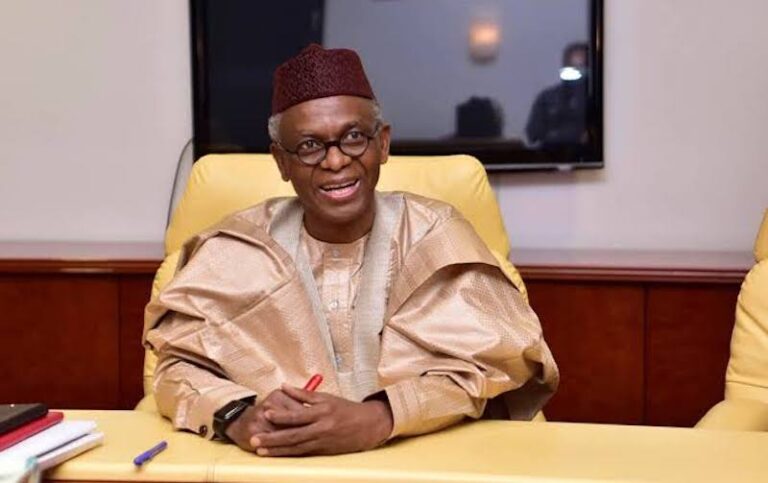
Former Kaduna State Governor and chieftain of the African Democratic Congress (ADC), Nasir El-Rufai, has been detained by the Economic and Financial Crimes Commission (EFCC) in Abuja over alleged corruption during his tenure in office.

Sources within the anti-graft agency confirmed that El-Rufai turned himself in on Monday following an invitation for questioning. He reportedly arrived at the EFCC headquarters in Jabi, Abuja, around 11 a.m. and was taken in for interrogation. As of late Monday, he remained in custody, with indications that investigators may seek a court order to extend his detention pending further inquiries.

The investigation follows a June 2024 report by an ad hoc committee of the Kaduna State House of Assembly, which probed finances, loans, and contracts awarded under El-Rufai’s administration between 2015 and 2023. The committee had alleged that several loans were either misapplied or secured without due process, and recommended further investigation and prosecution. The former governor has consistently denied the allegations, describing them as politically motivated.

In a related development, the Department of State Services (DSS) has filed a three-count criminal charge against El-Rufai at the Federal High Court, Abuja, over alleged unlawful interception of phone communications belonging to the National Security Adviser, Nuhu Ribadu.

The charge, marked FCT/ABJ/CR/99/2026, alleges that El-Rufai admitted during a televised interview that he and associates intercepted private communications of the NSA. The federal government contends that the alleged act violates provisions of the Cybercrimes (Prohibition, Prevention, etc.) (Amendment) Act, 2024, and the Nigerian Communications Act, 2003, posing a threat to national security.

Court documents further allege that the former governor failed to report those involved in the alleged interception to appropriate authorities.

Meanwhile, former Vice President Atiku Abubakar has accused the administration of President Bola Ahmed Tinubu of persecuting El-Rufai. In a statement marking El-Rufai’s birthday, Atiku described the former governor as a public servant of intellect and courage, and referred to the ongoing developments as “political persecution.”

Separately, hundreds of protesters gathered at the Kaduna State House of Assembly, demanding updates on the legislature’s investigation into El-Rufai’s administration. The Speaker of the Assembly assured demonstrators that due process would be followed and that the House remained committed to its oversight responsibilities.

Investigations by the EFCC and DSS are ongoing, with possible court proceedings expected in the coming days.

El-Rufai Faces Cybercrime Charges Over Alleged Phone Interception

0

The Department of State Services (DSS) has filed criminal charges against former Kaduna State Governor, Nasir El-Rufai, at the Federal High Court over allegations of unlawful interception of phone communications belonging to Nigeria’s National Security Adviser, Nuhu Ribadu.

According to court documents sighted by reporters, the DSS accused El-Rufai of involvement in acts that allegedly compromised public safety and national security, warning that the incident generated widespread fear and concern among Nigerians.

The prosecution’s case is partly anchored on comments attributed to El-Rufai during a live television interview on ARISE TV on February 13, during which he reportedly admitted to having knowledge of the alleged interception. Investigators contend that the statements amounted to an admission that sensitive communications involving the country’s top security official were unlawfully accessed.

In a three-count charge, the DSS alleged that the former governor either directly participated in the interception or failed to report individuals responsible for the act, despite being aware of their activities. The agency maintained that such omissions, if proven, constitute serious offences under Nigerian law, given the sensitive nature of the office involved and the potential implications for national security.

The charges were filed under provisions of the Cybercrimes (Amendment) Act 2024 and the Nigerian Communications Act 2003. Prosecutors argued that the alleged actions violated statutory safeguards designed to protect private communications and prevent unauthorised surveillance, especially where senior government officials are concerned.

The DSS further stated that unlawful interception of communications belonging to the National Security Adviser could undermine confidence in the country’s security architecture and expose classified information to unauthorised persons.

As of the time of filing, no trial date had been announced, and El-Rufai had yet to formally enter a plea. The former governor has not publicly responded to the charges, though his allies have previously dismissed similar allegations against him as politically motivated.

The case adds a new legal dimension to El-Rufai’s ongoing public dispute with elements of the federal government, following a series of exchanges and accusations in recent weeks. Legal observers say the outcome could test the scope and enforcement of Nigeria’s updated cybercrime laws, particularly as they relate to high-profile political figures and national security officials.

Peter Obi Declares 2027 Presidential Bid, Says No Force Can Stop His Candidacy

0

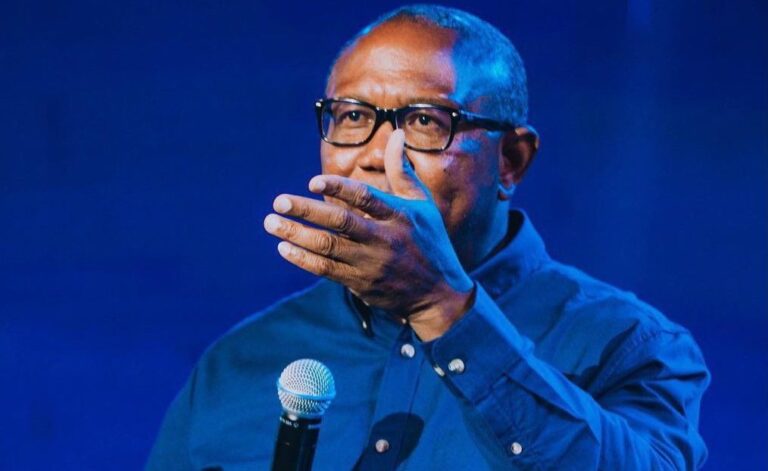
Former Anambra State governor and 2023 presidential candidate, Peter Obi, has reaffirmed his determination to contest the 2027 presidential election, declaring that no attempt to block him would succeed.

Obi made the declaration in Uyo, Akwa Ibom State, while addressing supporters at the OBIDIENT Conference and official declaration for the African Democratic Congress (ADC), themed “Activating the PO Effect in ADC.”

Addressing members of the Obidient Movement and party faithful, Obi said alleged efforts to prevent him from appearing on the ballot would not deter him.

“I want to assure you that I will contest the coming election even if it is held in their bedroom, and if they don’t want to transmit the results, we will transmit them for them,” he said.

Obi explained that his decision to leave the Labour Party was influenced by claims that the Independent National Electoral Commission (INEC) would not recognise the party’s leadership if he remained.

“I left LP when I got informed that as long as I remain in the party, INEC will not recognise its leadership, that the federal government doesn’t want me on the ballot,” he stated.

The former governor also criticised the borrowing record of the current administration, warning that Nigeria’s growing debt burden could have long-term consequences.

“The current administration has collected more loans than every other administration, and most of these loans will be repaid from 2045 to 2050, when most of the people who plunged the country into this indebtedness are no more,” Obi said.

He urged Nigerians to support his vision of reform, stressing that education and healthcare would be top priorities under his leadership. According to him, sustainable national growth is driven by deliberate investment in human capital.

Obi also pledged to tackle corruption, arguing that ethical leadership at the top could significantly reduce the problem.

“When I became governor of Anambra, I advised my wife to forget about the Office of First Lady because we were not elected together,” he said, adding that transparency and personal discipline were central to his approach to governance.

Also speaking at the event, the coordinator of the Obidient Movement worldwide, Tanko Yunusa, called on supporters to mobilise nationwide ahead of 2027 and rally behind the ADC. Akwa Ibom State coordinator of the movement, Ben Smith, described the next presidential election as a defining moment for Nigeria’s future.

Obi’s remarks have injected fresh momentum into early discussions around the 2027 general election, as political alignments and realignments continue to take shape across the country.

Gunfire Erupts In Kwara As Security Forces Repel Attack In Share Community

0

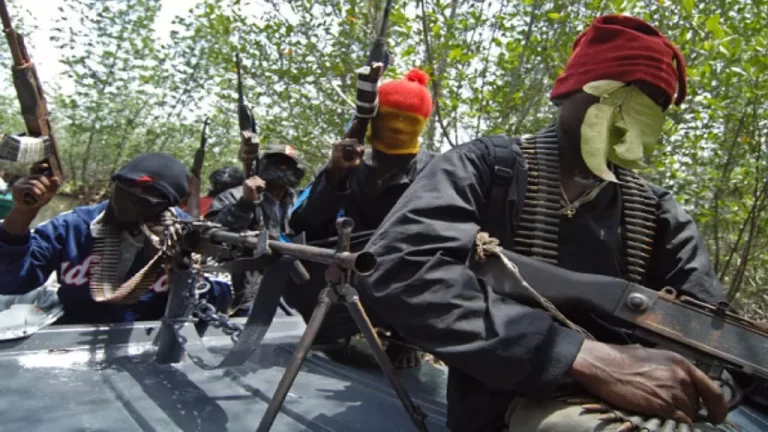
Tension briefly gripped parts of Share community, the headquarters of Ifelodun Local Government Area in Kwara State, on Sunday evening following a gunfire exchange between suspected bandits and security operatives.

Eyewitnesses said the armed men engaged security personnel, including troops of the Nigerian Army, who were working in collaboration with forest guards and other local security outfits. The combined forces successfully repelled the attackers.

Local security sources confirmed that the exchange of gunfire lasted for about one hour and occurred around 8:30 p.m., close to the headquarters of the Ifelodun Local Government Secretariat.

Authorities said the swift and coordinated response by the security operatives prevented the attackers from gaining ground, adding that there were no confirmed cases of casualties or abductions arising from the incident.

The development came just hours after suspected bandits attacked Kakafu community, a remote settlement in Patigi Local Government Area, where four residents were reportedly kidnapped.

According to sources, the attackers abducted four persons — a man, a woman and her two female children — during the early-morning operation, which occurred at about 1:30 a.m. on Sunday and threw the community into confusion.

Residents said the assailants fired sporadic gunshots into the air on arrival, causing panic as villagers fled for safety.

“They did not kill anyone. They only abducted the four victims and fired indiscriminately to create fear and confusion among the villagers,” a source said.

A forest guard, who spoke on condition of anonymity, said residents of the area remained traumatised and fearful of further attacks.

“People are still in shock. Panic has gripped the community because the assailants are believed to be hiding in nearby villages,” he said.

Kwara State has witnessed a rise in attacks by gunmen in recent weeks, heightening concerns among residents, particularly in rural communities. The violence has raised fears that armed groups may be expanding southward along the Niger–Kwara axis toward the Kainji forest, which security analysts warn could become a new operational base if unchecked.

The Federal Government has repeatedly assured Nigerians that measures are being taken to stem the attacks and improve security across affected areas.

Terrorists Kill 32 Farmers, Abduct Scores, Burn Homes In Niger’s Borgu LGA

0

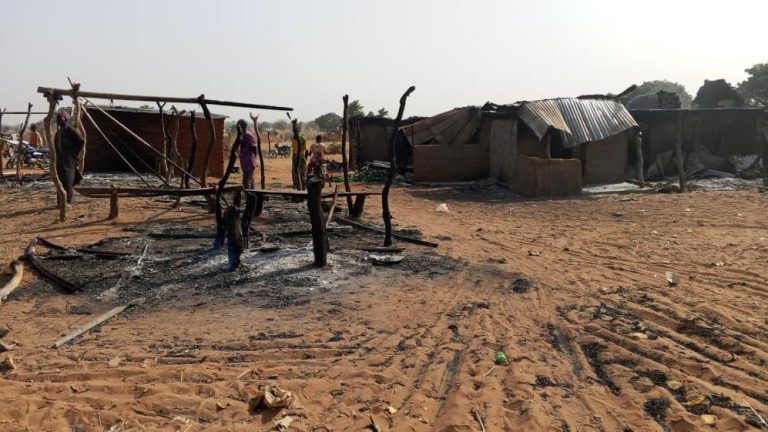
No fewer than 32 farmers were feared killed on Saturday after terrorists launched coordinated attacks on several communities in Borgu Local Government Area of Niger State, abducting residents and setting homes and public facilities ablaze.

The affected communities include Tunga-Makeri, Konsoko and Pissa, all located in the Borgu axis of the state.

Residents said the first attack occurred around 3:00 a.m. at Tunga-Makeri in Konkoso Ward, where at least six farmers were killed by heavily armed assailants who stormed the village while residents were asleep.

According to eyewitness accounts, the attackers later moved to Konsoko and Pissa communities at about 6:00 a.m., firing sporadically and unleashing further violence that reportedly left 26 more people dead. Several buildings were torched during the raids, including a police outpost.

Sources said the exact casualty figure from the attack on Pissa community in the Kabe/Pissa axis remains unclear, as many residents fled into nearby bushes and farmlands to escape the violence.

A resident, Hassan Abdullahi, told journalists that the attackers were more than 200 in number and operated freely for several hours without resistance.

“They came in large numbers and attacked from early morning till about 10:00 a.m. These communities are far from security formations. The nearest is the Nigerian Air Force base in New Bussa, about 200 kilometres away,” he said.

Confirming the incident, the spokesperson of the Niger State Police Command, SP Wasiu Abiodun, said the attack on Tunga-Makeri occurred around 3:00 a.m. on Saturday.

He confirmed that six people were killed in the community, some houses were set on fire and an unspecified number of residents were abducted.

Abiodun also confirmed that the assailants later moved to Konsoko village, noting that details of that attack were still sketchy as of the time of reporting.

“On 14/2/2026 at about 6:00 a.m., a report was received that suspected bandits invaded Tunga-Makeri village via Shafachi District in Borgu LGA at about 3:00 a.m. During the attack, six persons lost their lives, some houses were set ablaze, and a yet-to-be-ascertained number of persons were abducted,” he said.

He added that joint security teams had been deployed to the affected areas to assess the situation and intensify efforts to rescue abducted victims.

The latest attack adds to growing security concerns in Niger State, particularly in rural farming communities, where residents continue to face repeated assaults despite ongoing military and police operations across the state.