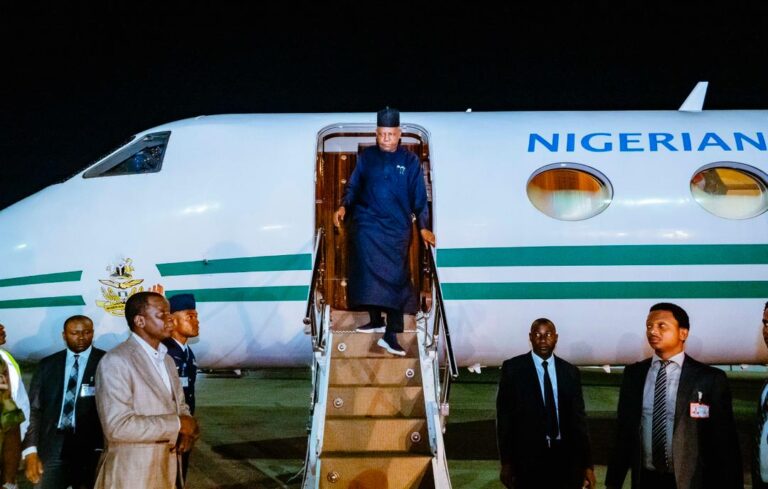
Vice President Kashim Shettima has returned to Abuja after representing President Bola Tinubu at the 80th Session of the United Nations General Assembly (UNGA) in New York and concluding high-level engagements in Germany.
During the week-long mission, Shettima delivered Tinubu’s national statement at the UNGA, calling for comprehensive United Nations reforms. He also advocated for Africa’s sovereignty over its $700 billion mineral resources and strengthened partnerships with the United Kingdom, the Gates Foundation, and other international stakeholders.
The Vice President met with UN Secretary-General António Guterres, who commended Nigeria’s bid for a permanent seat on the UN Security Council.
In another engagement, Shettima presented Nigeria’s $200 billion energy transition opportunity to global investors. He also assured the Nigerian diaspora community of robust engagement in the administration’s policies and programmes.
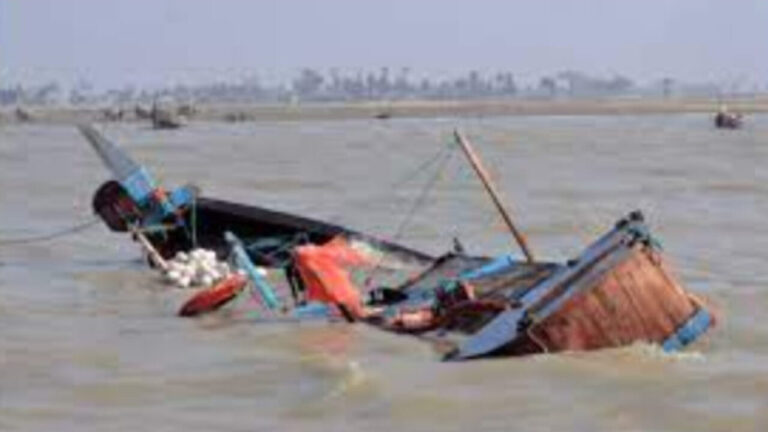
The National Emergency Management Agency (NEMA) has confirmed that 24 passengers were rescued after a boat carrying about 80 people capsized on the River Niger in Kogi State on Tuesday evening.
In its update on Thursday, NEMA said 42 persons remain missing, while 14 bodies have been recovered. The boat had departed Onugwa community in Ibaji Local Government Area and was heading to Olushi village before the accident.
The Director General of NEMA, Zubaida Umar, has activated the Abuja Operations Office to support search and rescue efforts, which involve community divers, KOSEMA, NIWA, Red Cross, Civil Defence, and the Fire Service.
NEMA assured that periodic updates will be provided as operations continue.
On Wednesday, the Kogi State Government confirmed at least 26 deaths from the tragedy. Commissioner for Information Kingsley Fanwo described the incident as “a heartbreaking loss,” while Governor Usman Ododo conveyed condolences to the victims’ families and directed agencies to provide support.
Both NEMA and the state government emphasised the need for strict compliance with safety measures on waterways, urging riverine communities to avoid overloading and to always use life jackets.
The Petroleum and Natural Gas Senior Staff Association of Nigeria (PENGASSAN) has insisted that it did not sign the communiqué that led to the suspension of its nationwide strike against Dangote Refinery.
Union president, Festus Osifo, explained on Thursday that the communiqué presented after government intervention was not an agreement but only a statement from the Minister of Labour and Employment.
“If you see that communiqué, we did not sign it. Normally, it is supposed to be signed by three parties. We did not sign because we felt that some things in it were not okay with us,” Osifo said while appearing on The Morning Brief.
He maintained that PENGASSAN suspended the strike in good faith to allow members return to work and cater for their families, but warned that unresolved “grey areas” could trigger an immediate resumption of the industrial action if dishonoured.
The dispute, which centres on the alleged illegal dismissal of more than 800 Nigerian workers, saw PENGASSAN members barricade the Nigerian National Petroleum Company Limited headquarters and regulatory agencies in Abuja, demanding the reinstatement of the sacked staff.
Dangote Refinery has denied wrongdoing, describing the restructuring exercise as necessary for efficiency, while stressing that most of its 3,000 Nigerian employees remain unaffected.
Meanwhile, the Minister of Labour and Employment, Mohammed Dingyadi, confirmed that disengaged workers would be reassigned within the Dangote Group without loss of pay, assuring that no worker would be victimised for union activities.
Despite this, PENGASSAN warned it would not hesitate to resume its strike if the resolutions are not implemented.
The Kogi State Government has confirmed that 26 traders lost their lives in a boat accident on the River Niger while travelling from Ibaji Local Government Area to Ilushi market in Edo State on Tuesday evening.
State Commissioner for Information and Communications, Kingsley Fanwo, announced the casualty figure in a statement on Wednesday, describing the tragedy as “a heartbreaking loss.”
“Reports indicate that the unfortunate incident has claimed the lives of not less than 26 passengers. This is a heartbreaking loss, and our thoughts and prayers are with the families of the deceased, as well as the entire Ibaji Local Government Area, in this moment of grief,” he said.
Governor Ahmed Usman Ododo extended condolences to the bereaved families and directed the State Emergency Management Agency to work with local authorities to provide immediate support and relief.
The Governor also assured that the state government would intensify collaboration with federal agencies to strengthen safety measures on waterways and prevent future tragedies.
He further urged riverine communities to prioritise safety by avoiding overloading and ensuring the use of life jackets during water travel.
“The Government of Kogi State stands with the people of Ibaji LGA and will continue to support them through this difficult time,” the statement added.
The National Agency for the Prohibition of Trafficking in Persons (NAPTIP) has arrested five suspected human traffickers and rescued 24 victims during a special operation at the Nnamdi Azikiwe International Airport, Abuja.
NAPTIP’s Director General, Binta Adamu Bello, confirmed the arrests in a statement issued by the agency’s spokesperson, Vincent Adekoye, on Wednesday.
Among those arrested was a retired senior officer of a Nigerian law enforcement agency, alleged to be a key member of a trafficking syndicate operating in the South West.
Operation Details The operation followed a tip-off about suspected trafficking activities at the airport. NAPTIP operatives disrupted the syndicate after nearly six hours of surveillance and enforcement.
The victims, aged between 15 and 26, were recruited from Kano, Katsina, Oyo, Ondo, and Rivers States. They were being trafficked to Iraq, Sudan, Egypt, Saudi Arabia, Bahrain, and Afghanistan.
Some of the victims could not speak any language apart from their local dialects, while others were unaware of their exact destinations.
One of the rescued girls revealed she was deceived by her father, a retired police officer, who told her she was being offered a supermarket job in Baghdad. “If that is what awaits me there, I will not go,” she said after being shown video clips of Nigerians stranded or maltreated abroad.
DG Reacts Bello condemned the syndicate’s activities, describing it as “unpatriotic and illicit trade in human beings.” She expressed shock that a father would traffic his own daughter.
“I am impressed with the outcome of the operation today because we were able to arrest five suspected members of the trafficking gang that have been recruiting and trafficking our citizens to various tension-soaked countries, especially in the Middle East,” she said.
She commended the Federal Airports Authority of Nigeria (FAAN), the Department of State Services (DSS), immigration officials, security personnel, and airline operators for their collaboration during the operation.
Bello assured Nigerians that NAPTIP will sustain its crackdown on traffickers, particularly at the Abuja airport, which she said has become a “comfort zone” for syndicates.
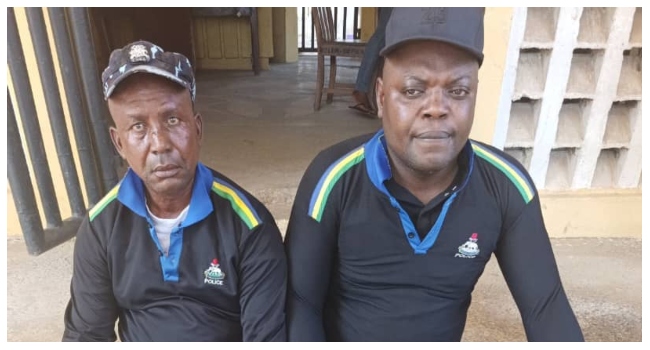
Troops of 6 Brigade Nigerian Army/Sector 3 Operation Whirl Stroke (OPWS), in collaboration with the National Drug Law Enforcement Agency (NDLEA), have arrested two fake policemen in Wukari Local Government Area of Taraba State.
The suspects were intercepted at Takum junction while driving two Toyota Hilux vehicles loaded with substances suspected to be cannabis sativa. They were dressed in mobile police uniforms, but preliminary investigations confirmed they were not serving policemen.
According to Lieutenant Umar Muhammad, Acting Assistant Director of Army Public Relations, the vehicles were traced to Akure, Ondo State, and were heading to Adamawa State before interception.
Arrested Suspects
Monday George, 71, a dismissed Police ASP
Ezeugo Destiny Uche, 41
The occupants of the second Hilux abandoned the vehicle and fled upon sighting the troops. A total of 1,134 blocks of cannabis were recovered from both vehicles. The suspects and exhibits have been handed over to the NDLEA office in Wukari for further investigation and prosecution.
The operation is part of Operation Lafiya Nakowa, which aims to flush out bandits and other criminal elements across Taraba State.
Commander 6 Brigade Nigerian Army, Brigadier General Kingsley Uwa, commended the troops and NDLEA operatives for their synergy and urged residents to provide credible information to aid security operations.
The National Working Committee (NWC) of the People’s Democratic Party (PDP) has dissolved the Akwa Ibom State Executive Committee and appointed a 31-member caretaker committee to oversee the party’s affairs.
The decision was reached at the NWC meeting held on Tuesday. The caretaker committee will serve for three months, effective September 30, 2025, or until a new state executive is elected.
Key Officers of the Caretaker Committee
Igwat Umoren — Chairman
Harrison Ekpo — Deputy Chairman
Borono Bassey — Secretary
Ewa Okpo — Publicity Secretary
Emman Mbong — Organising Secretary
Aniekan Asuquo — Youth Leader
Mary Silvia Abara — Woman Leader
Enoch Enoch — Legal Adviser
Other Members Aniebiet Cornelius, Udim Peters, Ayanime Obot, Ofon Michael, Esther Bassey Effiong, David Umanah, Usenmfon Ibanga, Unwana Assam, among others.
PDP National Publicity Secretary, Debo Ologunagba, urged leaders, stakeholders, and members in Akwa Ibom to remain united and work together for the progress of the party.
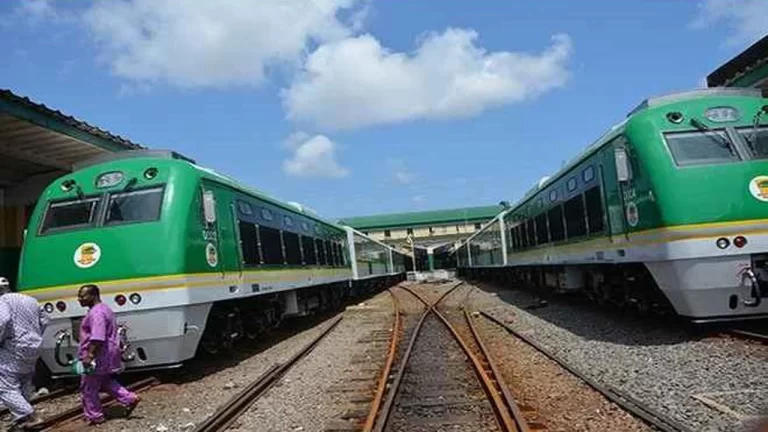
The Nigerian Railway Corporation (NRC) has resumed passenger train operations on the Abuja–Kaduna corridor, weeks after a derailment halted services.
NRC’s Chief Public Relations Officer, Callistus Unyimadu, announced on Wednesday that commercial services would restart following the completion of safety, technical, and operational checks.
The move comes after the August 26 derailment — the second at the same station in 13 months — which was traced by the Nigerian Safety Investigation Bureau (NSIB) to defective infrastructure and lapses in safety management.
Unyimadu said the corporation had put additional measures in place to guarantee safe and reliable train services.
Passenger Welfare Measures
Of the 583 passengers on board, 530 were contacted, and 512 have received refunds.
All 22 injured passengers have been contacted, with many visited by NRC’s medical team; they will receive one free ride per week until December 31, 2025.
All 618 passengers on board the August 26 train will be entitled to one free ride before December 31, 2025.
Timetable for Abuja-Kaduna Train Service
Abuja – Kaduna:
IDU: 8:45
Kubwa: 9:05
Rigassa: 12:42 (Arrive)
Kaduna – Abuja:
Rigassa: 14:30
Kubwa: 18:02
IDU: 18:23 (Arrive)
The NRC also announced that Wednesdays will be reserved for maintenance.
The corporation thanked passengers for their patience during the suspension and reaffirmed its commitment to delivering safe, affordable, and efficient train services nationwide.
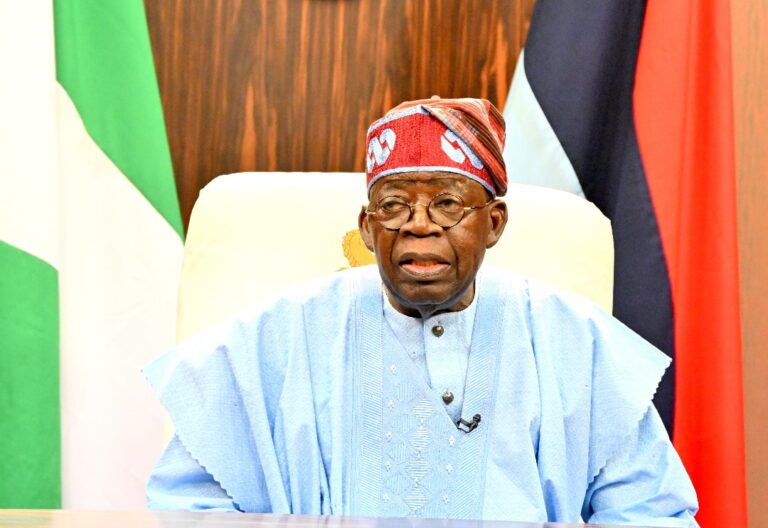
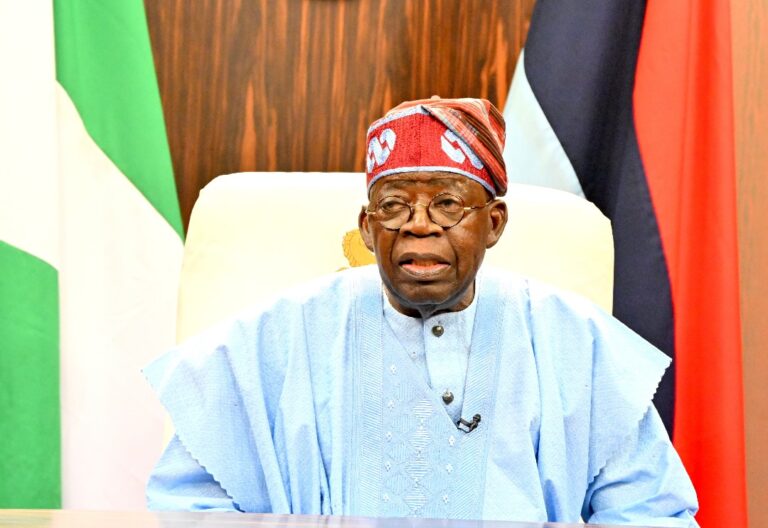
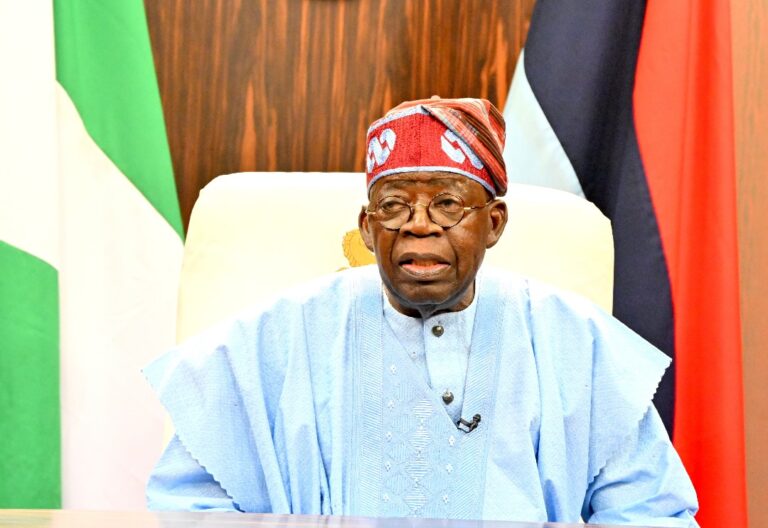
President Bola Tinubu on Wednesday addressed the nation during the celebration of Nigeria’s 65th Independence anniversary, saying his administration’s reforms are yielding results for Nigerians.
Tinubu also said that Nigeria must become a producing nation, “not just consumers”.
Read full text below:
NATIONAL BROADCAST BY HIS EXCELLENCY BOLA AHNED TINUBU, GCFR, PRESIDENT OF THE FEDERAL REPUBLIC OF NIGERIA ON THE 65TH INDEPENDENCE ANNIVERSARY OF NIGERIA, OCTOBER 1, 2025
Fellow Nigerians, Today marks the 65th anniversary of our great nation’s Independence. As we reflect on the significance of this day and our journey of nationhood since October 1, 1960, when our founding fathers accepted the instruments of self-government from colonial rule, let us remember their sacrifice, devotion, and grand dream of a strong, prosperous, and united Nigeria that will lead Africa and be the beacon of light to the rest of the world.
Our founding heroes and heroines—Herbert Macaulay, Dr Nnamdi Azikiwe, Sir Abubakar Tafawa Balewa, Chief Obafemi Awolowo, Sir Ahmadu Bello, Margaret Ekpo, Anthony Enahoro, Ladoke Akintola, Michael Okpara, Aminu Kano, Funmilayo Ransome-Kuti, and other nationalists—believed it was Nigeria’s manifest destiny to lead the entire black race as the largest black nation on earth.
For decades, the promise of our Independence has been tested by profound social, economic, and political challenges, and we have survived. While we may not have achieved all the lofty dreams of our forebearers, we have not strayed too far from them. In 65 years since our Independence, we have made tremendous progress in economic growth, social cohesion, and physical development. Our economy has experienced significant growth since 1960.
Although, it is much easier for those whose vocation is to focus solely on what ought to be, we must recognise and celebrate our significant progress. Nigerians today have access to better education and healthcare than in 1960. At Independence, Nigeria had 120 secondary schools with a student population of about 130,000. Available data indicate that, as of year 2024, there were more than 23,000 secondary schools in our country. At Independence, we had only the University of Ibadan and Yaba College of Technology as the two tertiary institutions in Nigeria. By the end of last year, there were 274 universities, 183 Polytechnics, and 236 Colleges of Education in Nigeria, comprising Federal, State, and private institutions. We have experienced a significant surge in growth across every sector of our national life since Independence – in healthcare, infrastructure, financial services, manufacturing, telecommunications, information technology, aviation and defence, among others.
Our country has experienced both the good and the bad times in its 65 years of nationhood, as is normal for every nation and its people. We fought a bitter and avoidable civil war, experienced military dictatorships, and lived through major political crises. In all these, we weathered every storm and overcame every challenge with courage, grit, and uncommon determination. While our system and ties that bind us are sometimes stretched by insidious forces opposed to our values and ways of life, we continue to strive to build a more perfect union where every Nigerian can find better accommodation and find purpose and fulfilment.
Fellow Compatriots, this is the third time I will address you on our independence anniversary since I assumed office as your President on May 29, 2023. In the last 28 months of my administration, like our founding fathers and leaders who came before me, I have committed myself irrevocably to the unfinished nation-building business.
Upon assuming office, our administration inherited a near-collapsed economy caused by decades of fiscal policy distortions and misalignment that had impaired real growth. As a new administration, we faced a simple choice: continue business as usual and watch our nation drift, or embark on a courageous, fundamental reform path. We chose the path of reform. We chose the path of tomorrow over the comfort of today. Less than three years later, the seeds of those difficult but necessary decisions are bearing fruit.
In resetting our country for sustainable growth, we ended the corrupt fuel subsidies and multiple foreign exchange rates that created massive incentives for a rentier economy, benefiting only a tiny minority. At the same time, the masses received little or nothing from our Commonwealth. Our administration has redirected the economy towards a more inclusive path, channelling money to fund education, healthcare, national security, agriculture, and critical economic infrastructure, such as roads, power, broadband, and social investment programmes. These initiatives will generally improve Nigerians’ quality of life. As a result of the tough decisions we made, the Federal and State governments, including Local Governments, now have more resources to take care of the people at the lower level of the ladder, to address our development challenges.
Fellow Nigerians, we are racing against time. We must build the roads we need, repair the ones that have become decrepit, and construct the schools our children will attend and the hospitals that will care for our people. We have to plan for the generations that will come after us. We do not have enough electricity to power our industries and homes today, or the resources to repair our deteriorating roads, build seaports, railroads, and international airports comparable to the best in the world, because we failed to make the necessary investments decades ago. Our administration is setting things right.
I am pleased to report that we have finally turned the corner. The worst is over, I say. Yesterday’s pains are giving way to relief. I salute your endurance, support, and understanding. I will continue to work for you and justify the confidence you reposed in me to steer the ship of our nation to a safe harbour.
Under our leadership, our economy is recovering fast, and the reforms we started over two years ago are delivering tangible results. The second quarter 2025 Gross Domestic Product grew by 4.23%—Nigeria’s fastest pace in four years—and outpaced the 3.4 per cent projected by the International Monetary Fund. Inflation declined to 20.12% in August 2025, the lowest level in three years. The administration is working diligently to boost agricultural production and ensure food security, reducing food costs.
In the last two years of our administration, we have achieved 12 remarkable economic milestones as a result of the implementation of our sound fiscal and monetary policies:
i. We have attained a record-breaking increase in non-oil revenue, achieving the 2025 target by August with over N20 trillion. In September 2025 alone, we raised N3.65 trillion, 411% higher than the amount raised in May 2023.
ii. We have restored Fiscal Health: Our debt service-to-revenue ratio has been significantly reduced from 97% to below 50%. We have paid down the infamous “Ways and Means” advances that threatened our economic stability and triggered inflation. Following the removal of the corrupt petroleum subsidy, we have freed up trillions of Naira for targeted investment in the real economy and social programmes for the most vulnerable, as well as all tiers of government.
iii. We have a stronger foreign Reserve position than three years ago. Our external reserves increased to $42.03 billion this September—the highest since 2019.
iv. Our tax-to-GDP ratio has risen to 13.5 per cent from less than 10 per cent. The ratio is expected to increase further when the new tax law takes effect in January. The tax law is not about increasing the burden on existing taxpayers but about expanding the base to build the Nigeria we deserve and providing tax relief to low-income earners.
v. We are now a Net Exporter: Nigeria has recorded a trade surplus for five consecutive quarters. We are now selling more to the world than we are buying, a fundamental shift that strengthens our currency and creates jobs at home. Nigeria’s trade surplus increased by 44.3% in Q2 2025 to ₦7.46 trillion ($4.74 billion), the largest in about three years. Goods manufactured in Nigeria and exported jumped by 173%. Non-oil exports, as a component of our export trade, now represent 48 per cent, compared to oil exports, which account for 52 per cent. This signals that we are diversifying our economy and foreign exchange sources outside oil and gas.
vi. Oil production rebounded to 1.68 million barrels per day from barely one million in May 2023. The increase occurred due to improved security, new investments, and better stakeholder management in the Niger Delta. Furthermore, the country has made notable advancements by refining PMS domestically for the first time in four decades. It has also established itself as the continent’s leading exporter of aviation fuel.
vii. The Naira has stabilised from the turbulence and volatility witnessed in 2023 and 2024. The gap between the official rate and the unofficial market has reduced substantially, following FX reforms and fresh capital and remittance inflows. The multiple exchange rates, which fostered corruption and arbitrage, are now part of history. Additionally, our currency rate against the dollar is no longer determined by fluctuations in crude oil prices.
viii. Under the social investment programme to support poor households and vulnerable Nigerians, N330 billion has been disbursed to eight million households, many of whom have received either one or two out of the three tranches of the N25,000 each.
ix. Coal mining recovered dramatically from a 22% decline in Q1 to 57.5% growth in Q2, becoming one of Nigeria’s fastest-growing sectors. The solid mineral sector is now pivotal in our economy, encouraging value-added production of minerals extracted from our soil.
x. The administration is expanding transport infrastructure across the country, covering rail, roads, airports, and seaports. Rail and water transport grew by over 40% and 27%, respectively. The 284-kilometre Kano-Kastina-Maradi Standard Gauge rail project and the Kaduna-Kano rail line are nearing completion. Work is progressing well on the legacy Lagos-Calabar Coastal Highway and Sokoto-Badagry Highway. The Federal Executive Council recently approved $3 billion to complete the Eastern Rail Project.
xi. The world is taking notice of our efforts. Sovereign credit rating agencies have upgraded their outlook for Nigeria, recognising our improved economic fundamentals. Our stock market is experiencing an unprecedented boom, rising from an all-share index of 55,000 points in May 2003 to 142,000 points as of September 26, 2025.
xii. At its last MPC meeting, the Central Bank slashed interest rates for the first time in five years, expressing confidence in our country’s macroeconomic stability.
SECURITY
We are working diligently to enhance national security, ensuring our economy experiences improved growth and performance. The officers and men of our armed forces and other security agencies are working tirelessly and making significant sacrifices to keep us safe. They are winning the war against terrorism, banditry and other violent crimes. We see their victories in their blood and sweat to stamp out Boko Haram Terror in North-East, IPOB/ESN terror in South East and banditry and kidnapping. We must continue to celebrate their gallantry and salute their courage on behalf of a grateful nation. Peace has returned to hundreds of our liberated communities in North-West and North-East, and thousands of our people have returned safely to their homes.
YOUTH
I have a message for our young people. You are the future and the greatest assets of this blessed country. You must continue to dream big, innovate, and conquer more territories in your various fields of science, technology, sports, and the art and creative sector. Our administration, through policies and funding, will continue to give you wings to fly sky-high. We created NELFUND to support students with loans for their educational pursuits. Approximately 510,000 students across 36 states and the FCT have benefited from this initiative, covering 228 higher institutions. As of September 10, the total loan disbursed was N99.5 billion, while the upkeep allowance stood at N44.7 billion.
Credicorp, another initiative of our administration, has granted 153,000 Nigerians N30 billion affordable loans for vehicles, solar energy, home upgrades, digital devices, and more.
YouthCred, which I promised last June, is a reality, with tens of thousands of NYSC members now active beneficiaries of consumer credit for resettlement.
Under our Renewed Hope Agenda, we promised to build a Nigeria where every young person, regardless of background, has an equitable opportunity to access a better future—thus, the Investment in Digital and Creative Enterprises (iDICE) programme. The Bank of Industry is driving the programme, in collaboration with the African Development Bank, the French Development Agency, and the Islamic Development Bank. This initiative is at the cusp of implementation. Over the last two years, we have collaborated with our partners to launch the programme, supporting our young builders and dreamers in the technology and creative sectors.
A MESSAGE OF HOPE
Fellow Nigerians, I have always candidly acknowledged that these reforms have come with some temporary pains. The biting effects of inflation and the rising cost of living remain a significant concern to our government. However, the alternative of allowing our country to descend into economic chaos or bankruptcy was not an option. Our macro-economic progress has proven that our sacrifices have not been in vain. Together, we are laying a new foundation cast in concrete, not on quicksand.
The accurate measure of our success will not be limited to economic statistics alone, but rather in the food on our families’ tables, the quality of education our children receive, the electricity in our homes, and the security in our communities. Let me assure you of our administration’s determination to ensure that the resources we have saved and the stability we have built are channelled into these critical areas. Today, the governors at the state level, and the local government autonomy are yielding more developments.
Therefore, on this 65th Anniversary of Our Independence, my message is hope and a call to action. The federal government will continue to do its part to fix the plumbing in our economy. Now, we must all turn on the taps of productivity, innovation, and enterprise, just like the Ministry of Interior has done with our travel passports, by quickening the processing. In this regard, I urge the sub-national entities to join us in nation-building. Let us be a nation of producers, not just consumers. Let us farm our land and build factories to process our produce. Let us patronise ‘Made-in-Nigeria’ goods. I say Nigeria first. Let us pay our taxes.
Finally, let all hands be on deck. Let us believe, once more, in the boundless potential of our great nation.
With Almighty God on our side, I can assure you that the dawn of a new, prosperous, self-reliant Nigeria is here.
Happy 65th Independence Anniversary, and may God continue to bless the Federal Republic of Nigeria.
Amen.
Bola Ahmed Tinubu, GCFR President and Commander-In-Chief of the Armed Forces of the Federal Republic of Nigeria, Presidential Villa, Abuja.
President Bola Tinubu has assured Nigerians that the country’s economy is firmly on a growth trajectory, citing sustained trade surpluses, rising reserves, and stronger non-oil revenues.
In his Independence Day address on Wednesday, Tinubu said Nigeria had become a net exporter, with trade surpluses recorded for five consecutive quarters. The surplus rose by 44.3% in the second quarter of 2025 to ₦7.46 trillion ($4.74 billion), the largest in three years.
Goods manufactured in Nigeria and exported surged by 173%, while non-oil exports now account for 48% of government revenue, compared to oil exports at 52%.
“We are now selling more to the world than we are buying, a fundamental shift that strengthens our currency and creates jobs at home,” Tinubu declared.
He highlighted growth in external reserves, which rose to $42.03 billion in September 2025, the highest since 2019, alongside an increase in the tax-to-GDP ratio to 13.5%. A new tax law, set to take effect in January, is expected to expand the tax base while offering relief to low-income earners.
Oil and Energy Tinubu noted that oil production had recovered to 1.68 million barrels per day, up from barely one million in May 2023. He attributed this rebound to improved security, fresh investments, and stronger stakeholder engagement in the Niger Delta.
He added that Nigeria had refined petrol domestically for the first time in four decades and had become Africa’s leading exporter of aviation fuel.
Currency and Inflation The President said the Naira had stabilised following foreign exchange reforms, with the gap between official and parallel market rates significantly reduced. He noted that inflation had declined to 20.12% in August 2025, the lowest in three years.
“The multiple exchange rates, which fostered corruption and arbitrage, are now part of history,” he said.
Social Investment and Mining According to Tinubu, ₦330 billion has been disbursed to eight million households under social programmes, with beneficiaries receiving ₦25,000 per tranche.
He also pointed to a dramatic recovery in coal mining, which rebounded from a 22% decline in the first quarter to 57.5% growth in the second quarter.
Infrastructure and Stock Market On infrastructure, Tinubu said rail and water transport grew by 40% and 27%, respectively, with major projects such as the Kano-Katsina-Maradi rail, Kaduna-Kano line, Lagos-Calabar Coastal Highway, and Sokoto-Badagry Highway progressing.
The Federal Executive Council recently approved $3 billion for the completion of the Eastern Rail Project, he disclosed.
He also said Nigeria’s stock market had surged to unprecedented levels, with the All-Share Index rising from 55,000 points in May 2023 to 142,000 points as of September 26, 2025.
Macroeconomic Gains The President highlighted a cut in interest rates to 27% by the Central Bank of Nigeria — the first in five years — as evidence of renewed confidence in macroeconomic stability.
He said GDP grew by 4.23% in the second quarter of 2025, the fastest pace in four years and higher than the IMF projection of 3.4%.
“We have paid down the infamous ‘Ways and Means’ advances that threatened our stability. Following the removal of the corrupt petroleum subsidy, we have freed up trillions of Naira for investment in the real economy and support for vulnerable households,” Tinubu added.
He said Nigeria’s debt service-to-revenue ratio had dropped from 97% to below 50%, while non-oil revenues reached a record-breaking ₦20 trillion by August, with ₦3.65 trillion raised in September alone.
President Bola Tinubu has declared that the most difficult phase of Nigeria’s economic reforms has passed, assuring citizens that the pains of the past are giving way to relief.
In a nationwide broadcast on Wednesday to mark Nigeria’s 65th Independence Day anniversary, Tinubu said his administration’s policies were beginning to yield results, with key economic indicators showing signs of recovery.
“Our administration is setting things right. I am pleased to report that we have finally turned the corner. The worst is over,” the President stated.
He commended Nigerians for their patience and resilience, pledging to continue steering the country toward stability.
“Under our leadership, our economy is recovering fast, and the reforms we started over two years ago are delivering tangible results,” Tinubu said. “The second quarter 2025 Gross Domestic Product grew by 4.23 percent — Nigeria’s fastest pace in four years — surpassing the IMF’s projection of 3.4 percent.”
On food security, the President highlighted efforts to expand agricultural production and bring down food prices.
“Inflation declined to 20.12 percent in August 2025, the lowest level in three years,” he noted. “The administration is working diligently to boost agricultural production and ensure food security, reducing food costs.”
Tinubu added that in the past two years, his government had recorded 12 key economic milestones through what he described as “sound fiscal and monetary policies.”