Security analyst and Head of Beacon Security and Intelligence Limited, Kabir Adamu, has said the recent United States airstrikes on terrorist enclaves in Nigeria failed to achieve their intended objectives, citing flawed intelligence, inappropriate weapon choice and unexploded missiles.
Adamu made the assessment on Tuesday while speaking in an interview, noting that continued attacks after the strikes indicated limited operational impact.
“In simple terms, no. The fact that attacks have been ongoing after the military airstrikes simply says that the intended results are yet to be achieved,” he said.
According to him, there is no credible public evidence that the strikes significantly degraded terrorist capabilities.
“Till date, pictures haven’t been matched of corpses of those killed, neither have we seen pictures of destroyed camps, equipment they use in fighting, their gun trucks or weapons. That tells me that perhaps the intended outcome was never achieved,” Adamu stated.
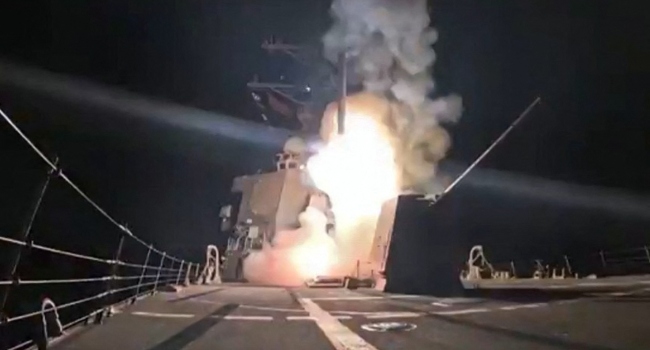
He also raised concerns over reports that four of the 16 Tomahawk missiles used during the Christmas Day operation failed to detonate, describing the incident as both an operational and financial setback.
“Four of the 16 warheads never exploded, and we are talking about warheads that cost about two million US dollars per head. So roughly eight million US dollars was wasted,” he said.
Questioning the suitability of the weapons deployed, Adamu argued that Tomahawk missiles were ill-suited for Nigeria’s security environment.
“The general consensus is that it couldn’t and shouldn’t have been the appropriate weaponry to use, given the nature of the threat elements we have in Nigeria — asymmetric warfare elements infused within law-abiding citizens. Ground troops and other forms of weaponry would have been more effective,” he explained.
He noted that the missiles were launched from a US destroyer in the Gulf of Guinea, travelling long distances that may have undermined intelligence accuracy.
“The most conservative distance they covered would be about one thousand kilometres. Intelligence is not static, and the possibility exists that the intelligence changed from the time the missile was launched to when it hit the target,” Adamu said.
On the issue of unexploded warheads, he identified several possible causes.
“Technical faults, weather conditions, wrong mapping and several other components could have interfered to cause the unexploded ordnance,” he added.
Adamu also spoke on intelligence sharing, saying available information suggested the United States relied heavily on Nigerian intelligence.
“Open information indicates that the intelligence was shared by Nigeria to the US. The intelligence capability of the United States in this part of the world is really basic, and for several reasons it is not as strong as it used to be, so it relied on Nigerian intelligence,” he said.
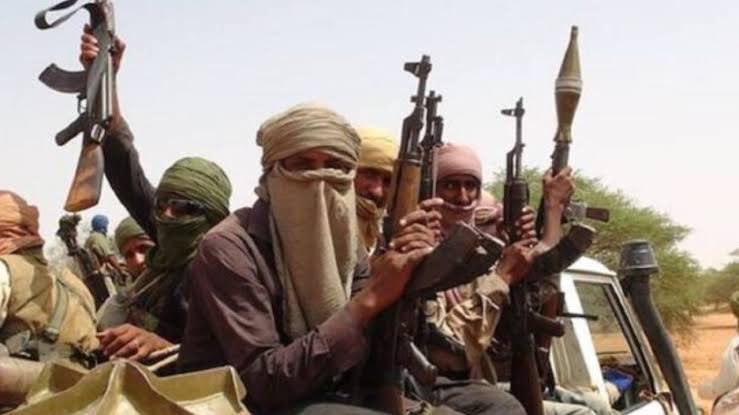
He questioned the choice of target, describing the Lakurawa group as a low-priority threat.
“If you are ranking terrorist groups in Nigeria, the Lakurawas occupy the lowest echelons. They are nowhere within the top ten categories of threat elements in terms of fatalities,” Adamu stated.
According to him, more dangerous groups should have been prioritised.
“If it had been ISWAP, Jama’atu Ahlis Sunna Lidda’awati wal-Jihad, Ansaru or Boko Haram, one would have said these were more important and crucial terror groups. But the Lakurawas are somewhere way down,” he said.
Adamu argued that the operation largely served domestic political objectives in the United States.
“In the case of the US, they achieved a domestic objective. President Trump was under pressure, at least from Congress,” he said, adding that the timing and location of the strike were symbolic.
“It is instructive that the attack occurred on the 25th of December, Christmas Day, and that it targeted Sokoto State, which is the symbolic seat of the Islamic Caliphate in Nigeria. It was symbolic.”
He said Nigeria also gained diplomatically from the operation.
“For the Nigerian state, they succeeded in de-escalating the pressure they were under from the United States by allowing that attack to occur,” Adamu said, while stressing that insecurity remains a concern.
“The threat element remains, and anyone who doubts that should look at the number of attacks that have occurred from December 26 to January 13. Several Nigerians have been killed within this period.”
Presenting highlights from Beacon Security and Intelligence Limited’s 2025 annual report, Adamu said insecurity remained severe despite some improvements.
“From January to December 2025, we recorded about 9,000 fatalities,” he said.
He noted a spike towards the end of the year.
“In December 2025, fatalities increased from 451 in November to 498, a 10.42 per cent increase, mainly concentrated in the northwest — Zamfara and Katsina — largely driven by banditry,” he explained.
However, he said abductions declined sharply on a month-on-month basis.
“We recorded 970 abductions in November 2025 and 406 in December 2025, a decrease of about 71.55 per cent,” Adamu said.
On an annual basis, he said both fatalities and abductions declined.
“Abductions declined from 9,679 in 2024 to 8,523 in 2025, an 11.94 per cent decrease. Fatalities also declined from 11,692 in 2024 to 10,504 in 2025, a 10.16 per cent reduction,” he stated.
According to him, the most significant improvements began around mid-2025.
“From around May 2025, we started seeing a decrease from about 1,300 fatalities per month, ending the year at about 400. This clearly shows an increase in law enforcement capabilities, especially in rural areas,” Adamu said.
He attributed the gains to targeted interventions.
“Law enforcement capabilities improved, including the deployment of forest guards. We also saw better intelligence, targeted operations against threat actors, the killing of commanders and destruction of supply chains. There was improved synergy between intelligence and operations,” he said.
Adamu also highlighted improved coordination between federal and state authorities but warned about policy inconsistencies.
“There has been increased engagement between the federal government and state governments, following directives from the President for the Office of the National Security Adviser to work more closely with states,” he said.
However, he added, “What is happening in Katsina State, such as the release of 70 bandits, is extremely deplorable. Zamfara has said it will not do the same. These variances still exist.”
In his concluding remarks, Adamu described Nigeria’s position as challenging.
“The most significant takeaway is the pressure the Nigerian government is under. It is a no-win situation. Either way, American pressure will continue,” he said.
He urged authorities to focus on dismantling terrorist networks.
“We must suffocate the oxygen terrorists use to operate — their funding, recruitment, mobility, access to weapons and the shadow economy of illegal mining and kidnapping for ransom. The moment we block these, the insurgency will end,” Adamu said.