Home Blog Page 9

INEC To Issue Revised 2027 Election Timetable Under New Law

0

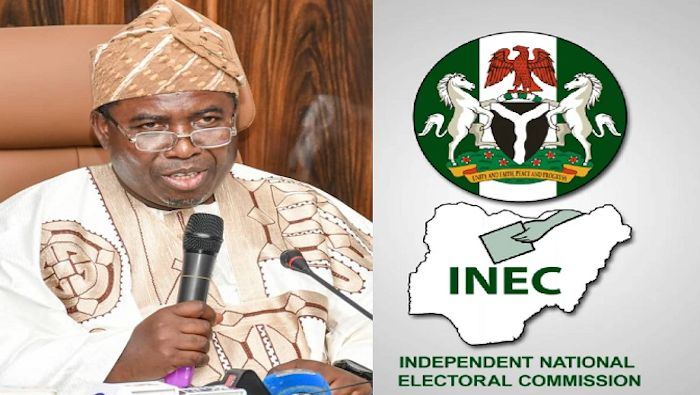
The Independent National Electoral Commission (INEC) has announced plans to release a revised timetable for the 2027 general election following the enactment of the Electoral Act 2026.

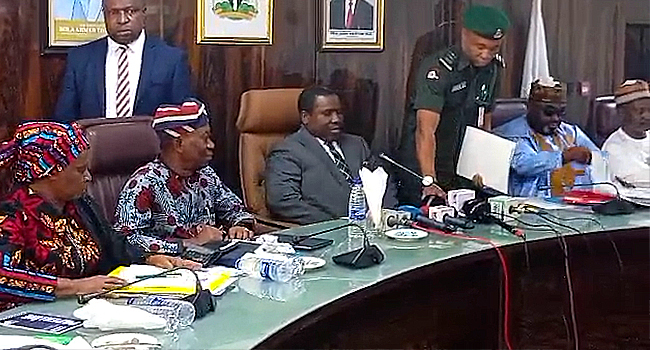
INEC Chairman, Joash Amupitan, disclosed this on Wednesday in Abuja during a meeting with Resident Electoral Commissioners (RECs) and the swearing-in of a new REC for Abia State.

According to him, the earlier Notice of Election issued on February 13, 2026, was made under the old Electoral Act.

“I must not fail to inform you that we now have a new Electoral Act, 2026. We had on 13th February 2026 issued a Notice of Election before the new act was enacted. The notice was issued under the old law. With the introduction of the new Electoral Act, we have to make some adjustments and issue a revised timetable for the 2027 general election,” he said.

Amupitan revealed that the commission is reviewing its transport logistics model ahead of 2027. He explained that during the recent Federal Capital Territory (FCT) Area Council election, only 45 per cent of polling units opened by 8:30am, though full coverage was achieved by 10:00am.

He stated that staff members responsible for logistics shortfalls in Kuje Area Council and Kabusa Ward in Abuja Municipal Area Council (AMAC) had been identified and would be queried. Transporters linked to delays in Kwali Area Council would also be blacklisted.

The INEC chairman noted that the FCT election and the state constituency elections in Kano and Rivers provided both reassuring and sobering lessons for the commission.

On allegations of “voter migration” in the FCT, Amupitan clarified that no voter was migrated in 2026. He explained that the redistribution of voters occurred in 2022 following the creation of over 56,000 additional polling units nationwide, increasing the total from 119,972 to over 176,000.

To populate the newly created polling units, about 6.7 million voters were redistributed from approximately 12,000 congested units to 17,000 less congested ones across the country.

In the FCT alone, 411 polling units were decongested, and about 580,000 voters were redistributed to 1,156 polling units.

He said some voters still experienced difficulties locating their polling units despite text messages, emails, and voter register displays, stressing that voter education must be continuous and not episodic.

Amupitan also addressed concerns over result management, describing collation as the most vulnerable stage of the electoral process. He said safeguards had been added to the BVAS system to prevent manipulation of results uploaded to the INEC Result Viewing Portal (IReV).

He explained that presiding officers are required to capture and upload Form EC8A to IReV and enter party scores directly into the BVAS device. The system automatically flags over-voting and prevents finalisation if total votes exceed accredited voters.

Using the example of the Kuroko Health Centre polling unit in Yangoji Ward, Kwali Area Council, where a viral result alleged 1,219 votes for a party despite 345 registered voters and 213 accredited voters, Amupitan said an investigation revealed a clerical error by the presiding officer during manual correction of figures.

He said the correct result was later entered at the ward collation level and that the FCT REC issued a press release clarifying the matter.

While acknowledging that no election is perfect, the INEC chairman stressed that the commission would no longer tolerate absenteeism, lateness, or dereliction of duty by staff.

He added that the upcoming governorship elections in Ekiti and Osun would test INEC’s readiness ahead of the more complex 2027 general election.

Amupitan said the commission would soon begin a thorough clean-up to sanitise and strengthen the integrity of the voter register in preparation for 2027, emphasising that credibility is built on performance, transparency, and public trust.
Tinubu Urges Senate To Amend Constitution For State Police Establishment

0

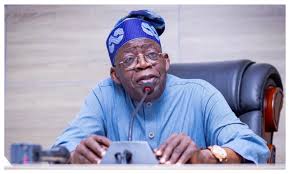
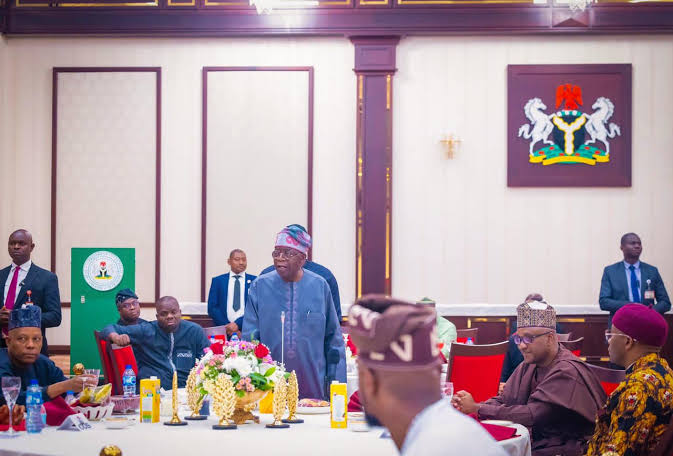
President Bola Ahmed Tinubu has called on the leadership of the 10th Senate to begin constitutional amendments that would provide a legal framework for the establishment of state police as part of efforts to tackle rising insecurity across Nigeria.

The President made the appeal during an interfaith breakfast with senators at the Presidential Villa in Abuja, according to a statement issued by his Special Adviser on Information and Strategy, Bayo Onanuga.

Tinubu said the creation of state police had become necessary in view of Nigeria’s evolving security challenges, stressing that decentralised policing would strengthen grassroots security and allow states to respond more effectively to local threats.

“We are facing terrorism, banditry and insurgency. But we will never fail to make the right response to these challenges,” the President said. “What I will ask for tonight is for you (Senators) to start thinking about how best to amend the Constitution to incorporate state police for us to secure our country, take over our forests from marauders and free our children from fear.”

He explained that a decentralised policing structure would complement the existing federal security system while promoting intelligence-driven and community-focused law enforcement.

The President also commended the working relationship between the executive and the National Assembly, describing unity as essential in the fight against terrorism and banditry.

“It is a good thing that we are working in harmony. We are looking forward to a country that evolves, a country that takes care of its citizens and protects all,” he said.

Tinubu further appreciated the Senate for supporting key reforms of his administration, including the removal of fuel subsidy and tax reforms, which he described as bold but necessary decisions.

“I have a lot of credit for bold reforms. Without your collaboration and inspiration, those reforms would not have been possible. We are reformists together,” he added, noting that ending the subsidy regime curtailed what he described as monumental corruption.

In his remarks, Senate President Godswill Akpabio thanked the President for hosting the interfaith breakfast and commended his leadership at what he termed a critical period for the country.

Akpabio said the administration’s reforms had boosted revenue allocations to states, enabling governors to embark on key infrastructure projects, and prayed for peace and prosperity in Nigeria.

Natasha Akpoti Condemns Alleged Assassination Attempt On Peter Obi, Warns Of Threat To Democracy

0

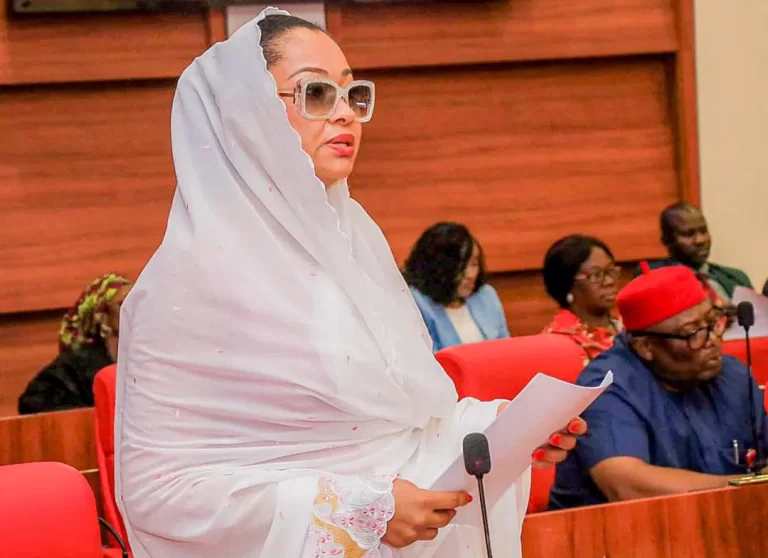
The Senator representing Kogi Central, Natasha Akpoti-Uduaghan, has condemned the alleged assassination attempt on Peter Obi and John Odigie-Oyegun, describing the development as a grave threat to Nigeria’s democracy.

In a statement, Akpoti-Uduaghan said the incident was “deeply disturbing” and warned against what she described as a growing wave of political intolerance across the country.

She stressed that violence, intimidation, and threats must not be allowed to define Nigeria’s political environment, insisting that democratic competition should never descend into physical attacks on perceived opponents.

According to her, democracy thrives on healthy rivalry, freedom of expression, and respect for dissenting voices. She maintained that opposition figures have constitutional rights to organise, mobilise, and participate in the political process without fear.

The senator also expressed concern over what she termed overzealous political actors who, in an attempt to prove loyalty to political leaders, resort to harassment or aggression against opposition members. She described such actions as reckless, counterproductive, and dangerous to national unity.

Akpoti-Uduaghan called on security agencies to conduct a thorough investigation into the incident and ensure that anyone found culpable is brought to justice.

Meanwhile, a chieftain of the African Democratic Congress (ADC) in Edo State, Ken Imasuangbon, urged President Bola Ahmed Tinubu to rein in members of the All Progressives Congress (APC) in the state following the reported attack on opposition figures in Benin.

Imasuangbon described the development as a dangerous signal for democracy and warned that failure to address alleged excesses could heighten tensions in Edo State. He alleged that the attack bore the “imprint of ruling party hirelings” and insisted that intimidation and political violence have no place in a democratic society.

He further stated that the presidency has a responsibility to ensure that members of the ruling party uphold democratic norms and respect the rule of law.

In addition, youths of Agulu community in Anaocha Local Government Area of Anambra State, under the aegis of the Agulu Youth Development Committee, also condemned the incident. In a statement signed by their chairman and secretary, Eric-Kenny Maduagwu and Egoh Chamberlain, the group called for a full investigation into the matter.

The youths described the alleged attack as unfortunate and warned against the escalation of political tensions, urging authorities to take proactive steps to safeguard democratic principles and protect political actors across party lines.

Tinubu’s Executive Order Halts N2tn NNPC Deductions

0

President Bola Ahmed Tinubu has issued an executive order stopping the deduction of management fees and contributions to the Frontier Exploration Fund by the Nigerian National Petroleum Company Limited (NNPC), effectively blocking revenue streams that generated about N2.076tn over four years.

An analysis of monthly earnings submitted to the Federation Account Allocation Committee (FAAC) shows that the national oil company received N20.739bn from such deductions in 2022, N695.9bn in 2023, N452.6bn in 2024, and N906.91bn in 2025. The total retained between 2022 and 2025 amounts to roughly N2.1tn.

The directive mandates that all oil and gas revenues due to the federation be remitted in full before any operational charges are applied, in line with constitutional fiscal provisions. It halts automatic deductions, including management fees and Frontier Exploration Fund allocations, requiring that earnings first be paid into the Federation Account.

The order has drawn mixed reactions.

State governments and fiscal transparency advocates have welcomed the move, arguing that it will increase distributable revenue, improve accountability, and address concerns over opaque deductions.

However, some industry stakeholders and legal analysts warn that the directive may create tensions between provisions of the Petroleum Industry Act (PIA) and constitutional fiscal rules. They caution that frontier exploration and joint venture funding structures were designed to drive reserve growth and operational efficiency, and that abrupt changes without alternative funding arrangements could affect investments and production.

Labour groups, including the Petroleum and Natural Gas Senior Staff Association of Nigeria, have called for clarity on implementation to ensure reforms do not disrupt production or job security. They also urged the government to establish a transparent funding framework for critical industry projects.

Data from FAAC submissions show significant volatility in the retained earnings over the four-year period. While deductions stood at N20.739bn in 2022, they rose sharply to N695.9bn in 2023, before dropping to N452.6bn in 2024 and surging again to N906.91bn in 2025.

In 2025 alone, N453.455bn was allocated each to management fees and the Frontier Exploration Fund. However, the frontier allocation fell short of the N710.520bn budgeted for the year, leaving a deficit of N257.066bn.

Monthly figures further highlight the fluctuations. For instance, in 2025, frontier deductions ranged from as low as N6.83bn in June to as high as N82.61bn in September, reflecting swings in production sharing contract profits.

Under existing arrangements, royalties and taxes from deepwater production sharing contracts are remitted to FAAC through crude oil lifting rather than direct cash payments. Industry sources say any change to this structure could create operational and financing uncertainties, particularly where crude-backed loans and investor agreements are involved.

The Frontier Exploration Fund, established under the PIA, supports hydrocarbon exploration in frontier basins such as Chad, Sokoto, Anambra, and Benue troughs.

Energy analysts note that the long-term impact of the directive will depend on how the government balances fiscal transparency with sustained oil and gas investment. A presidential implementation committee has been tasked with overseeing the effective rollout of the new remittance framework.

INEC Chair Orders Probe Over Kuje, Kabusa Election Shortfalls

0

The Chairman of the Independent National Electoral Commission (INEC), Joash Amupitan, has ordered an investigation into staff members responsible for shortfalls recorded in Kuje and Kabusa during the recent Federal Capital Territory (FCT) council elections.

Amupitan said the affected employees would face sanctions if found culpable. He also disclosed that transporters linked to delays in the movement of election materials to Kwali Area Council would be blacklisted.

The INEC chairman made this known on Wednesday while reviewing the FCT polls at a meeting with Resident Electoral Commissioners (RECs) at the commission’s headquarters in Abuja.

The meeting comes four days after the conduct of the FCT council elections and by-elections held in Rivers and Kano states last Saturday. It is also aimed at gathering feedback from RECs and discussing preparations ahead of the 2027 general elections.

All RECs from the 36 states and the FCT attended the meeting. Also present was the Forum of State Independent Electoral Commissions, who paid a courtesy visit to the INEC chairman.

Leader of the delegation, Mamman Eri, said the engagement was to strengthen collaboration with INEC in improving the conduct of local government elections nationwide.

INEC conducted elections across the six area councils of the FCT for chairmanship and councillorship positions. By-elections were also held in Ahoada East II and Khana II constituencies in Rivers State, while legislative elections took place in Kano Municipal and Ungogo constituencies in Kano State.

In Kuje Area Council, APC candidate Danjuma Shekwolo won the chairmanship election with 17,269 votes. In Abuja Municipal Area Council (AMAC), APC’s Christopher Maikalangu secured victory with 40,295 votes out of 62,861 valid votes cast.

In Kwali Area Council, APC candidate Daniel Nuhu polled 17,032 votes to defeat PDP’s Haruna Pai, who scored 8,575 votes. Meanwhile, in Gwagwalada Area Council, PDP candidate Mohammed Kasim won the chairmanship seat with 22,165 votes, defeating APC’s Yahaya Shehu, who garnered 17,788 votes.

Coroner’s Inquest Into Death Of Chimamanda Adichie’s Son To Begin April 14

0

A Coroner sitting at the Yaba Magistrate Court in Lagos has fixed April 14, 2026, for the commencement of an inquest into the death of 21-month-old Nkanu, son of acclaimed Nigerian author Chimamanda Ngozi Adichie and Dr. Ivara Esege.

Magistrate Atinuke Adetunji adjourned the matter on Wednesday when it came up in court.

Senior Advocate of Nigeria, Kemi Pinheiro, announced appearance for the family, while Adebola Rahman represented the Attorney-General of Lagos State. Cheluchi Onyemelukwe of Health Ethics and Law Consulting appeared for Atlantis Hospital, with another counsel representing Euracare Multi-Specialist Hospital.

During a preliminary session, Magistrate Adetunji disclosed that the court received an application from the Chief Coroner of Lagos State following a request by the Attorney-General that an inquest be conducted. She noted that the Lagos State Government also considers itself bereaved in the matter.

The magistrate explained that the preliminary proceedings were to determine whether a formal inquest would proceed and directed all parties to file their witness statements ahead of the next adjourned date. She emphasised that the purpose of the inquest is to determine the cause of death.

She further stated that an autopsy is generally the starting point in every inquest to provide a professional medical report.

Pinheiro urged the court to proceed with the hearing, maintaining that the parents believe the child’s death was unnatural and occurred during medical intervention. He indicated that the family would present evidence alleging gross medical negligence, possible overdose, wrongful prescription and administration of propofol, and wrongful diagnosis.

According to him, the family plans to call five independent medical experts, including an anesthesiologist, a paediatric anaesthesia specialist, a radiologist, an intensivist, as well as the child’s father.

He also requested that Euracare preserve all physical and electronic evidence from January 6, 2026, including CCTV footage, monitoring data, pharmacy records, emergency equipment logs, internal communications, and morbidity and mortality reviews.

The magistrate ruled that Euracare would open its case at the hearing, followed by the family and then Atlantis Hospital.

Nkanu reportedly died on January 7, 2026, after receiving care at Atlantis Hospital and undergoing medical procedures at Euracare in Lagos. He had initially been admitted for what was described as a worsening but initially mild illness.

While arrangements were underway to transfer him to Johns Hopkins Hospital in the United States for further treatment, Atlantis referred him to Euracare for pre-flight diagnostic procedures, including an MRI, lumbar puncture, echocardiogram, and insertion of a peripherally inserted central catheter.

According to the family’s legal notice, intravenous sedation using propofol was administered, and the child allegedly developed sudden and severe complications while being transported after the MRI.

The parents have alleged breaches of duty of care, raising concerns about cumulative dosing of propofol, inadequate airway protection, failure to ensure continuous monitoring, insufficient medical personnel during transfer, and delayed recognition and management of distress.

The court is expected to reconvene on April 14, 2026, for the substantive hearing.

Archbishop Ndagoso Elected President Of Catholic Bishops Conference Of Nigeria

0

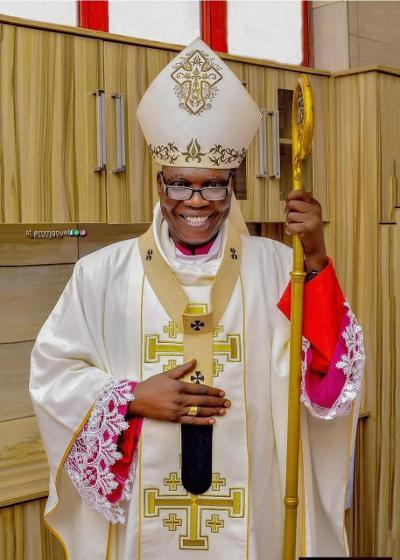
The Archbishop of Kaduna, Matthew Man-Oso Ndagoso, has been elected as the new President of the Catholic Bishops Conference of Nigeria (CBCN).

He succeeds Lucius Iwejuru Ugorji, the Archbishop of Owerri, who is completing his four-year tenure as president of the conference.

According to a statement signed by the Secretary General of the Catholic Secretariat of Nigeria, Very Rev. Fr. Michael Ayanleke Banjo, Ndagoso emerged as president during the ongoing plenary session of the conference at the Catholic Secretariat of Nigeria in Abuja.

Born on January 3, 1960, Archbishop Ndagoso was raised in a traditional religious family before converting to Catholicism. He was ordained a priest on October 4, 1986. He has served as Archbishop of the Archdiocese of Kaduna since November 2007 and was officially installed on January 30, 2008.

Also elected into key leadership positions were Alfred Adewale Martins, Archbishop of Lagos, as Vice President; Peter Odetoyinbo as Secretary; and Peter Chukwu as Assistant Secretary of the CBCN.

Tinubu Tasks IGP Disu to Lead Police Firmly, Restore Public Confidence

0

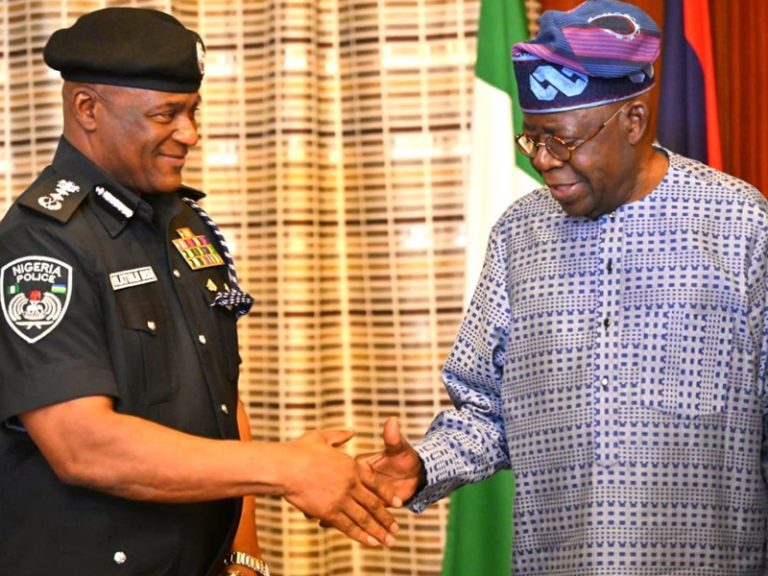
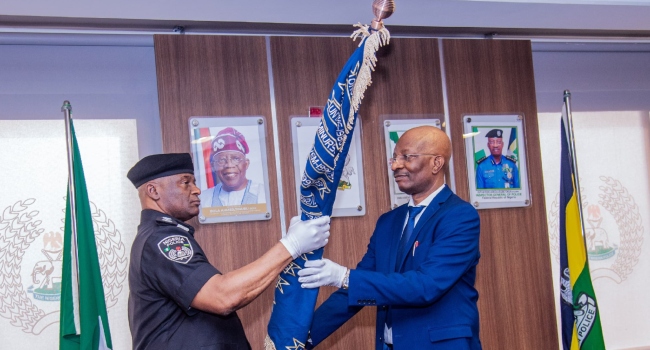
President Bola Tinubu has charged the Acting Inspector-General of Police, Tunji Disu, to lead the police force with firmness and fairness while restoring public confidence in law enforcement across the country.

The President gave the charge on Wednesday at the State House, Abuja, during the decoration of Disu as Acting Inspector-General of Police, following the retirement of Kayode Egbetokun.

Tinubu said Disu’s appointment was based on his track record and dedication in previous assignments within the Nigeria Police Force.

“I made this decision for you to assume this responsibility. I know your record. I saw the dedication you exhibited while you were in Lagos when I was governor,” the President said.

He urged the new police chief to demand professionalism at every level and ensure that the safety of lives and property remains the highest priority.

“It’s a daunting challenge. I know you can do it. You have my word; you have my full support,” Tinubu added.

The President described the appointment as coming at a critical time, calling on Disu to rebuild public trust in the police and strengthen collaboration with other security agencies to tackle banditry, terrorism and other criminal activities.

Disu’s appointment is subject to ratification by the Nigeria Police Council and confirmation by the Senate, with the Council expected to meet next week.

In his remarks after the decoration, Disu pledged to reposition the Force through professionalism, respect for human rights and zero tolerance for corruption. He emphasised that effective policing depends heavily on cooperation between officers and members of the public.

“The citizens of the country are the boss. No police anywhere in the world can succeed without the cooperation of members of the public,” he said.

He promised to reorient officers to end impunity, strengthen discipline and prioritise continuous training and capacity building in line with global best practices.

Disu also assured officers of improved welfare, noting that a motivated workforce is essential for delivering results.

The outgoing IGP, Egbetokun, urged his successor to consolidate ongoing reforms, including improved intelligence coordination, dismantling of criminal syndicates and enhanced inter-agency collaboration. He expressed confidence that Disu would surpass the achievements recorded during his tenure.

Also present at the ceremony were the National Security Adviser, Nuhu Ribadu; Chief of Staff to the President, Femi Gbajabiamila; and Delta State Governor, Sheriff Oborevwori, among other senior government officials and security stakeholders.

Governors Dapo Abiodun of Ogun State and Ademola Adeleke of Osun State also congratulated the new acting IGP, expressing confidence in his ability to provide focused and professional leadership at a crucial period in Nigeria’s security landscape.

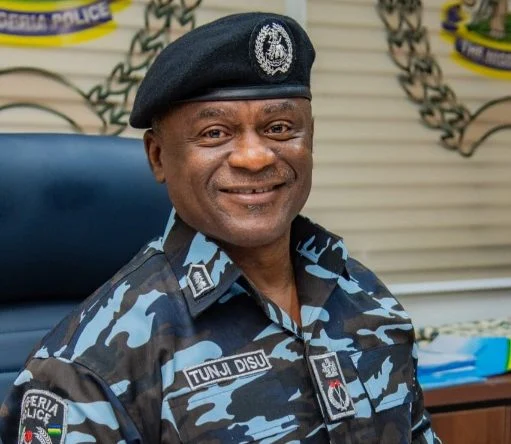
Tunji Disu Assumes Office as Acting IGP, Vows Professional, Accountable Policing

0

Tunji Disu has formally assumed office as the acting Inspector-General of Police, pledging to lead the Nigeria Police Force with professionalism, accountability and modern policing strategies.

Disu took over leadership of the Force on Wednesday at a brief handover ceremony held at the Louis Edet House, Force Headquarters, Abuja, shortly after being decorated by President Bola Tinubu at the Presidential Villa.

His appointment followed the resignation of Kayode Egbetokun, who stepped down citing pressing family considerations.

In his inaugural remarks, the 59-year-old police chief outlined a three-point agenda centred on professionalism, modernisation and accountability.

“My tenure will be built on three clear commitments: professionalism, modernism and accountability,” Disu said.

He charged officers nationwide to uphold integrity, compassion and courage in the discharge of their duties, while assuring them of improved welfare and support.

“To all officers, I will demand the best from you because the people we serve deserve nothing less,” he stated. “Integrity, compassion and courage are not optional qualities; they are the job. In return, I will fight for your welfare, dignity and the conditions you need to serve effectively.”

Disu emphasised that leadership within the Force must be visible and accountable, declaring that his appointment marked the beginning of renewed efforts to strengthen public trust and operational effectiveness.

Earlier at the decoration ceremony, President Tinubu expressed confidence in Disu’s capacity to tackle Nigeria’s security challenges, including banditry and terrorism. The President recalled Disu’s service in Lagos and urged him to lead firmly while prioritising the safety of lives and property.

In his remarks at the handover, Egbetokun congratulated his successor and urged him to consolidate on reforms initiated during his tenure, particularly in intelligence integration, community-centred policing and officer welfare. He highlighted improved inter-agency collaboration, targeted anti-kidnapping operations and capacity development as key achievements recorded under his leadership.

Until his elevation, Disu served as Assistant Inspector-General in charge of the Force Criminal Investigation Department (FCID) Annex, Alagbon, Lagos. He previously held positions as Commissioner of Police in Rivers State and the Federal Capital Territory, among other strategic roles within the Force.

With Disu now at the helm, attention turns to how the new leadership will navigate evolving security threats and deepen reforms within the Police.

FULL LIST: Senior DIGs Who May Exit As Disu Takes Over As Acting IGP

0

President Bola Tinubu on Tuesday appointed Assistant Inspector-General of Police, Tunji Disu, as the acting Inspector-General of Police following the resignation of Kayode Egbetokun.

Egbetokun, who was appointed in June 2023 for a four-year term expected to end in 2027, stepped down citing pressing family considerations, according to a statement by the Presidency.

Until his elevation, Disu served as AIG in charge of the Force Criminal Investigation Department (FCID) Annex, Alagbon, Lagos.

In line with longstanding tradition within the Nigeria Police Force, senior officers often retire when a junior officer is appointed Inspector-General. Though not backed by statute, the practice reflects the Force’s adherence to hierarchy and seniority.

Below is a list of Deputy Inspectors-General (DIGs) who may be affected by the development:

Frank Mba
A former Force Public Relations Officer and three-time national spokesman of the Police, Frank Mba rose through the ranks from Inspector to Assistant Inspector-General in March 2023. He served in the United Nations Mission in Liberia between 2006 and 2007 and received a UN Medal for his service.

Mohammed Gumel
Currently serving as DIG in charge of the Force Intelligence Department, Gumel assumed office in late 2025. He is recognised for his advocacy in community policing and holds professional designations including FIPMA and psc.

Adebola Hamzat
Hamzat heads the Department of Logistics and Supply, overseeing procurement, works, housing, and Quarter-Master operations nationwide. Before his promotion to DIG in 2025, he served as AIG Zone 16 and Commissioner of Police in Oyo State.

Yahaya Abubakar
Abubakar leads the Department of Finance and Administration at Force Headquarters, supervising budgeting, financial management, and human resources. He was promoted to DIG in 2024 after serving in senior command roles.

Basil Idegwu
Appointed to head the Department of Research and Planning in March 2025, Idegwu oversees strategic planning and policy development. He holds a Ph.D. in Peace and Security Studies and is focused on modernising policing standards.

Bzigu Kwazhi
Kwazhi serves as DIG in charge of Operations, coordinating nationwide tactical and joint security operations. He has led high-level security interventions in states including Plateau and Adamawa and previously served as Commissioner of Police in Osun and Akwa Ibom.

Idris Abubakar
A member of the Force since 1992, Abubakar holds advanced degrees in Education and Psychology, including a Ph.D. He has served in various command and administrative capacities over the course of his career.

Adebowale Williams
Williams heads the Department of Information and Communication Technology, overseeing the Force’s digital infrastructure and technology-driven policing initiatives.

With Disu’s appointment, attention now turns to potential retirements within the top hierarchy of the Police as the Force adjusts to new leadership.

Makinde, Kwankwaso Hold Closed-Door Talks in Ibadan

0

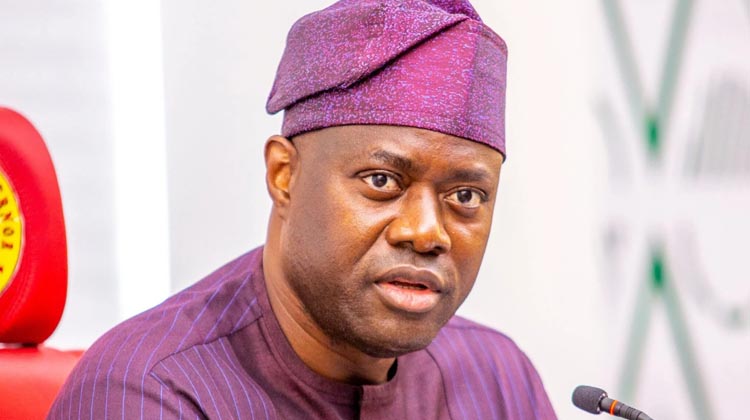
Oyo State Governor, Seyi Makinde, is currently in a closed-door meeting with the National Leader of the New Nigeria People’s Party (NNPP), Rabiu Kwankwaso, in Ibadan, the Oyo State capital.

A brief video shared on Wednesday confirmed the presence of the two political figures at the meeting venue. The footage showed Makinde arriving and exchanging greetings with Kwankwaso and other attendees.

Details of the discussion were not disclosed as of the time of filing this report.

The meeting comes weeks after Makinde and former Vice President, Atiku Abubakar, visited the Uphill Mansion of former Military President, Ibrahim Babangida, in Minna, Niger State — a move widely interpreted as part of early political consultations ahead of the 2027 general election.

Kwankwaso recently returned to Nigeria through the Nnamdi Azikiwe International Airport following what the NNPP described as strategic international engagements in India.

His return also follows reports of a proposed bill before the United States Congress in which he was named among individuals recommended for targeted sanctions over alleged religious freedom violations in Nigeria.