Home Blog Page 54

Israel, Hamas Agree To Gaza Peace Deal As Trump Announces Imminent Hostage Release

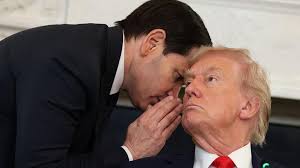
Hostages held in Gaza could be freed within days following an agreement between Israel and Hamas on the first phase of a peace deal brokered by US President Donald Trump.

Announcing the breakthrough, President Trump said the deal would facilitate the release of Israeli hostages and Palestinian prisoners, the partial withdrawal of Israeli forces from Gaza, and the entry of humanitarian aid into the enclave.

Israel’s government is expected to meet later today to formally approve the deal, with a ceasefire set to take effect immediately upon endorsement. Washington says all remaining Israeli hostages could be released by Monday.

However, a Palestinian source revealed that Hamas has not yet received the final list of prisoners Israel intends to release in exchange.

Hamas confirmed its acceptance of the deal, describing it as “a crucial step towards easing tensions and ending the prolonged conflict.” Despite widespread optimism, analysts note that key details remain unresolved, and the durability of the peace process is uncertain.

Celebrations erupted across Gaza and several Israeli towns as news of the accord spread. Families of captives and civilians affected by the conflict expressed relief, calling the deal a “glimmer of hope” after months of violence.

Israeli Prime Minister Benjamin Netanyahu hailed the agreement as “a great day” for Israel, describing it as “a critical step towards restoring peace and bringing our people home.”

UK Prime Minister Keir Starmer also welcomed the development, saying it was “a moment of profound relief that will be felt around the world.”

The peace deal follows weeks of high-stakes negotiations mediated by Egypt and supported by Washington, marking one of the most significant diplomatic breakthroughs in the Middle East in recent years.

Diplomats have, however, cautioned that the success of the ceasefire and prisoner exchanges will depend on both sides’ commitment to honouring the terms of the agreement in the coming days.
Adi Bongo: Nigerians Must Pay Taxes To Hold Leaders Accountable For Public Funds

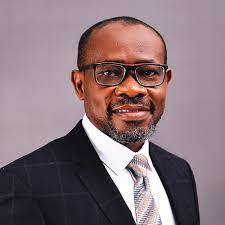
Economist and public affairs analyst, Professor Adi Bongo, has said Nigeria’s political and economic challenges stem from the nation’s dependence on oil revenue instead of taxation.

Speaking in an interview on Thursday, Bongo argued that without a tax-based democracy, Nigerians lack the leverage to hold leaders accountable for the management of public funds.

“I keep saying that we’re not a tax-paying democracy. We are more like a revenue-sharing democracy. These are two different regimes and they create different incentives and norms,” he said.

According to him, a system where government relies on oil income rather than citizens’ taxes has fostered unaccountability and wasteful governance.

“If citizens don’t pay taxes, they don’t ask questions about how money is spent. That’s why leaders act without accountability,” he stated.

He explained that taxation promotes civic responsibility and grants citizens moral authority to question government actions. “Taxation gives citizens the moral right to question government spending. Without it, there’s no real democracy,” Bongo said.

Professor Bongo noted that Nigeria’s rentier economy, sustained by oil revenue, has discouraged productivity and innovation. “The rentier system has made us lazy as a nation. Once money comes from oil, nobody bothers about productivity,” he added.

He warned that until Nigeria transitions to a tax-based economy, genuine reform and sustainable development would remain unattainable. “Until we move from a revenue-sharing to a tax-paying democracy, genuine development will remain impossible,” Bongo stated.

Calling for fiscal reforms at both federal and state levels, Bongo criticised the over-centralised revenue system. “Every month, governors rush to Abuja for allocations instead of developing their internal economies. That’s our biggest problem,” he said.

He urged Nigerians to push for a restructured fiscal framework that promotes accountability, transparency, and citizen participation. “If people begin to pay taxes directly, they will have the courage to challenge misuse of public funds,” he concluded.

Nnaji Fallout: Obi Urges INEC To Rigorously Vet Candidates’ Certificates Ahead Of 2027 Elections

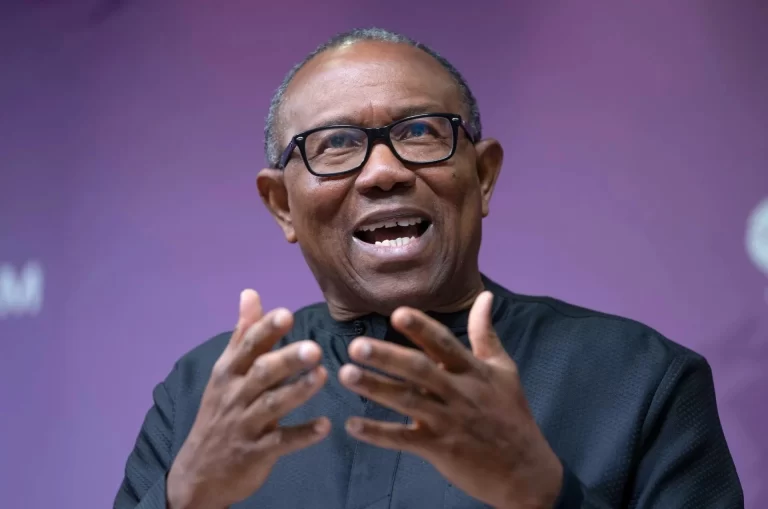
The Labour Party presidential candidate in the 2023 election, Peter Obi, has called on the Independent National Electoral Commission (INEC) and other relevant authorities to conduct thorough verification and authentication of the academic and professional certificates of all political candidates ahead of the 2027 general elections.

In a statement posted on X on Thursday, Obi said Nigeria’s democratic integrity depends on truth, transparency, and accountability in the leadership selection process.

He also commended the resignation of the Minister of Innovation, Science and Technology, Uche Nnaji, amid controversies over discrepancies in his academic records, describing it as “a decent and honourable step.”

Obi recalled that former Minister of Finance, Kemi Adeosun, resigned under similar circumstances during the administration of President Muhammadu Buhari, noting that such issues “constitute serious criminal offences.”

“It is appalling that our electoral body carries out little or no due diligence in confirming certificates submitted by candidates. Continuous discrepancies, false declarations, and forged credentials undermine the credibility of our democracy,” Obi stated.

He urged INEC to start verifying all certificates submitted by political candidates, from the presidency to local government councillors, to strengthen public confidence in the electoral process.

“INEC has enough time to investigate past complaints about various forms of forgery and false claims. Every incumbent and aspiring candidate must submit all academic certificates immediately for verification and public accessibility, clearly detailing schools attended from primary to university level,” he said.

Obi emphasised that the process of integrity must begin now if Nigeria is to achieve free, fair, and credible elections in 2027, adding:

“Let truth, transparency, and accountability form the foundation of leadership in our dear country. Only then can we build a Nigeria where public service is anchored on honour, not deceit. We must get it right.”

Army Launches Major Offensive In Kwara Forests As AbdulRazaq Moves To Crush Kidnapping Gangs

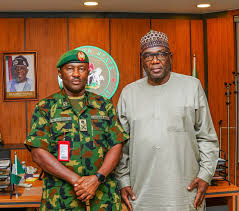
The Nigerian Army has launched a major offensive across forests in Kwara State, deploying a full brigade and heavy equipment to dislodge kidnapping gangs operating in parts of Kwara South and Kwara North senatorial districts.

Troops have begun sweeping operations through communities around Oke Ode and Babanla in Ifelodun Local Government Area, as well as Edu and Patigi LGAs, areas long plagued by abductions and criminal hideouts.

In a statement issued in Ilorin and signed by his Chief Press Secretary, Rafiu Ajakaye, Governor AbdulRahman AbdulRazaq welcomed the troops and pledged total support for the operation.

“The operation is also extending to Edu and Patigi to comb through thick forests from which kidnappers have launched cowardly attacks on communities and abducted people for ransom,” the statement said.

Governor AbdulRazaq, who met with President Bola Tinubu over the issue during the President’s recent visit to Jos, commended the Federal Government, the military high command, and other security agencies for their renewed efforts to ensure peace and safety in the state.

“We will not spare any resources in supporting the military, DSS, police, and other security agencies as they work to strengthen the security of lives and property,” the governor said.

He expressed optimism that the operation, launched under Operation Fasan Yanma, would “eliminate all forms of threats” in affected areas.

AbdulRazaq added: “I thank the President and the security agencies for their efforts so far. As I said a few days ago, we just need to double our efforts to save the people. We are confident that the Brigadier General A.A. Babatunde-led Army Brigade will succeed in this vital mission and clear the entire areas.”

Ethiopia Accuses Eritrea of Plotting War, Backing Armed Groups Amid Red Sea Dispute

The Ethiopian government has accused neighbouring Eritrea of plotting war and supporting armed groups, in what marks a sharp escalation of tensions between the two Horn of Africa nations over access to the Red Sea.

In a letter dated October 2 and addressed to United Nations Secretary-General António Guterres, Ethiopia’s Foreign Minister, Gedion Timothewos, alleged that Eritrea was working with the Tigray People’s Liberation Front (TPLF) to destabilise northern Ethiopia.

According to the letter, Eritrea and the TPLF were “funding, mobilising, and directing armed groups” in the Amhara region, where Ethiopian forces have been battling insurgents.

Eritrea has not yet issued an official response to the accusations.

The development rekindles decades-old hostilities between the two countries. Eritrea, which gained independence from Ethiopia in 1993, took control of the nation’s only coastline — a strategic Red Sea corridor Ethiopia has sought to regain access to.

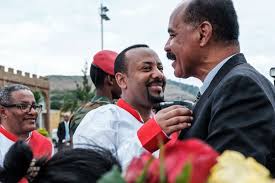
A two-year border war (1998–2000) between the neighbours claimed tens of thousands of lives and left relations frozen until 2018, when Ethiopian Prime Minister Abiy Ahmed signed a landmark peace agreement with Eritrean President Isaias Afwerki — a move that earned Abiy the Nobel Peace Prize.

However, relations have soured again in recent years as Ethiopia’s government renews calls for sea access, a demand Asmara views as a threat to its sovereignty.

In his message to the UN, Minister Timothewos said Ethiopia still preferred dialogue and negotiation, but warned that Eritrea’s alleged actions could destabilise an already fragile Horn of Africa region.

NEXIM Bank Promises Affordable Loans To Strengthen Nigerian SMEs’ Export Competitiveness

0

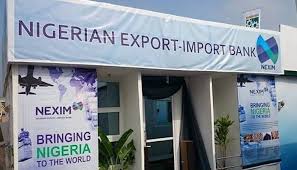
The Nigerian Export-Import Bank (NEXIM) has pledged to expand affordable financing options for Small and Medium Enterprises (SMEs) to reduce borrowing costs, strengthen export capacity, and improve competitiveness in the global market.

Managing Director/Chief Executive of NEXIM, Abubakar Abba Bello, made this known on Wednesday during the SME Export Finance Sensitisation Forum (EXCEL Programme) held in Abuja. The event was jointly organised by NEXIM and GIZ Nigeria under the SEDIN programme.

Bello said one of the biggest challenges confronting SMEs was the high cost of borrowing, noting that interest rates from commercial banks have risen to as much as 30 percent, a figure he described as “too high for small businesses to sustain.”

He explained that NEXIM, in collaboration with other Development Finance Institutions (DFIs) such as the Bank of Industry (BoI) and the Development Bank of Nigeria (DBN), was working to provide cheaper financing and refinancing opportunities for MSMEs.

“As a development finance institution, our role is to help small businesses grow to the level where they can attract financing from multiple sources,” Bello said.

The NEXIM boss emphasised that beyond access to finance, SMEs also face challenges such as infrastructure deficits, regulatory hurdles, and capacity gaps.

“It’s not that banks are unwilling to lend to MSMEs; rather, many small businesses lack the capacity to manage credit effectively. That’s why sensitisation programmes like this are important — to help entrepreneurs understand processes, documentation, and structures that make them investment-ready,” he stated.

Bello noted that MSMEs are the backbone of Nigeria’s economy, accounting for 96.9% of registered businesses, contributing 48% to GDP, and employing nearly 88% of the workforce. Yet, about 55% of MSMEs still struggle to access finance, with many failing within their first five years due to capital constraints, poor infrastructure, and high operating costs.

Highlighting NEXIM’s ongoing initiatives, Bello cited the SME Export Facility (SMEEF), Women & Youth Export Facility (WAYEF), and the NEXA digital platform, which offers SMEs access to digital export and financial management services.

He added that the bank is preparing to onboard clients onto the African Trade Gateway (ATG), a platform designed to enhance market access, improve payment systems, and deepen intra-African trade.

“Globally, export financing is a proven driver of economic growth. However, exports of goods and services contribute only about 7.64% to Nigeria’s GDP. This shows the huge untapped potential in our MSME export sector,” Bello said.

He reaffirmed NEXIM’s commitment to driving export-led growth through partnerships, capacity-building, and access to affordable finance, saying the EXCEL Programme was a key step toward unlocking the full value of Nigeria’s MSME ecosystem.

ASUU Says FG’s Appeal To Halt Strike Came Too Late

The Academic Staff Union of Universities (ASUU) has faulted the Federal Government’s last-minute appeal to suspend its planned warning strike, describing it as belated and symptomatic of the government’s slow response to workers’ grievances.

ASUU President, Prof. Chris Piwuna, speaking on The Morning Brief on Thursday, said the government’s intervention came only two working days before the strike, despite the union’s repeated attempts to engage on outstanding issues.

“The problem we have with this government and the Ministry of Education is that they are slow in responding to our demands,” Piwuna said.

He recalled that during a meeting in Sokoto, the union had agreed to give the government a three-week window to address key concerns, but the administration failed to act within the agreed period.

“We never heard a word from them until the three weeks elapsed — not even a courtesy message to say, ‘Gentlemen, we are running short of time.’ Nothing, until we threatened action,” he stated.

Piwuna added that the government’s appeal on Wednesday to avert industrial action came “a little too late,” stressing that the union’s 2009 agreement, which has been under renegotiation for eight years, remains unresolved.

“Two working days before a strike action, you come to appeal to us. I think the appeal has come a little too late,” he said.

ASUU is expected to decide soon on whether to proceed with the warning strike amid growing frustration over unfulfilled agreements and poor working conditions in public universities.

NUPRC Unlocks $4.9bn Gas Investments, Approves 25 New Field Projects Under PIA

The Nigerian Upstream Petroleum Regulatory Commission (NUPRC) says it has approved 25 new Non-Associated Gas (NAG) Field Development Plans (FDPs) since the enactment of the Petroleum Industry Act (PIA), attracting over $4.9 billion in capital investments and unlocking nearly 9,790 billion standard cubic feet (BSCF) of gas reserves.

According to a statement by NUPRC’s Head of Media and Strategic Communication, Eniola Akinkuotu, the Commission Chief Executive, Gbenga Komolafe, disclosed this during the 3rd Gas Investment Forum held in Lagos.

Represented by the Executive Commissioner for Development and Production, Enorense Amadasu, Komolafe said the Commission’s strategic focus remains on gas development, monetisation, and infrastructure expansion to strengthen Nigeria’s energy future and drive economic transformation.

He revealed that Nigeria’s proven gas reserves currently stand at 210.54 trillion cubic feet (TCF) — comprising 109.51 TCF of Non-Associated Gas and 101.03 TCF of Associated Gas. Of this total, about 55 TCF, representing 26 per cent, remains uncommitted to existing or planned monetisation projects, presenting significant investment opportunities for both local and international investors.

“Nigeria’s ambition to become Africa’s gas powerhouse has received a major boost through our regulatory reforms, which aim to unlock over 55 TCF of uncommitted gas reserves and attract billions of dollars in new investments,” Komolafe said.

The NUPRC boss noted that Nigeria’s annual average daily gas production in 2024 stood at 6.99 billion standard cubic feet (BSCF/D), with a Reserves Replacement Ratio (RRR) of 1.56 and a Reserves Life Index (RLI) of 92.7 years, reflecting long-term sustainability for investors.

He highlighted that the Commission is overseeing 19 active gas development projects, including 10 production facilities and 9 pipeline projects, with a combined capacity of 3.55 BSCF/D. About 88 per cent of these are in the engineering phase, while 12 per cent have advanced to construction and fabrication.

Komolafe added that 86 per cent of new gas production is targeted at the export market, mainly for NLNG feed gas supply, while 142 MMSCFD (23 per cent) will serve the domestic market.

He listed the Commission’s regulatory milestones, including the Domestic Gas Delivery Obligation Regulations (2022), Gas Flaring, Venting and Methane Emissions Regulations (2023), and the Oil and Gas Companies (Tax Incentives) Order (2024), which have consolidated Nigeria’s pro-investment framework.

Komolafe further disclosed that the NUPRC is facilitating upstream gas supply agreements for key national projects such as NLNG Train 7, the Ajaokuta–Kaduna–Kano (AKK) Pipeline, and the Brass Fertilizer and Petrochemical Project.

Reaffirming Nigeria’s commitment to its National Gas Policy and Energy Transition Plan, Komolafe said the Commission is eliminating investment barriers through the ‘drill or drop’ provision in the PIA and encouraging public-private collaboration to drive gas expansion.

“Nigeria stands at a pivotal juncture in its energy journey—one that demands innovation, collaboration, and sustainable investment,” he concluded.

NDDC Awards Postgraduate Scholarships To 600 Niger Delta Candidates

The Niger Delta Development Commission (NDDC) has awarded postgraduate scholarships to 600 successful candidates under its 2025/2026 Local Postgraduate Scholarship Programme, aimed at enhancing human capital development across the Niger Delta region.

Presenting the award letters in Port Harcourt, NDDC Managing Director, Dr. Samuel Ogbuku, described the initiative as a vital part of the Commission’s human development agenda, noting that education remains the most powerful tool for transforming the region’s fortunes.

“You are the torchbearers of transformation. Your education is not just for you but for the millions who look up to you for hope,” Ogbuku told the beneficiaries. “Every lecture you attend, every paper you write, and every solution you provide is a step toward transforming our communities.”

Ogbuku, supported by senior NDDC officials including Executive Director of Corporate Services, Hon. Ifedayo Abegunde, and Bayelsa State Representative on the Board, Senator Dimaro Denyanbofa, commended past beneficiaries for setting high standards, revealing that 32 NDDC scholars graduated with distinction from Coventry University this year.

The Director of Education, Health, and Social Services, Dr. George Uzonwanne, disclosed that out of 46,240 applicants, only 600 were selected through a transparent electronic examination process.

“Competition for the scholarship was intense and fair,” Uzonwanne said. “Through initiatives like this, we are investing in the minds that will shape the Niger Delta’s tomorrow.”

Also speaking, NDDC Director of Education, Dr. Angela Chukwudifu, explained that the programme’s focus on local institutions is intended to keep beneficiaries connected to the region’s challenges and opportunities, fostering a sense of ownership and responsibility.

The best-performing candidate, Reginald Omubo-Pepple, expressed gratitude on behalf of the awardees, pledging that they would uphold excellence and serve as good ambassadors of the Niger Delta.

Tinubu Inaugurates $400m Indigenous Crude Oil Export Terminal In Rivers State

President Bola Tinubu has inaugurated Nigeria’s first indigenous onshore crude oil export terminal, the $400 million Green Energy International Limited (GEIL) Otakikpo Terminal, located in Andoni Local Government Area of Rivers State.

Represented by the Minister of State for Petroleum Resources (Oil), Senator Heineken Lokpobiri, Tinubu described the project as a major milestone in Nigeria’s energy infrastructure and a testament to indigenous capacity in the oil and gas sector.

“With the resolution of key issues, especially those involving the Ogoni people, the Otakikpo terminal will now evacuate crude oil produced from their land,” he said, appealing for cooperation from Ogoni leaders to ensure the region benefits from its natural resources.

The President noted that the facility’s commissioning comes amid renewed efforts to improve financing access in the energy sector, revealing that the $5 billion African Energy Bank (AEB) — to be hosted in Nigeria — is set to commence operations.

“The biggest challenge in the upstream sector has been access to finance. With the African Energy Bank ready to take off, that era is over,” Tinubu affirmed.

The Chief Executive of the Nigerian Upstream Petroleum Regulatory Commission (NUPRC), Gbenga Komolafe, said the terminal expands Nigeria’s crude export capacity and reduces dependence on existing terminals operating near full capacity.

He added that the facility demonstrates the “world-class capability” of Nigerian firms and supports indigenous operators now contributing 30% of national oil output.

GEIL’s Chief Executive Officer, Prof. Anthony Adegbulugbe, disclosed that the terminal has a storage capacity of 750,000 barrels, expandable to 3 million barrels, and a pumping capacity of 360,000 barrels per day. Since June 2025, it has completed four export operations totaling one million barrels.

“Beyond the numbers, this terminal is a catalyst for national renewal. It unlocks more than 40 stranded fields in the region with over 3 million barrels of reserves,” Adegbulugbe said.

Lekoil CEO, Lekan Akinyanmi, whose company operates the Otakikpo field in partnership with GEIL, described the terminal as a “symbol of progress and credibility” that reflects the determination of indigenous producers to deliver value globally.

“This milestone validates our commitment to reliability, community development, and Nigeria’s broader energy ambitions,” Akinyanmi stated.

The terminal, Nigeria’s first indigenous crude export hub in over 50 years, is expected to significantly enhance production efficiency, boost local participation, and reinforce the country’s position in the global oil market.

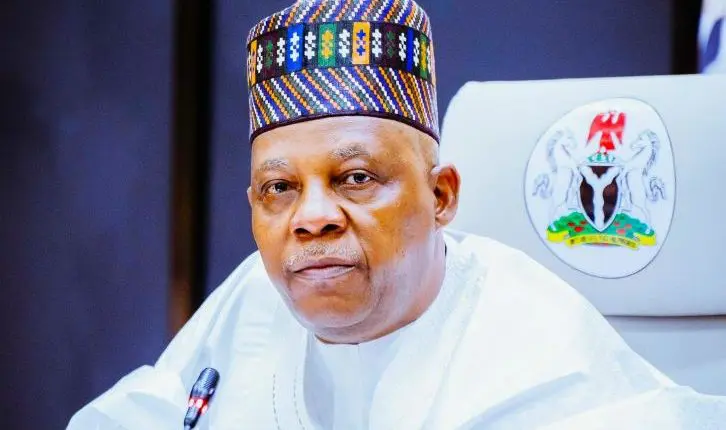
Shettima To Foreign Investors: Nigeria Has Overcome Economic Instability, Now Ripe For Investment

Vice President Kashim Shettima has declared that Nigeria has exited its phase of economic instability, assuring foreign investors that the country is now a safe and rewarding destination for investment.

Speaking at the Bauchi Investment Summit 2025, Shettima attributed the turnaround to reforms implemented by President Bola Tinubu’s administration to dismantle structural barriers hindering economic growth.

According to the Vice President, the nation’s debt service-to-revenue ratio has dropped from nearly 100% to below 50%, GDP growth reached 4.23% in September, and non-oil revenue rose by 411% year-on-year. He also revealed that external reserves climbed to $43 billion, while the tax-to-GDP ratio improved to 13.5%.

“Nigeria has exited its phase of economic instability, and I assure investors present here that there is no better time to choose Nigeria,” Shettima said.

He explained that Tinubu’s early decisions — including fuel subsidy removal and exchange rate harmonisation — were necessary to ensure enduring growth and eliminate rent-seeking practices.

Shettima highlighted the administration’s focus on job creation, food security, value-chain development, and regional competitiveness, calling Bauchi a model for opportunities in agriculture, solid minerals, tourism, and renewable energy.

Former President Olusegun Obasanjo, in his remarks, urged stronger partnerships built on “Politics, People, Protection, Partnership, and Progress,” describing them as essential to sustaining investment.

Bauchi State Governor Bala Mohammed pledged to implement summit recommendations and ensure investor safety, while Borno State Governor Babagana Zulum and Sultan of Sokoto Sa’ad Abubakar III both called for commitment to implementation and improved security.

The two-day summit brought together government officials, investors, and traditional rulers to explore strategies for unlocking Bauchi’s vast economic potential.