
Home Blog Page 53

Maria Corina Machado: Nobel Laureate and Symbol of Venezuela’s Defiance

Venezuelan opposition leader Maria Corina Machado — hailed as “la libertadora” in homage to independence hero Simón Bolívar — has been awarded the 2025 Nobel Peace Prize for her courage and leadership in championing democracy under President Nicolás Maduro’s authoritarian rule.

The Norwegian Nobel Committee on Friday praised Machado’s “unwavering commitment to human rights, political freedom, and the nonviolent pursuit of democratic governance” in Venezuela.

Machado, long regarded as the most popular politician in the country, has become the face and fire of Venezuela’s opposition movement. Though barred from contesting the 2024 presidential election, detained, and later released, she continued to inspire widespread resistance against Maduro’s government.

In July, on the anniversary of Maduro’s disputed re-election, Machado urged “clandestine resistance” and later went into hiding amid reports she may be sheltering at the U.S. embassy.

Despite her disqualification, Machado threw her weight behind Edmundo González Urrutia, a little-known ex-diplomat who replaced her on the ballot. Her charisma and energy on the campaign trail — always clad in white and adorned with rosaries gifted by supporters — turned González Urrutia into a viable symbol of democratic defiance.

“Yes, we can!” (Si, se puede!) her supporters chanted at rallies as thousands flooded the streets, waving Venezuelan flags and clamouring to touch or glimpse their champion.

Machado’s popularity, however, was not enough to overturn Maduro’s hold on power. Although the European Union and several countries have recognised González Urrutia as Venezuela’s president-elect, Maduro continues to control the state apparatus.

The Nobel Peace Prize announcement comes amid rising U.S. military activity off Venezuela’s coast, where Washington claims to be targeting drug traffickers linked to the Maduro regime. At least 21 people have been reported killed in recent strikes.

In a recent joint statement, Machado and González Urrutia described U.S. pressure as a “necessary measure to restore popular sovereignty in Venezuela”, accusing Maduro’s government of trafficking “drugs, minerals, metals, weapons, and human beings.”

Machado has also warned that Venezuelan criminal networks pose “a real and growing threat to the security and stability of the Americas.”

Born in Caracas, the 57-year-old industrial engineer and former legislator has long been a fierce critic of Venezuela’s socialist governments. With the Nobel Peace Prize, her decades-long struggle for freedom and accountability in her homeland has gained global validation — and renewed hope for millions of Venezuelans yearning for change.
Sokoto Launches Zonal Town Halls To Shape 2026 Budget

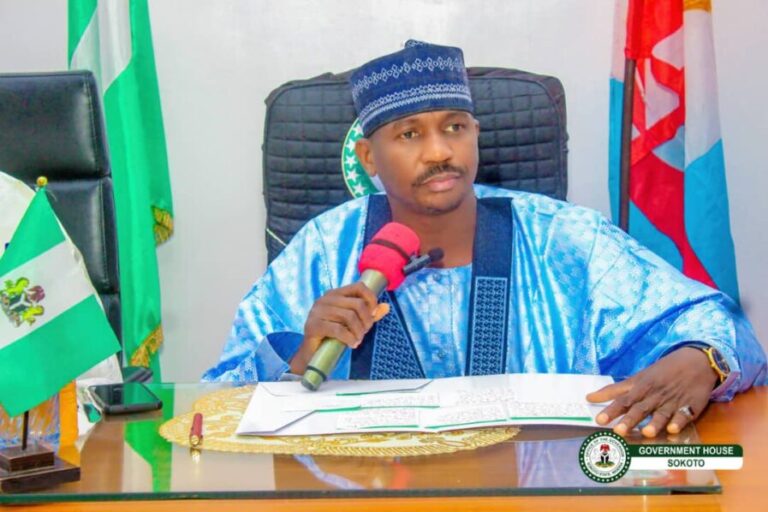
The Sokoto State Government has commenced zonal town hall meetings across its three senatorial districts as part of preparations for the 2026 fiscal year budget, aimed at ensuring transparency and public participation in the budgeting process.

The sessions, held in Tambuwal, Tangaza, and Gwadabawa Local Government Areas, brought together traditional rulers, lawmakers, civil society groups, youth and women organisations, and persons with disabilities to identify priority needs for inclusion in next year’s budget.

Declaring the meetings open on Thursday, the Commissioner for Budget and Economic Planning, Dr. Abubakar Zayyana, said the initiative reflects Governor Ahmad Aliyu’s commitment to open, inclusive, and people-driven governance.

“This government wants to hear directly from the people before putting pen to paper. Our goal is to design a people-oriented budget that addresses real needs, not assumptions,” Zayyana said.

He noted that the majority of submissions received align with the administration’s focus on education, healthcare, infrastructure development, and poverty reduction.

The Commissioner for Finance, Muhammad Shagari, described the initiative as “an unprecedented step toward fairness and accountability,” stressing that it would ensure equitable distribution of resources across the state.

“This is budgeting by the people and for the people. It’s about justice in resource allocation and ensuring no community is left behind,” he said.

The House Leader, Alhaji Bello Idris (Gwadabawa South), hailed the process as “a clear demonstration of government sincerity,” adding that it signals “a new chapter for participatory democracy in Sokoto.”

Similarly, the Chairman of the Association of Local Governments of Nigeria (ALGON), Alhaji Abba Shehu Tambuwal, commended Governor Aliyu for giving citizens a direct voice in shaping the budget.

“This is governance at its best — where people are not just spectators but active contributors,” he said.

Representatives of the Sultan of Sokoto, Alhaji Muhammad Sa’ad Abubakar, also applauded the inclusive approach, pledging continued support from the traditional institution.

Civil society organisations under the Budget Advocacy Coalition expressed strong backing for the initiative. Its Executive Director, Rabi’u Auwal, said it would “foster ownership, strengthen accountability, and build trust between citizens and government.”

The town halls recorded wide participation from across the state, reflecting broad consensus in support of participatory budgeting as a tool for transparency, inclusion, and responsive governance in Sokoto State.

Nigeria Presents Taoheed Elias As Candidate For International Court Of Justice Bench

The Federal Government of Nigeria has formally presented Dr. Taoheed Elias as its candidate for election to the International Court of Justice (ICJ), aiming to restore West Africa’s representation on the bench of the world’s highest judicial body.

The announcement was made in Abuja by Ambassador Yusuf Tuggar, Minister of Foreign Affairs, who led senior government officials and members of the diplomatic corps in endorsing Elias’s candidacy ahead of the ICJ elections scheduled for November 12, 2025.

Ambassador Tuggar noted that no West African judge has served on the ICJ bench since 2011 and that Nigeria’s absence spans more than three decades.

“This long absence is not a matter of pride but of perspective. It underscores the importance of equitable geographical representation and the need for voices from West Africa to again be heard within the world’s highest judicial body,” he said.

Describing Dr. Elias as a jurist of exceptional distinction and integrity, Tuggar stated that the nominee represents not just Nigeria, but the international community.

“Elias embodies the envisaged qualities of a person of high moral character, possessing the qualifications for the highest judicial office and recognised competence in international law,” the minister said.

He emphasized that the nomination reflects Nigeria’s commitment to ensuring Africa, particularly West Africa, retains its rightful place in shaping global jurisprudence.

“This candidacy is not about Nigeria alone. It is about ensuring that Africa, and West Africa in particular, retains its rightful presence in shaping the global rule of law,” Tuggar declared.

In his remarks, Dr. Elias expressed gratitude for the government’s confidence in him and reaffirmed his dedication to upholding the principles of international justice.

“The ICJ is at the cornerstone of the entire architecture of the United Nations, being responsible for the peaceful resolution of disputes,” he said.

Outlining the three pillars of his candidacy—academic expertise, institutional understanding of the UN system, and judicial experience—Elias noted that his over 20 years within the UN system had given him deep practical insight into global governance.

He highlighted his current role as Judge ad hoc at the ICJ, where he was appointed by Equatorial Guinea over its own national, describing the appointment as a testament to his global credibility.

“Equatorial Guinea didn’t pick somebody from their own country; they picked me,” he said.

Elias also paid tribute to Judge Abdulqawi Yusuf of Somalia, whose seat he seeks to fill, acknowledging the high standard of excellence set by his predecessor.

If elected, Dr. Taoheed Elias will become the fourth Nigerian to serve on the ICJ, following Charles Onyeama, Bola Ajibola, and his father, Taslim Olawale Elias, a former ICJ President and one of Africa’s foremost legal minds.

A member of the Institut de Droit International, Dr. Elias has held several high-level international positions, including Legal Adviser and Director at the Organisation for the Prohibition of Chemical Weapons (OPCW) in The Hague. He currently serves as President of the Administrative Tribunal of the OPEC Fund for International Development, Chairman of the Islamic Development Bank Administrative Tribunal, and former President of the OPEC Appeals Committee.

Anambra ADC Guber Candidate Nwosu Swears Affidavit To Serve Only One Term

The African Democratic Congress (ADC) governorship candidate in the upcoming November 8 Anambra State election, Mr. John Chuma Nwosu, has formally reaffirmed his commitment to serve for only one term if elected, by swearing an affidavit before the High Court in Awka.

Nwosu, who hails from Nnewi in Anambra South Senatorial Zone, the same zone as the incumbent governor, Prof. Chukwuma Soludo, said the move reflects his determination to uphold Anambra’s zoning tradition, which rotates the governorship among the state’s three senatorial zones.

The ADC candidate had earlier promised to complete only one term on behalf of Anambra South and, true to his word, visited the court on Thursday to make his pledge legally binding.

Describing the action as a bold demonstration of integrity and transparency, observers say Nwosu’s affidavit sets a new standard for political accountability in the state.

Speaking after signing the document, Nwosu stated that governance should be driven by service, not personal ambition.

“I came into the race to serve, not to rule,” he said. “I have publicly made this commitment before, and I have now legally sealed it before the court. Four years is enough to transform Anambra if there is sincerity of purpose.”

Nwosu’s decision, analysts say, reinforces his message of selflessness and focused leadership, as he seeks to assure voters of his intention to prioritize development over politics.

Palestinians Return to Northern Gaza as Ceasefire Begins Under Trump-Brokered Peace Deal

Palestinians have started returning to northern Gaza after the Israeli military confirmed that a ceasefire is now in effect, marking the first phase of the Trump-brokered peace and hostage return agreement.

The Israel Defense Forces (IDF) announced on Friday that its troops have withdrawn to positions outlined in the agreement but will continue to “neutralize any immediate threat” if necessary.

The ceasefire follows the Israeli government’s approval of the first phase of the peace and prisoner exchange deal, under which Hamas is to release all Israeli hostages within 72 hours, while Israel will free hundreds of Palestinian detainees.

The truce also allows for the entry of hundreds of aid trucks carrying food, water, and medical supplies to Gaza, where more than two million people have been displaced by months of intense fighting.

In Gaza City, residents returning home have been met with scenes of widespread devastation. “People are returning to scenes of total destruction. There is little left standing,” reported journalist Rushdi Abualouf from northern Gaza.

Entire neighborhoods lie in ruins, and families continue searching through the rubble for any remnants of their homes and belongings.

While the ceasefire brings a long-awaited pause to the violence, regional observers warn that the truce remains fragile, with both sides under intense pressure to uphold their commitments.

The agreement is seen as a major test of the Trump administration’s broader Middle East peace framework, which aims to lay the groundwork for lasting stability in the region after years of conflict.

Tinubu, Osun Mourn As Christopher Kolade Dies At 92

0

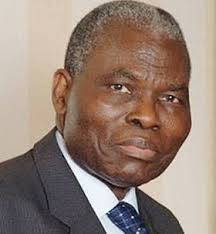
President Bola Tinubu has paid glowing tribute to the late Dr. Christopher Kolade, describing him as “an icon of integrity, patriotism, and excellence” whose life embodied the highest ideals of service and leadership in Nigeria.

In a statement personally signed by the President on Thursday, Tinubu said he received the news of Kolade’s death “with profound sadness,” calling the 92-year-old diplomat, broadcaster, and corporate leader “one of Nigeria’s intellectual treasures and a custodian of our enterprise history.”

“Dr. Kolade was among the finest of men. He was exceptionally brilliant, statesmanly, diligent, and had unimpeachable integrity. He was not only a boardroom icon, serving as one-time Chief Executive and Chairman of Cadbury Nigeria Plc, but also a patriot and an uncompromising advocate of transparency and accountability in governance,” Tinubu said.

The President noted that Kolade’s public service career, spanning from the colonial era to Nigeria’s Fourth Republic, reflected “uncommon dedication to the nation’s growth and moral capital.”

“From working as a colonial-era education officer to serving as Nigeria’s High Commissioner to the United Kingdom and Director-General of the Nigerian Broadcasting Corporation, Dr. Kolade left ineffaceable stamps of distinction in every endeavour,” Tinubu added.

He also commended Kolade’s humanitarian work through the Christopher Kolade Foundation, particularly his lifelong advocacy for ethical leadership and his support for people living with sickle-cell disease.

“He lived not for wealth or fame but for impact. His passing is agonising but worth celebrating. He immortalised himself through uncommon service to our nation and humanity,” Tinubu stated. “He was a true Nigerian—selfless, resilient, and guided by faith. May God Almighty, whom he served faithfully, grant him eternal rest.”

In Osun State, the Alua of Erin-Oke, Oba Ayodeji Akintola, also mourned the elder statesman, describing his death as a great loss to the community and the nation.

“It hurts me deeply because he promised to support our development efforts. He told me that if I needed anything—be it a school, hospital, or federal project—I should reach out to him. He was my father and kinsman, and he had a global reputation that brought pride to Erin-Oke. God knows best,” the monarch said.

Born on December 28, 1932, in Erin-Oke, Osun State, Kolade was the son of an Anglican missionary. He attended Government College, Ibadan, and later Fourah Bay College, Freetown, Sierra Leone, where he completed his higher education.

He served as Nigeria’s High Commissioner to the United Kingdom, Chairman of Cadbury Nigeria Plc, and pioneer Chairman of the Subsidy Reinvestment and Empowerment Programme (SURE-P). He was also a leading advocate for ethics and corporate governance at the Lagos Business School.

In a family statement announcing his passing, the Kolade family said, “We are thankful for his incredible life of faith and service and are grateful for God’s abundant blessings.”

Two Killed, Seven Injured In Jigawa Communal Clashes Between Herders And Farmers

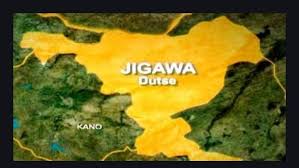
At least two people have been killed and seven others injured following a violent midnight clash between Fulani herders and local farmers in Dagaceri, Birniwa Local Government Area of Jigawa State.

The incident, which occurred on Wednesday night, is the latest in a series of conflicts linked to land and resource disputes between herders and farming communities in the region.

Eyewitnesses described the attack as chaotic and terrifying. “People were running everywhere. It was a terrifying sight as attackers set homes on fire and unleashed violence on families,” said Hassan Abdullahi, a resident.

Another eyewitness, Izaddeen Usman, recalled hiding with his children in the bushes as “screams filled the night.”

A local farmer, Malam Sani, attributed the violence to recurring disputes over grazing land. “The herdsmen’s cattle kept damaging our farms. The tension finally exploded into violence,” he said.

Confirming the incident, the Jigawa State Police Public Relations Officer, SP Shi’isu Adam, said seven suspects had been arrested.

“Weapons including bows and arrows, cutlasses, phones, and local charms were recovered at the scene,” he disclosed, adding that Operation Salama was swiftly deployed to restore order.

Adam assured residents that the police remain vigilant and committed to protecting lives and property. “We will continue to pursue all those responsible,” he said.

Community leaders have appealed for calm. Malam Garba, a respected elder, urged the warring groups to embrace dialogue, saying, “More loss of life cannot be tolerated.”

Another community elder, Usman Tela, added, “We want to live in harmony, farm peacefully, and raise our children without fear of violence.”

Security agencies have intensified patrols in Dagaceri and neighbouring areas to prevent further unrest, while efforts to reach leaders of the Fulani group, Kautel Houre, were unsuccessful.

A Jigawa-based human rights advocate, Comrade Musbahu Basirka, condemned the attack and called for immediate government intervention.

He urged all parties to embrace peace, warning that continued violence “will only deepen division and suffering across the state.”

Makinde Faults Umahi Over Coastal Highway Cost, Says Minister Should State Average Figure

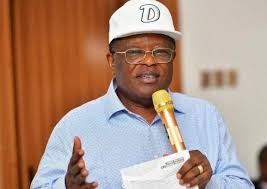
Oyo State Governor, Seyi Makinde, has criticised the Minister of Works, David Umahi, over his handling of questions regarding the cost breakdown of the Lagos-Calabar Coastal Highway, urging him to provide clarity rather than “dance around the cost.”

Makinde made the remarks in a viral video on Friday while reacting to a heated on-air exchange between Umahi and Arise TV presenter Rufai Oseni earlier in the week.

During the interview, Oseni had asked the minister to provide a kilometre-by-kilometre cost analysis of the multi-trillion-naira project — a request that appeared to irritate Umahi, who dismissed the question as “elementary” and claimed that the cost per kilometre varies due to technical factors.

Umahi, describing himself as a “professor of practice in engineering,” told the journalist to “keep quiet,” insisting that the pricing of each section of the project differs.

Responding to the controversy, Governor Makinde defended the journalist’s line of questioning, saying Umahi owed Nigerians transparency on the project’s cost structure.

“They asked a minister how much the coastal road is, and then you are dancing around and saying the next kilometre is different from the next kilometre,” Makinde said. “Then what is the average cost?”

Citing examples from Oyo State, Makinde noted that his administration had executed major road projects with publicly verifiable cost figures.

“When we did the Oyo to Iseyin road, it was about ₦9.99 billion — almost ₦10 billion — for about 34 to 35 kilometres, averaging ₦238 million per kilometre. The Iseyin to Ogbomoso road was 76 kilometres, cost about ₦43 billion, averaging ₦500 million per kilometre, and we had two bridges,” he explained.

The Federal Government last year commenced construction of the 700-kilometre Lagos-Calabar Coastal Highway, spanning nine states with two spurs leading northwards.

According to a statement from Umahi’s media aide, Uchenna Orji, the project’s first phase — a 47.47-kilometre dual carriageway — was awarded to Hitech Construction Company Limited and will be built with concrete pavement.

Umahi has repeatedly maintained that the project will be delivered on schedule and without cost variation due to delays, insisting that all contractors must meet agreed timelines.

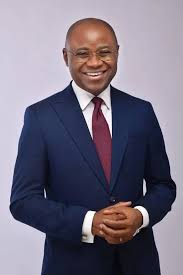
ADC Reacts To Amupitan’s Nomination As INEC Chairman, Says It Will ‘Give Him The Benefit Of Doubt’

The African Democratic Congress (ADC) has reacted to the nomination of Professor Joash Ojo Amupitan, SAN, as the new Chairman of the Independent National Electoral Commission (INEC) by President Bola Tinubu, saying it will give him the benefit of doubt.

In a statement signed by the party’s spokesperson, Bolaji Abdullahi, the ADC said it expects the new INEC Chairman to rebuild public trust in the nation’s electoral process and demonstrate loyalty to the Nigerian people rather than the government.

“We are cautious. But we expect the new INEC Chairman to have a personal ambition to do better and restore the confidence of Nigerians and the world in Nigerian elections,” the statement read.

“He must understand that his loyalty is with the Nigerian people, not the government. We are willing to give him the benefit of the doubt based on his track record. But now he has the opportunity to make a good name for himself that his children would be proud of, or to soil his record and end up with ignominy.”

The ADC also reminded Professor Amupitan that his tenure would likely extend beyond one electoral cycle, urging him to act independently of those who appointed him.

The statement followed Thursday’s National Council of State meeting, where the council unanimously endorsed President Tinubu’s nomination of Amupitan to succeed Professor Mahmood Yakubu, who served as INEC Chairman from 2015 to October 2025.

According to Presidential aide Bayo Onanuga, Tinubu described the nominee as “apolitical” and “a man of integrity,” noting that he is the first person from Kogi State to be nominated for the position.

Amupitan’s name is expected to be forwarded to the Senate for confirmation in line with constitutional provisions.

Born on April 25, 1967, Professor Amupitan hails from Ayetoro Gbede in Ijumu Local Government Area of Kogi State. A Professor of Law at the University of Jos, he specialises in Company Law, Law of Evidence, and Corporate Governance. He became a Senior Advocate of Nigeria (SAN) in 2014 and currently serves as Deputy Vice-Chancellor (Administration) at UNIJOS, as well as Pro-Chancellor and Chairman of Council at Joseph Ayo Babalola University, Osun State.

Ex-ECOWAS Court President, Edward Asante, Elected to UN Human Rights Council Advisory Committee

Former President of the ECOWAS Court of Justice, Justice Edward Asante, has been elected to the Advisory Committee of the United Nations Human Rights Council (UNHRC) — a prestigious global think tank that supports the Council’s mission of promoting and protecting human rights worldwide.

A statement from Justice Asante’s office at the ECOWAS Court headquarters in Abuja confirmed his election on Thursday.

The 18-member Advisory Committee serves as the UNHRC’s intellectual and research body. Members are selected based on proven expertise in international human rights mechanisms, impartiality, and diplomatic competence.

Justice Asante, currently a Judge of Ghana’s Court of Appeal and the ECOWAS Court, will serve a three-year renewable term. Nominated by Ghana, he was one of two African representatives elected during the Council’s 60th session to fill seven available positions on the committee.

According to the statement, “Justice Asante is a distinguished jurist and seasoned international legal expert whose extensive experience in human rights law, international humanitarian law, and judicial administration makes him an outstanding candidate for this prestigious role.”

Ghana’s government, in its nomination letter, highlighted Asante’s six-year tenure as President of the ECOWAS Court (2018–2024), which it described as “marked by visionary leadership, judicial innovation, and groundbreaking rulings on civil and political rights.”

He was also credited with spearheading the Electronic Case Management System at the ECOWAS Court and leading external court sessions that expanded public access to regional justice mechanisms.

Justice Asante’s qualifications include training in Public and Private International Law at the Hague Academy of International Law, as well as advanced courses in corporate risk management, judicial ethics, arbitration, and governance from leading global institutions.

His contributions to justice delivery have earned him several honours, including the Columbia University Global Freedom of Expression Award (2020) and the African Bar Medal of Merit Award.

The Ghanaian government lauded his “unblemished probity, fidelity to equity, and balanced jurisprudence,” expressing confidence that his participation will “enrich the Human Rights Council Advisory Committee’s work and reinforce Ghana’s role as a global advocate for human rights and good governance.”

UN Confirms Release of One Detained Staff Member in Yemen as 53 Others Remain in Houthi Custody

The United Nations has confirmed the release of one of its staff members detained by Yemen’s Houthi authorities, while 53 others remain in custody amid mounting tensions in the war-torn country.

UN spokesperson Stéphane Dujarric announced the development on Wednesday, urging the Houthis to “immediately and unconditionally release all UN and humanitarian workers who are supporting the most vulnerable people in Yemen.”

Dujarric did not disclose details about the circumstances of the staff member’s detention or release but noted that some of the detained personnel have been held since 2021. The UN says the detentions highlight growing risks for humanitarian workers operating in Yemen.

The release follows earlier incidents in which nine UN employees were detained, underscoring worsening conditions for international organisations amid Yemen’s prolonged conflict.

Yemen remains at the centre of one of the world’s largest humanitarian crises, with the World Food Programme (WFP) reporting that it reached 15.3 million people—nearly half the population—in 2023.

Tensions between the Houthis and global agencies escalated in August after Houthi forces raided several UN offices in Sanaa, detaining 11 staff members. The raid came shortly after an Israeli airstrike on the city that killed the Houthi-run government’s prime minister and several ministers.

UN Secretary-General António Guterres had condemned the detentions as “intolerable,” while Houthi officials defended their actions, claiming that UN staff “engaged in espionage activities” under the guise of humanitarian work.

The group’s foreign ministry accused the UN of bias, alleging it failed to condemn Israeli attacks while criticising “legal measures” taken against alleged spy cells.

Despite the recent release, the UN continues to call for the freedom of all detained humanitarian personnel, warning that the continued targeting of aid workers threatens critical relief operations for millions of Yemenis facing hunger, disease, and displacement.