Home Blog Page 21

YEAC Condemns Assassination Attempt On Rivers Monarch, Demands Probe

0

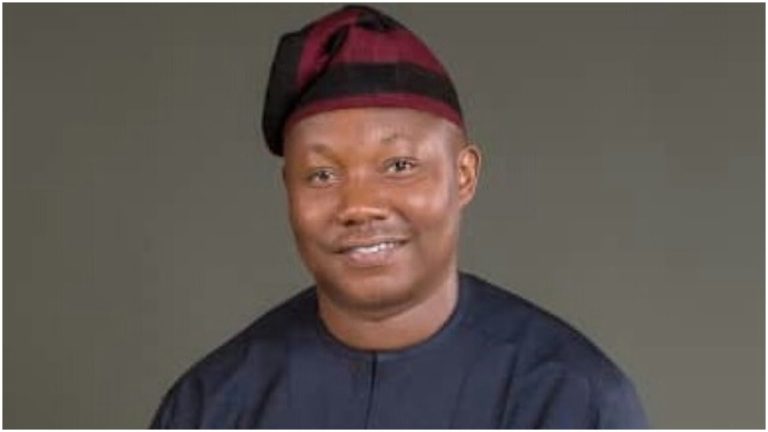
The Youths and Environmental Advocacy Centre (YEAC-Nigeria) has condemned the assassination attempt on Suanu T.Y. Baridam, the first-class monarch of Bangha in Khana Local Government Area, Rivers State.

The traditional ruler was reportedly attacked by gunmen on Sunday along the Ogoni axis of the East–West Road. As of Monday, the Rivers State Police Command had not issued an official statement on the incident.

In a statement, YEAC Executive Director Fyneface Dumnamene described the attack as a direct threat not only to the Bangha Kingdom but also to the wider Niger Delta region. “This is an affront to traditional institutions in Rivers State and a destabilising act capable of undermining peace in Ogoniland,” he said.

The group called for a thorough and transparent investigation, urging Rivers State Police Commissioner Olugbenga Adepoju to ensure the perpetrators are identified and brought to justice. YEAC also appealed to Governor Siminalayi Fubara to guarantee the monarch’s security during recovery and strengthen protection for other traditional rulers and communities across the state.

YEAC-Nigeria stressed that safeguarding traditional institutions is vital for stability, community cohesion, and the preservation of cultural heritage in Rivers State.

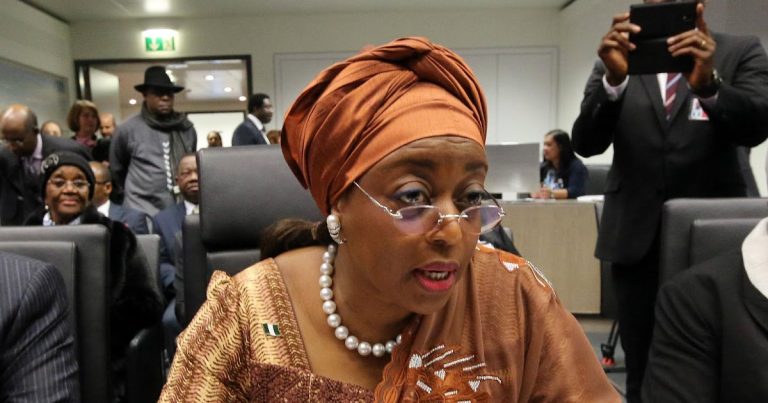
Ex-Minister Diezani Alison-Madueke’s London Corruption Trial Begins

0

The corruption trial of former Nigerian Petroleum Minister and ex-OPEC President Diezani Alison-Madueke has officially commenced in London.

Alison-Madueke, 65, faces five counts of accepting bribes and one count of conspiracy to commit bribery, all linked to her tenure as Nigeria’s Minister of Petroleum Resources between 2010 and 2015 under President Goodluck Jonathan.

According to the indictment, she allegedly received “financial or other advantages” from individuals connected to two energy groups, including:

  • Use and refurbishment of London properties
  • Staff costs and high-end furniture
  • Chauffeur-driven cars and private jet flights to Nigeria
  • £100,000 ($137,000) in cash
  • Luxury items and payment of her son’s school fees

These benefits, the prosecutors claim, amounted to “improper performance” of her ministerial duties.

Two other defendants, Doye Agama and Olatimbo Ayinde, are also facing charges linked to the case. The trial, expected to last 10 to 12 weeks, follows preliminary court proceedings, including jury selection, held last week. Alison-Madueke has been on bail since her initial arrest in London in October 2015 and has denied all charges.

The UK’s National Crime Agency (NCA) said in 2023 that Alison-Madueke allegedly abused her powers to receive financial rewards for awarding multi-million-pound contracts. Evidence provided by the NCA to US authorities enabled the recovery of $53.1 million in assets, including luxury real estate in California and New York and the 65-metre superyacht, Galactica Star.

Alison-Madueke, born in 1960 in Port Harcourt, previously studied architecture in Britain and the US before joining Shell Nigeria. She held key ministerial roles under late President Umaru Yar’Adua and President Jonathan, becoming the first female president of OPEC in 2014.

Blame FG For Impact Of Strike On Nigeria’s Healthcare System — JOHESU Tells Nigerians

0

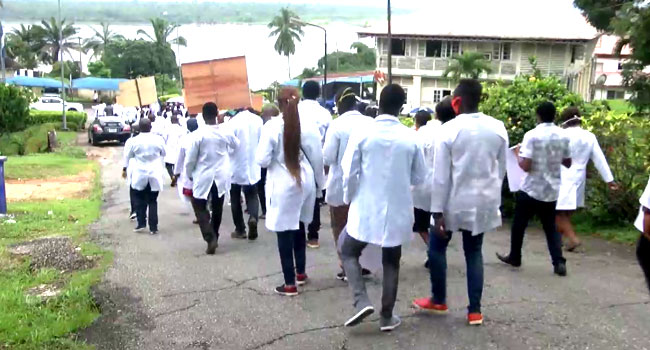
The Joint Health Sector Union (JOHESU) has urged Nigerians to hold the Federal Government responsible for the hardship faced by patients and other citizens following the ongoing strike by health workers across public hospitals in the country.

The union said the industrial action would not have occurred if the government had honoured its commitment to implement the adjustment of the Consolidated Health Salary Structure (CONHESS), which remains JOHESU’s sole demand.

Speaking on Monday, the National Secretary of JOHESU, Martin Egbanubi, said the union was fully aware of the negative impact of the strike on Nigerians but insisted that responsibility rested squarely with the government.

“We know the impact of the strike on Nigerian citizens, but Nigerian citizens should not hold us responsible,” Egbanubi said.

“The government should be responsible because the government must do the needful so we can avert such a strike in the future.”

He explained that JOHESU had exhausted all dialogue options before embarking on the strike, stressing that the union had repeatedly engaged the government over the years without success.

Egbanubi acknowledged that the strike had caused severe hardship for patients who depend on public health facilities, particularly those who cannot afford private medical care, but noted that health workers themselves were also suffering.

“It’s quite unfortunate. We’ve said severally in different media engagements that we truly empathise with the masses of this country — the consumers of health services, those who cannot afford health care outside public health institutions,” he said.

“We sympathise, and of course, we are also part of these masses. Our members are part of the masses.”

He disclosed that the strike had already claimed lives among health workers.

“We have had casualties among our members. As of last week, we lost one of our members at the University of Uyo Teaching Hospital,” Egbanubi revealed.

The JOHESU secretary said the union was not enjoying the strike and was eager to suspend the action once the government addressed its demand.

“We are not deriving any pleasure in continuing with the strike. It is also not convenient for us because of a lot of difficulties associated with the implementation of a strike — logistics and all that,” he said.

He appealed to Nigerians and civil society groups to pressure the Federal Government to resolve the issue quickly.

“What we are saying in essence is that let the masses appeal on our behalf to the Federal Government to please address this one-point demand of the health workers, and then we are good to go to suspend the strike,” he added.

Egbanubi further lamented that despite multiple engagements with the government, including a direct intervention by President Bola Tinubu in 2023, the union’s demands had remained unaddressed.

According to him, JOHESU suspended an earlier strike in June 2023 after the president assured the union that he would mandate the relevant ministry, department or agency to resolve the issue.

“We sounded a series of warnings. We had a series of engagements before we resumed the strike that was suspended in 2023, when the President intervened on June 5, 2023, that we should suspend the strike, and he would mandate the relevant MDA to address our issue,” he said.

“We have also written a letter to Mr President to remind him of the engagement on June 5, 2023,” Egbanubi added.

Indefinite Strike

JOHESU had in November 2025 announced an indefinite strike after accusing the Federal Government of failing to implement the adjusted CONHESS agreement.

The union said the strike would continue until the government fulfilled its obligation to health workers.

Speaking earlier at a press conference in Abuja, the National Chairman of the Medical and Health Workers Union, Kabiru Minjibri, warned that the industrial action would disrupt medical services and academic activities in public health institutions nationwide.

According to him, the government had made no concrete effort to reach a resolution with the unions despite several ultimatums and negotiations.

TUC Backs Health Workers

The strike has also received the backing of the Trade Union Congress (TUC), which last week condemned the Federal Government’s attempt to enforce a “No Work, No Pay” policy against striking health workers.

The TUC rejected a circular issued by the Federal Ministry of Health and Social Welfare directing the stoppage of salaries of JOHESU members through the Integrated Payroll and Personnel Information System (IPPIS), effective January 2026.

In a statement jointly signed by its President, Festus Osifo, and Secretary General, N. A. Toro, the congress described the directive as unacceptable and a violation of established industrial relations principles.

The TUC accused the ministry of attempting to intimidate health workers and acting unilaterally while negotiations were still ongoing.

It also faulted the government for ignoring the harsh economic realities facing Nigerian workers and warned that such actions could further deepen unrest in the health sector.

Police Denial Enabling Mass Kidnapping, Not Lack Of Intelligence — Okwori

0

Security consultant and analyst, Dr Steve Okwori, has criticised the handling of recent mass kidnappings in northern Nigeria, blaming police denial, delayed response and weak security presence in rural communities rather than intelligence failure.

Okwori said the initial denial of reported abductions by the police created a window for kidnappers to escape with their victims unchallenged, warning that such responses undermine public safety and embolden criminal groups.

He spoke during an interview on ARISE News on Sunday while assessing the broader security situation across northern Nigeria.

According to him, the region continues to grapple with multiple security threats, including terrorism, banditry and kidnappings for ransom, despite some recent operational gains recorded by security agencies.

“The northern part of Nigeria is currently being faced with a lot of insecurity challenges — terrorism, banditry activities, kidnappings, abductions and ransom payments. We mostly see these criminal activities in the North, and it is something that is worrisome,” Okwori said.

While acknowledging calls by some groups for the declaration of a national emergency on security, he noted that recent operations suggest improved coordination among Nigeria’s security agencies.

“It will not take away the fact that the Nigerian security architecture has recorded some commendable successes across multiple fronts,” he stated.

“You can see coordinated operations by the armed forces, the DSS and the police. This demonstrates growing synergy and intelligence sharing among security agencies.”

Okwori attributed these gains partly to recent leadership changes within the defence and security sector.

“The military has intensified kinetic operations. We have new service chiefs, a new Minister of Defence, and you can see coordination within the defence and security space,” he said.

However, he warned that early successes must not lead to complacency.

“What is key for me in all of these successes is sustainability. They must capitalise on the gains recorded so far. They should not become relaxed because they have recorded some successes,” he cautioned.

“We need strategic consolidation of these efforts.”

The security analyst also expressed concern that, despite some rescues, many abducted persons remain in captivity.

“Some hostages have been released or rescued, but many more are still in captivity. For instance, the people abducted from the Kurumi Wali community are still there. We have not heard anything about them,” he said.

Addressing the widely reported abduction of 177 persons from a northern community, Okwori directly faulted the police for initially denying that the incident occurred.

“I want to fault the police with regard to that incident. What the police did by initially denying that it happened was, for me, very unprofessional,” he said.

According to him, that denial delayed response and allowed the kidnappers to move freely with their victims.

“That denial and the delay from the police gave the terrorists and bandits the opportunity to ferry their victims. If they had not denied it, people who saw them moving might have raised the alarm earlier,” Okwori explained.

“There was no security agent to challenge them, and that is why they left unchallenged.”

He said the incident highlighted the absence of security presence in many rural and remote communities across the country.

“Most of these communities are remote and have no security presence. If you carry out a survey, you will discover that many of them have no police or military presence at all,” he said.

Okwori welcomed President Bola Tinubu’s directive on the establishment of armed forest guards, describing it as a positive step towards addressing security gaps in hard-to-reach areas.

“The idea of forest guards is commendable. They will be recruited from their immediate communities, trained, and armed. They will be first responders when criminals attack,” he said.

“Because these criminals were not confronted — no police, no military — they had fertile ground to operate.”

He described the manner in which the kidnappings were carried out as particularly alarming.

“They moved freely, from one community to another, even taking people from about three churches, in the early hours of the morning, not even at night,” he said.

Despite the grim security situation, Okwori pointed to recent intelligence-led arrests as evidence of improving capacity within the security agencies.

“That arrest you mentioned speaks well of intelligence gathering — being able to nip threats in the bud before they escalate,” he added.

He concluded by stressing that Nigerians should not be forced to live in fear, reminding government of its constitutional responsibility.

“Section 14(2)(b) of the Constitution is clear — the security and welfare of the people is the primary purpose of government. Nigerians should not be moving from one place to another in fear or anxiety,” Okwori said.

Deadly Winter Storm Kills Seven In US, Leaves Hundreds Of Thousands Without Power

0

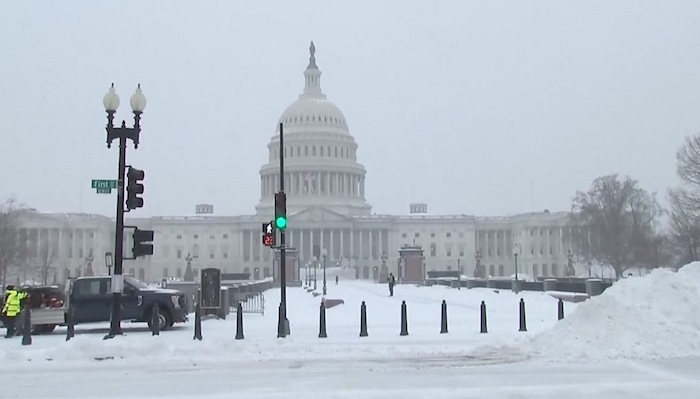
A powerful winter storm sweeping across large parts of the United States has claimed at least seven lives, knocked out electricity to more than 800,000 homes and caused widespread disruption to travel and public services.

Authorities said the storm has created life-threatening conditions from Texas to New England, forcing school closures, road shutdowns and thousands of flight cancellations. The US National Weather Service (NWS) warned that heavy snow, sleet and freezing rain could persist for several days, potentially affecting around 180 million people — more than half of the country’s population.

“The snow and the ice will be very, very slow to melt and won’t be going away anytime soon, and that’s going to hinder any recovery efforts,” Allison Santorelli, a meteorologist with the National Weather Service, told CBS News.

As of Sunday afternoon, data from PowerOutage.us showed that more than 800,000 households were without electricity, while FlightAware reported over 11,000 cancelled flights nationwide. Emergency responders across multiple states have been stretched as icy roads and extreme cold triggered hundreds of traffic accidents.

Louisiana’s Department of Health confirmed that two men died from hypothermia, while the mayor of Austin, Texas, reported an “exposure-related” death. In Kansas, officials said a woman whose body was found covered in snow may also have succumbed to hypothermia.

Weather-related deaths were additionally reported in Tennessee. New York City Mayor Zohran Mamdani said at least five people in the city died on Saturday, although the exact causes of death were still under investigation. “It is a reminder that every year New Yorkers succumb to the cold,” he said.

New York State Governor Kathy Hochul urged residents to stay indoors and avoid travel, describing the system as the coldest and most severe winter storm the state has experienced in years.

“A sort of an arctic siege has taken over our state and many other states across the nation,” Hochul said, warning that the “brutal” conditions could bring the longest cold stretch and heaviest snowfall in years. “It is bone-chilling and it is dangerous,” she added.

Kentucky Governor Andy Beshear said the state was experiencing more ice and less snow than initially forecast, describing the development as particularly dangerous.

Meteorologists warned that freezing rain poses one of the greatest risks, as it rapidly coats roads, trees and power lines with ice, leading to accidents, outages and infrastructure damage. Officials in states including Virginia and Kentucky reported responding to hundreds of crashes linked to icy conditions.

In Washington, DC, Mayor Muriel Bowser declared a state of emergency, calling it the capital’s largest snowstorm in a decade. Nearly half of US states have issued emergency declarations, and the US Senate postponed a scheduled vote due to the severe weather. Schools across the country have cancelled classes as the storm is expected to continue into Monday.

While northern states such as the Dakotas and Minnesota are accustomed to prolonged cold winters, the extreme temperatures have been unusual for southern states like Texas, Louisiana and Tennessee, where readings are reportedly 15 to 20 degrees Celsius below seasonal averages. Some of these areas could also experience ice accretions of up to an inch from freezing rain.

The storm has also impacted Canada, where heavy snowfall and hundreds of flight cancellations have been reported. Authorities in Ontario expect between 15 and 30 centimetres of snow.

Weather experts said the storm was driven by a disruption of the polar vortex — a ring of strong winds that usually traps cold air over the Arctic. When weakened, the vortex allows frigid air to plunge southwards into the United States, interacting with warmer southern air to form intense storm systems.

Forecasters said the system is expected to push northwards and eastwards, clearing the Canadian maritime region by Tuesday, but leaving behind another surge of dangerously cold air. The extreme cold is forecast to persist into early February.

Musawa Warns APC Risks Losing North If Tinubu–Shettima Ticket Is Altered Ahead Of 2027

0

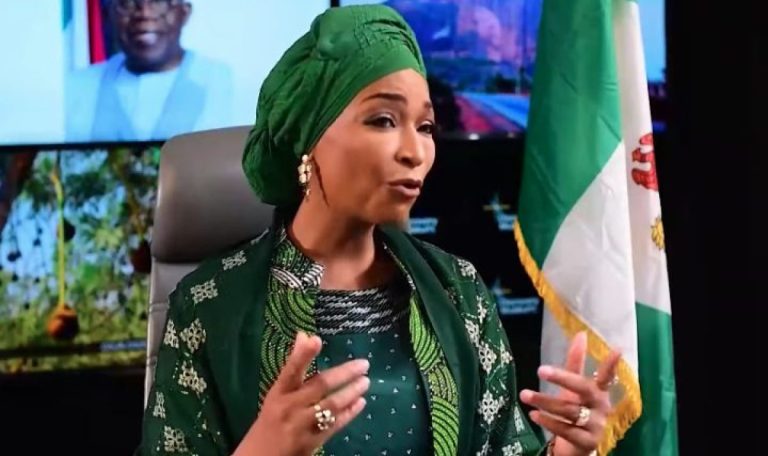
The Minister of Culture, Tourism and Creative Economy, Hannatu Musawa, has warned that the All Progressives Congress (APC) could significantly weaken its electoral fortunes in northern Nigeria if it alters the Tinubu–Shettima presidential ticket ahead of the 2027 general election.

Musawa said removing Vice President Kashim Shettima from President Bola Tinubu’s re-election ticket, or failing to retain a northern Muslim as running mate, would pose serious political risks for the ruling party, particularly in the core northern states.

She spoke during a recent interview amid growing speculation that the APC may consider changing the Muslim–Muslim ticket that secured victory in the 2023 presidential election.

According to the minister, voting behaviour in northern Nigeria is strongly shaped by regional, religious and historical considerations, making any major alteration to the ticket potentially damaging.

“If there is no Hausa, Fulani or Kanuri Muslim on that ticket, it creates a hurdle. That is the reality of the way people think,” Musawa said.

She described the core northern states as politically sophisticated, noting that politics remains deeply ingrained in everyday life across the region.

“The core north states, like Katsina, Kano, Kaduna, Kebbi, Jigawa, Zamfara and Sokoto, understand politics at a very deep level. Politics there is a way of life. People wait every four years to line up and vote because that is where they feel they have influence,” she said.

Musawa dismissed suggestions that the APC could easily reshuffle its presidential ticket without electoral consequences, warning that such views underestimate northern political realities.

“I think if we toy with changing the construct of what we have now, it is a problem. People who suggest otherwise may not fully understand how politics works in the north,” she cautioned.

On opposition politics ahead of 2027, the minister expressed confidence that President Tinubu and Vice President Shettima remain well positioned to secure a second term. She described the opposition landscape as fragmented, with multiple political heavyweights competing for leadership.

“You have an opposition that is overcrowded. Every single member is vying for the same spot, and that alone creates a recipe for political failure,” she said.

While acknowledging the influence of opposition figures, Musawa said the APC was not underestimating any challengers.

“We are not taking anybody lightly. But as the opposition is emerging now, I do not see how they can unseat President Tinubu and Vice President Shettima,” she added.

She concluded by saying that although the APC supports a vibrant opposition as part of democratic growth, the party remains focused on consolidating its support nationwide ahead of the next election cycle.

“It is good for democracy to have opposition. Nobody wants a one-party state. But we are confident in our political direction,” Musawa said.

House Minority Caucus Flags Alleged Alterations in Gazetted Tax Laws, Seeks Deeper Probe

0

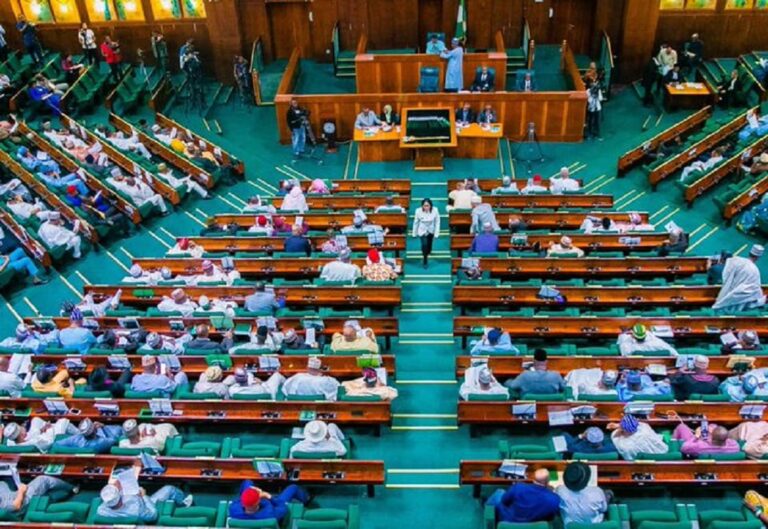
The House of Representatives Minority Caucus has raised serious concerns over alleged illegal alterations in recently gazetted tax laws, following discrepancies identified between versions passed by the National Assembly and those published in official records.

The controversy began after a member of the House, Hon. Abdulsamad Dasuki, alerted lawmakers to the circulation of an authorized version of the tax laws that differed from what was duly passed by the National Assembly and assented to by the President. Reacting to public outrage, the Minority Caucus, in a statement issued on December 28, 2025, vowed to protect the independence of the legislature, describing any attempt to impose altered laws on Nigerians as an attack on democracy and the constitutional mandate of the National Assembly.

In response, the Minority Caucus, led by Rt. Hon. Kingsley Chinda, constituted a seven-member fact-finding committee on January 2, 2026. The committee is chaired by Hon. Afam Victor Ogene, with members drawn from Bauchi, Oyo, Abia, Bayelsa, Kano, and Nasarawa states.

On January 3, 2026, the House of Representatives announced that the Speaker, Rt. Hon. Abbas Tajudeen, had ordered the public release of four tax reform Acts duly signed into law by the President. The directive also included an internal verification process and the immediate release of Certified True Copies to restore clarity and safeguard the integrity of the legislature. The Acts released were the Nigeria Tax Act, 2025; Nigeria Tax Administration Act, 2025; National Revenue Service (Establishment) Act, 2025; and the Joint Revenue Board (Establishment) Act, 2025.

According to the committee, contentious areas in the Nigeria Tax Administration Act include changes to reporting thresholds, the introduction of a mandatory 20 percent deposit for tax appeals, expanded enforcement and arrest powers for tax authorities, alterations to the definition of federal taxes, and changes to the currency used for tax computation in petroleum operations. These provisions, the committee noted, were not part of the versions passed by the National Assembly.

Similarly, discrepancies were identified in the National Revenue Service (Establishment) Act, particularly the removal of provisions granting the National Assembly oversight powers, including the requirement for quarterly and annual reports to parliament. The committee described this omission as a violation of the principles of checks and balances fundamental to democratic governance.

In view of the anomalies and alleged illegalities uncovered, the committee stated that there is sufficient basis for a more comprehensive investigation. It has therefore requested additional time to conduct an in-depth examination to ensure accountability and protect the constitutional role of the legislature.

The interim report was signed by the committee chairman, Hon. Afam Victor Ogene.

Japan Suspends Restart Of World’s Biggest Nuclear Power Plant

0

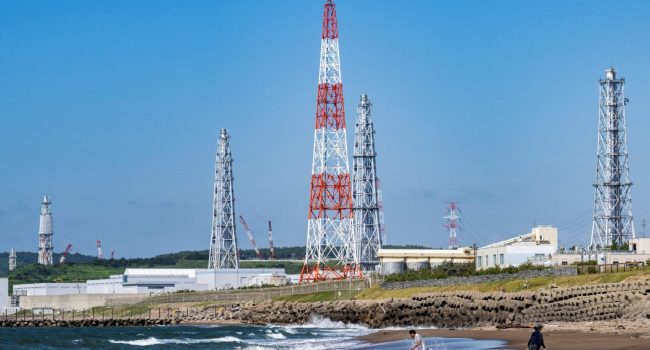
The restart of the world’s largest nuclear power plant has been suspended in Japan, with the operator saying it is unclear when the issue that prompted the halt will be resolved.

The Kashiwazaki-Kariwa nuclear power station in Niigata Prefecture, which has remained offline since the 2011 Fukushima disaster, had begun restart operations on Wednesday after receiving final approval from the country’s nuclear regulator.

However, its operator, Tokyo Electric Power Company (TEPCO), announced on Thursday that an alarm sounded during reactor start-up procedures, forcing a suspension of operations.

“An alarm from the monitoring system sounded during the reactor startup procedures,” TEPCO said, adding that it does not yet know how long it will take to resolve the issue.

Site superintendent Takeyuki Inagaki told a news conference, “We don’t expect this to be solved within a day or two. There is no telling at the moment how long it will take. We will for now fully focus on trying to identify the cause of what happened.”

According to TEPCO spokesman Takashi Kobayashi, the alarm led the company to investigate malfunctioning electrical equipment. He said that once it became clear the problem would take time to address, control rods were reinserted into the reactor in a planned manner.

“The reactor is stable and there is no radioactive impact outside,” Kobayashi said.

Control rods are used to regulate nuclear chain reactions in a reactor, either accelerating them when withdrawn or slowing and stopping them when inserted deeper.

The restart had initially been scheduled for Tuesday but was delayed after a separate technical issue related to control rod removal was identified over the weekend. TEPCO said that issue was resolved on Sunday.

Kashiwazaki-Kariwa is the world’s biggest nuclear power plant by potential capacity, although only one of its seven reactors was being restarted. The facility was shut down after Japan suspended nuclear power operations nationwide following the 2011 earthquake and tsunami that triggered meltdowns at the Fukushima Daiichi plant.

Japan has since sought to revive nuclear energy to cut reliance on fossil fuels, achieve carbon neutrality by 2050, and meet rising energy demand, including from artificial intelligence technologies. Kashiwazaki-Kariwa is the first TEPCO-operated unit to attempt a restart since 2011. TEPCO also operates the Fukushima Daiichi plant, which is undergoing decommissioning.

Public opinion in Niigata remains divided. A survey conducted in September showed about 60 per cent of residents oppose the restart, while 37 per cent support it.

“It’s Tokyo’s electricity that is produced in Kashiwazaki, so why should the people here be put at risk? That makes no sense,” said Yumiko Abe, a 73-year-old resident, during a protest outside the plant earlier this week.

Earlier this month, seven groups opposing the restart submitted a petition signed by nearly 40,000 people to TEPCO and Japan’s Nuclear Regulation Authority, citing concerns that the plant is located on an active seismic fault zone and was hit by a strong earthquake in 2007.

World Economic Forum: Nigeria’s Economy Showing Strong Recovery — Trade Minister Oduwole

0

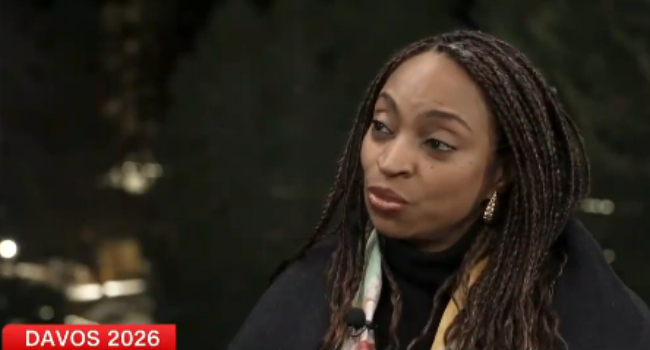
Nigeria’s Minister of Industry, Trade and Investment, Dr Jumoke Oduwole, says the country’s economy is showing strong signs of recovery, driven by sustained growth, easing inflation and renewed interest from local and foreign investors.

Oduwole made the remarks while speaking during an interview on the sidelines of the World Economic Forum (WEF) in Davos, Switzerland.

According to the minister, Nigeria’s economic reforms, infrastructure upgrades and expanding global partnerships are reshaping the country’s outlook and positioning it for sustained growth.

“The growth is over 4% and projected to continue growing strongly by the World Bank, highest in over a decade. Inflation has halved between 2024 and 2025,” she said.

She noted that ongoing reforms in trade facilitation are improving the ease of doing business, particularly at the nation’s ports.

“We have a single window project that’s going live at the end of this quarter. When investors make decisions, they look at whether they can do business efficiently, and the reforms we are implementing are helping to unlock that confidence,” Oduwole said.

On Nigeria’s trade ties with the United States, the minister described the relationship as strategic and mutually beneficial.

“The United States remains our strong strategic partner. We launched a commercial investment partnership in June last year. U.S. businesses work very closely with Nigerian businesses, and businesses simply want to do business,” she said.

Oduwole added that Nigeria is focused on long-term economic transformation through improved infrastructure, export expansion and enhanced trade access, while also playing a leadership role under the African Continental Free Trade Area (AfCFTA).

She revealed that Nigeria has opened air cargo corridors with 13 African countries, a move she said has cut freight costs for exporters by about half and strengthened regional trade.

The minister described Nigeria’s debut of the ‘Nigeria House’ platform at the Davos WEF as an opportunity to present the country’s reform agenda, trade priorities and investment opportunities to global investors and policymakers.

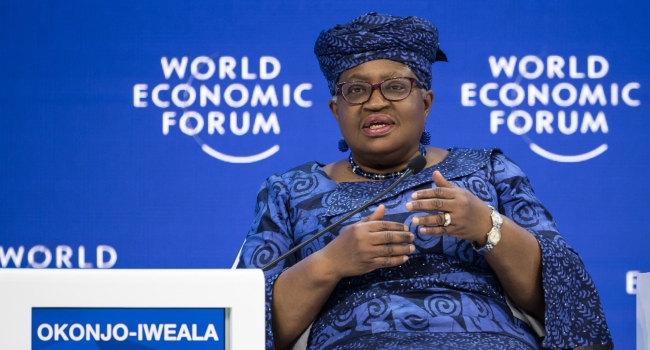
Davos: Nigeria Must Aggressively Court Global Investors To Drive Jobs And Manufacturing — Okonjo-Iweala

The Director-General of the World Trade Organisation (WTO), Dr Ngozi Okonjo-Iweala, has urged Nigeria to deliberately and aggressively target global investors and relocating supply chains to reduce import dependence, deepen local manufacturing and create jobs.

She made the call on Wednesday at Nigeria House during the ongoing World Economic Forum (WEF) in Davos, Switzerland.

Speaking during a panel discussion titled “From Scale to Capital: Financing Nigeria’s Role as Africa’s Digital Trade and Infrastructure Anchor,” Okonjo-Iweala said rising geopolitical tensions, particularly between the United States and China, have accelerated global supply chain diversification.

She noted that many multinational firms are now adopting “China+1” strategies to minimise risk by sourcing production outside China, even though the country remains central to global value chains.

“Firms are increasingly adopting China+1 sourcing strategies to reduce single-country risk, although China remains deeply embedded in many global value chains,” she said.

She added that tariffs and trade restrictions have further pushed companies to rethink overreliance on dominant suppliers, creating openings for countries like Nigeria to attract new investments.

According to the WTO chief, Nigeria must actively position itself to take advantage of these shifts by deliberately marketing itself to investors and identifying sectors with the strongest potential.

“There are reforms being pursued right now, and they are important, but they must translate into job creation,” she said. “We need to move from stabilisation to job creation. That is where the gap is.”

Okonjo-Iweala said Nigeria should strategically map out investment opportunities and directly court investors across major economies, including China, the United States and other global markets.

“If there is one thing I would emphasise, it is that everything we can do to showcase Nigeria as a country worthy of investment is what we should be doing,” she said.

“We should deliberately go after those investments and investors. As companies diversify supply chains, much of that movement is still within Asia, including India. Nigeria should aim to attract a sizeable share of that.”

She highlighted renewable energy, textiles and manufacturing as key areas Nigeria should focus on, stressing the need to move from importation to local production.

“Let’s build solar panels in Nigeria. We are importing, but we can also manufacture. We have the renewable capacity,” she said.

On the textile industry, she added: “Every time I buy wax fabric, I check where it’s made. Many of the shiny new textiles we wear are not made in Nigeria. Let’s attract investment to produce them locally.”

Okonjo-Iweala also identified the pharmaceutical sector as another area with strong potential for supply chain relocation and investment.

“Pharmaceuticals—there is a chance there as well. These are some of the supply chains I would be attracting,” she said.

Also on the panel was the Managing Director of the Bank of Industry, Dr Oludapo Olusi, as discussions focused on positioning Nigeria as a regional anchor for digital trade and infrastructure development.

Benue Exco Approves Yelewata Resettlement Plan, Construction to Begin January 22

0

The Benue State Executive Council has approved the resettlement of displaced persons in Yelewata, with the flag-off of construction scheduled for Thursday, January 22.

The project, which is supported by donations amounting to ₦1.275 billion, will provide 62 two-bedroom housing units for affected residents. To ensure accountability, the state government has constituted a committee chaired by the Secretary to the State Government (SSG) to oversee the transparent utilisation of the funds.

Briefing journalists after the Executive Council meeting, the SSG, Deaconess Deborah Aber, described the first EXCO session of 2026 as “robust,” noting that deliberations were centred on key issues impacting the welfare and security of Benue residents.

Also speaking, the Commissioner for Information and Orientation, Dr Peter Egbodo, said the state has recorded improvements in security across several areas. However, he warned that the increasing influx of herders could pose a threat to sustained peace if not properly managed.

He urged residents to promptly share credible intelligence with security agencies to help forestall potential security challenges. Dr Egbodo also disclosed that Governor Hyacinth Alia has directed regular engagement with the media, including quarterly briefings, to enhance transparency and keep citizens informed on governance and budget implementation.

On the health sector, the Commissioner for Health and Human Services, Dr Paul Ogwuche, said the state government is taking steps to resolve the ongoing strike by resident doctors and nurses over arrears linked to the 2024 Consolidated Medical Salary Scale.

According to him, Governor Alia has ordered an urgent end to the industrial action and assured health workers that all outstanding issues will be addressed promptly.