


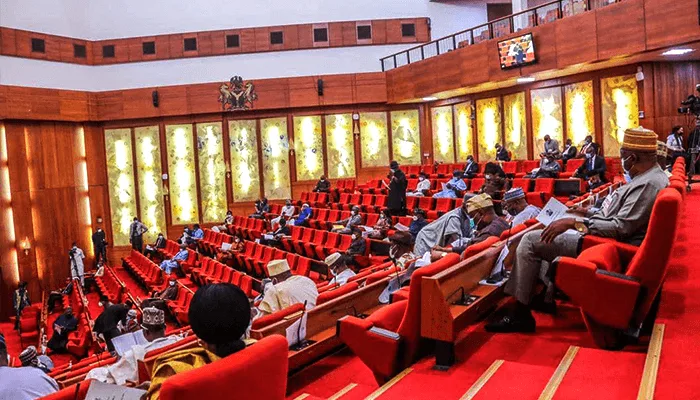
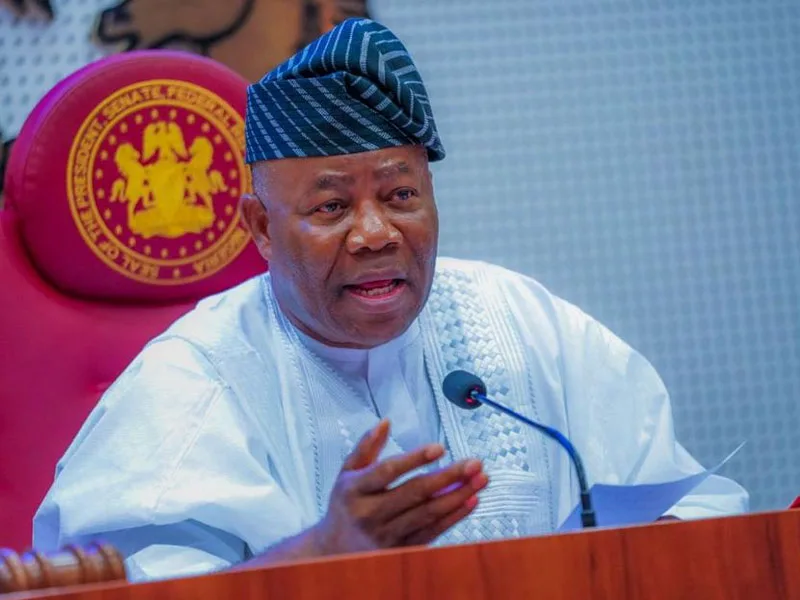
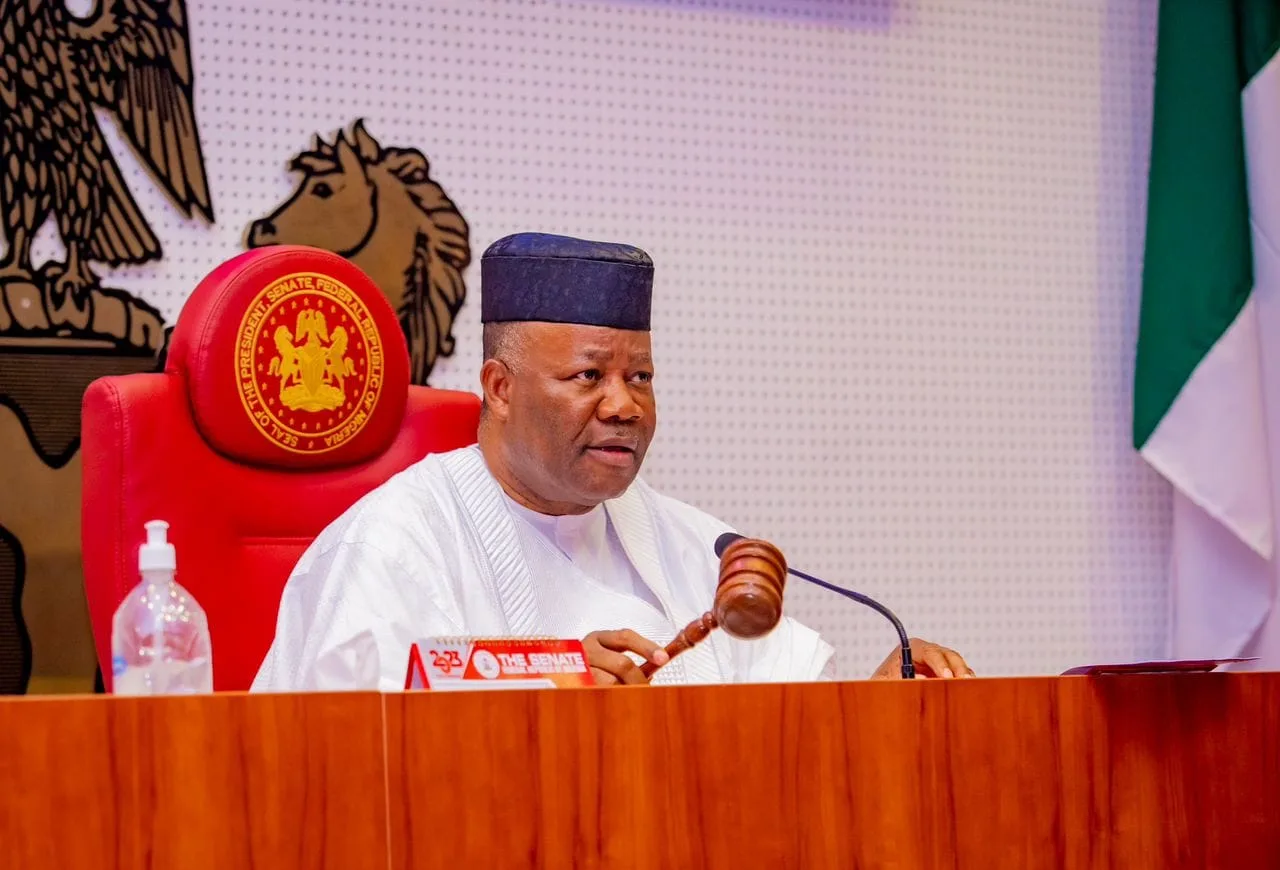
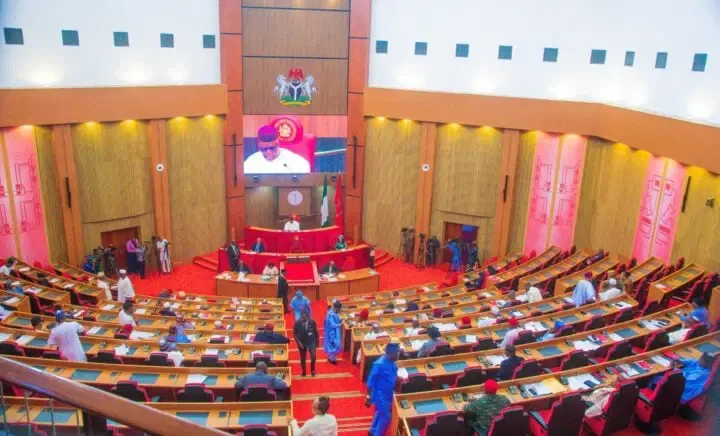
The Nigerian Senate on Tuesday convened an emergency plenary session amid sustained public backlash and growing political tension over contentious provisions in the Electoral Act Amendment Bill 2026, particularly clauses dealing with the electronic transmission of election results.
The extraordinary sitting followed widespread debate, protests and criticism that erupted after the Senate last week passed the Electoral Act 2022 (Repeal and Re-enactment) Amendment Bill 2026 through a third reading.
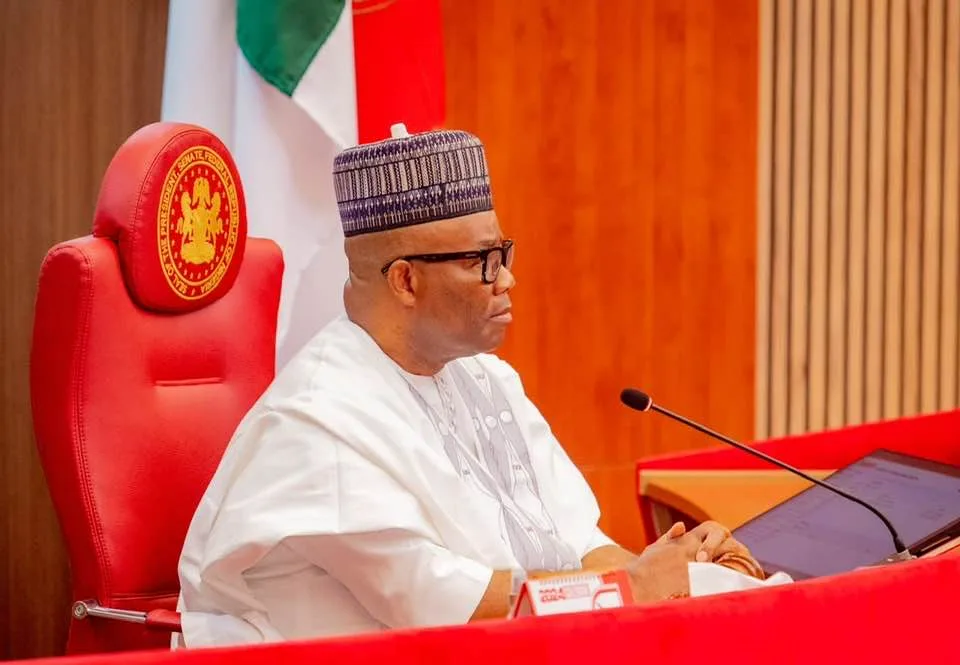
In a notice issued on Sunday by the Clerk of the Senate, Emmanuel Odo, lawmakers were formally summoned to reconvene at noon on Tuesday at the Senate Chamber, Abuja, on the directive of Senate President, Godswill Akpabio.
“I am directed by His Excellency, the President of the Senate, Distinguished Senator Godswill Obot Akpabio, GCON, to inform all Distinguished Senators of the Federal Republic of Nigeria that an Emergency Sitting of the Senate has been scheduled to hold as follows: Date: Tuesday, 10th February, 2026. Time: 12:00 noon. Venue: Senate Chamber,” the notice read.
Although the official communication did not state the specific agenda for the emergency sitting, the timing coincided with mounting public anger over the Senate’s refusal to make real-time electronic transmission of election results mandatory.
Related Posts:

Clause 60 Sparks National Debate
At the heart of the controversy is Clause 60, Subsection 3, of the amended bill, which addresses how election results are transmitted from polling units.
The Senate rejected a proposed amendment that sought to compel presiding officers of the Independent National Electoral Commission (INEC) to electronically transmit polling unit results to the INEC Result Viewing (IREV) portal in real time after result forms had been signed and stamped.
Instead, lawmakers retained the wording already contained in the 2022 Electoral Act, which provides that “the presiding officer shall transfer the results, including the total number of accredited voters and the results of the ballot, in a manner as prescribed by the Commission.”
Critics argue that the retained provision gives INEC excessive discretion and could weaken transparency, while supporters insist it allows flexibility in areas with poor network coverage and security challenges.
The Senate also declined proposals seeking tougher sanctions for vote-buying, rejecting a suggested 10-year ban on offenders and retaining existing penalties, which include fines and jail terms.
Protests Rock National Assembly
Public discontent spilled onto the streets of Abuja on Monday as civil society organisations, youth groups and opposition political parties staged a protest under the banner “Occupy National Assembly.”
Protesters converged on the National Assembly complex to oppose the Senate’s stance on electronic transmission of results, demanding that real-time upload of polling unit results be clearly mandated by law ahead of the 2027 general elections.
Security was tightened around the National Assembly, with personnel drawn from the Nigeria Police Force, the Nigerian Army and the Nigeria Security and Civil Defence Corps barricading the main entrance.
Some protesters told ADBN TV that the demonstration was peaceful and limited to the gate of the complex, adding that they had no intention of forcing their way into the premises. The protesters marched from the Federal Secretariat to the National Assembly, chanting slogans in support of electoral transparency.
Former Labour Party presidential candidate in the 2023 election, Mr Peter Obi, who is now a member of the African Democratic Congress (ADC), joined the protest.
Obi said lawmakers must act decisively to prevent a repeat of the technical failures recorded during the 2023 general elections, insisting that real-time electronic transmission of results is critical to restoring public confidence in Nigeria’s electoral process.
Akpabio Defends Senate Position
Responding to the backlash, Senate President Godswill Akpabio said the Red Chamber did not reject electronic transmission of election results, but only removed the phrase “real time” from the provision.
Speaking at a book launch over the weekend, Akpabio explained that the decision was informed by concerns over network failures and the potential legal consequences that could arise if results were delayed due to technical challenges.
“All we said during the discussion was that we should remove the word ‘real-time’ because if you say real-time, then there is a network or grid failure, and the network is not working. When you go to court, somebody will say it ought to have been real-time. That was all we said,” he stated.
According to him, the amendment was intended to give INEC the operational flexibility to determine the most effective method of result transmission, taking into account Nigeria’s uneven digital infrastructure and security realities.
Divergent Political Reactions
Former Senate President, David Mark, also weighed in on the controversy, urging the National Assembly to allow INEC the discretion to decide whether or not to transmit election results electronically.
Mark argued that imposing rigid provisions could create avoidable legal disputes and operational difficulties during elections.
However, some senators have maintained that there was broad consensus in favour of electronic transmission within the Senate.
The Senator representing Anambra Central, Victor Umeh, said more than 85 per cent of senators supported electronic transmission of results and that the issue was never fundamentally in dispute.
“Over 85 per cent of senators agreed to electronic transmission. It was common ground. Even the ad hoc committee of the Senate agreed to it,” Umeh said.
He clarified that the only modification agreed during the Senate’s executive session was the removal of the words “in real time,” citing concerns over network availability in parts of the country.
“Transmission itself was never in dispute. It was only ‘real time’ that was expunged because of network issues,” he said.
Umeh also alleged that confusion arose during plenary when a motion was reportedly introduced to substitute the word “transmission” with “transfer” without proper debate.
“There was no debate on it. If debate had been allowed, it would have taken us back to the executive session where the matter had already been thoroughly discussed and resolved,” he added.
What Next?
The emergency Senate sitting is expected to shape the next phase of legislative action on the Electoral Act amendments, including possible harmonisation efforts with the House of Representatives and engagement with public concerns.
Political analysts say the outcome of the current controversy could have far-reaching implications for electoral reforms ahead of the 2027 general elections, particularly on transparency, technology use and public trust in Nigeria’s democratic process.