The Supreme Council for Shari’ah in Nigeria (SCSN) has renewed its demand for the removal of the Chairman of the Independent National Electoral Commission (INEC), Professor Joash Amupitan, warning that his continued leadership poses a serious threat to the credibility of the 2027 general elections. The Council declared that Nigerian Muslims would neither recognise nor […]
Share This Article:
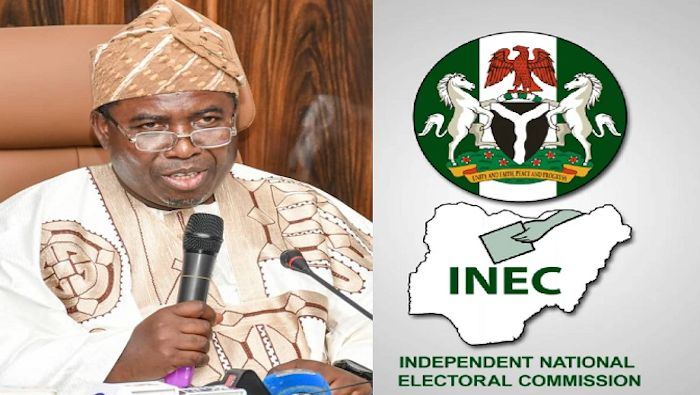
The Supreme Council for Shari’ah in Nigeria (SCSN) has renewed its demand for the removal of the Chairman of the Independent National Electoral Commission (INEC), Professor Joash Amupitan, warning that his continued leadership poses a serious threat to the credibility of the 2027 general elections.
The Council declared that Nigerian Muslims would neither recognise nor legitimise any election conducted under Amupitan’s leadership, citing concerns over his integrity, neutrality and alleged past actions which it described as divisive.
Council Raises Integrity And Neutrality Concerns
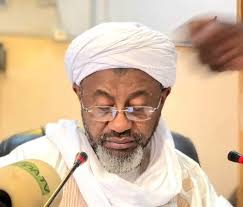
The position of the SCSN was made public on Tuesday in Abuja by its President, Sheikh Bashir Umar, during the Council’s 2026 Annual Pre-Ramadan Lecture and General Assembly, themed “Nigeria’s Future: Faith, Justice, and Leadership.”
According to Umar, the Council’s stance is based on what it described as the INEC chairman’s “questionable antecedents,” particularly an alleged legal brief personally authored by Amupitan which suggested the existence of a Christian genocide in Nigeria.
The Federal Government has consistently rejected claims that such a genocide exists.
“This is not the first time the Council is taking this position,” Umar said. “In a legal brief he personally sent, he sought to establish the existence of a Christian genocide in Nigeria, a claim that is directly at odds with the official position of the Federal Government.”
‘Integrity Of Electoral Umpire Compromised’
The Council said the alleged brief raised serious doubts about Amupitan’s ability to serve as a neutral electoral umpire, arguing that the position of INEC chairman demands unquestionable integrity and impartiality.
“For an umpire in a democratic process, integrity and neutrality are non-negotiable,” Umar stated. “As far as we are concerned, his integrity has been compromised. The honourable thing is for him to resign. If he does not, the government should dismiss or retire him.”
He added that allowing the 2027 elections to be conducted under such circumstances could undermine public confidence and worsen religious and political tensions in the country.
Warning On 2027 Elections
The SCSN warned that proceeding with the 2027 polls under Amupitan’s leadership could lead to a credibility crisis.
“The Ummah will not recognise or legitimise any election presided over by a character with questionable integrity,” Umar said. “Democratic credibility must never be compromised.”
INEC Reacts
When contacted for a response, a source within the Independent National Electoral Commission dismissed the allegations, describing them as an attempt to attract publicity, and said the commission would not respond to the claims.
Legal Actions And Advocacy
Umar noted that while the SCSN is not directly involved in litigation, it is aware that other groups have approached the courts to challenge Amupitan’s appointment and continued stay in office.
He emphasised that the Council’s role remains that of advocacy and public engagement rather than legal action.
Broader National Concerns Raised
Beyond the electoral controversy, the Council expressed concern over what it described as worsening insecurity, economic hardship, poor budget implementation, alleged imbalance in federal appointments, and attempts to undermine Muslims’ constitutional right to practise Shari’ah in Muslim-majority states.
The SCSN also rejected narratives of a Christian genocide in Nigeria, warning that such claims fuel division, heighten mistrust and threaten national cohesion.
Calls For Responsible Discourse
Speaking at the event, Aminu Sani Jaji, Chairman of the House of Representatives Committee on Ecological Funds, said the timing of the Pre-Ramadan lecture was significant given Nigeria’s current security and socio-political challenges.
He cautioned that unverified and divisive narratives could worsen tensions if not responsibly addressed.
The Chairman of the occasion, Mallam Muhammadu Munir Ja’afaru, the Madakin Zazzau, said the Supreme Council for Shari’ah has remained a principled voice of the Nigerian Muslim Ummah, promoting justice, peaceful coexistence and national unity through constructive engagement.
ADBN TV is a dynamic digital broadcasting platform committed to delivering credible news, inspiring stories, and engaging programmes that inform, educate, and connect communities across Nigeria and beyond.